Applications
How to Get into The University of Michigan (2026 Guide)
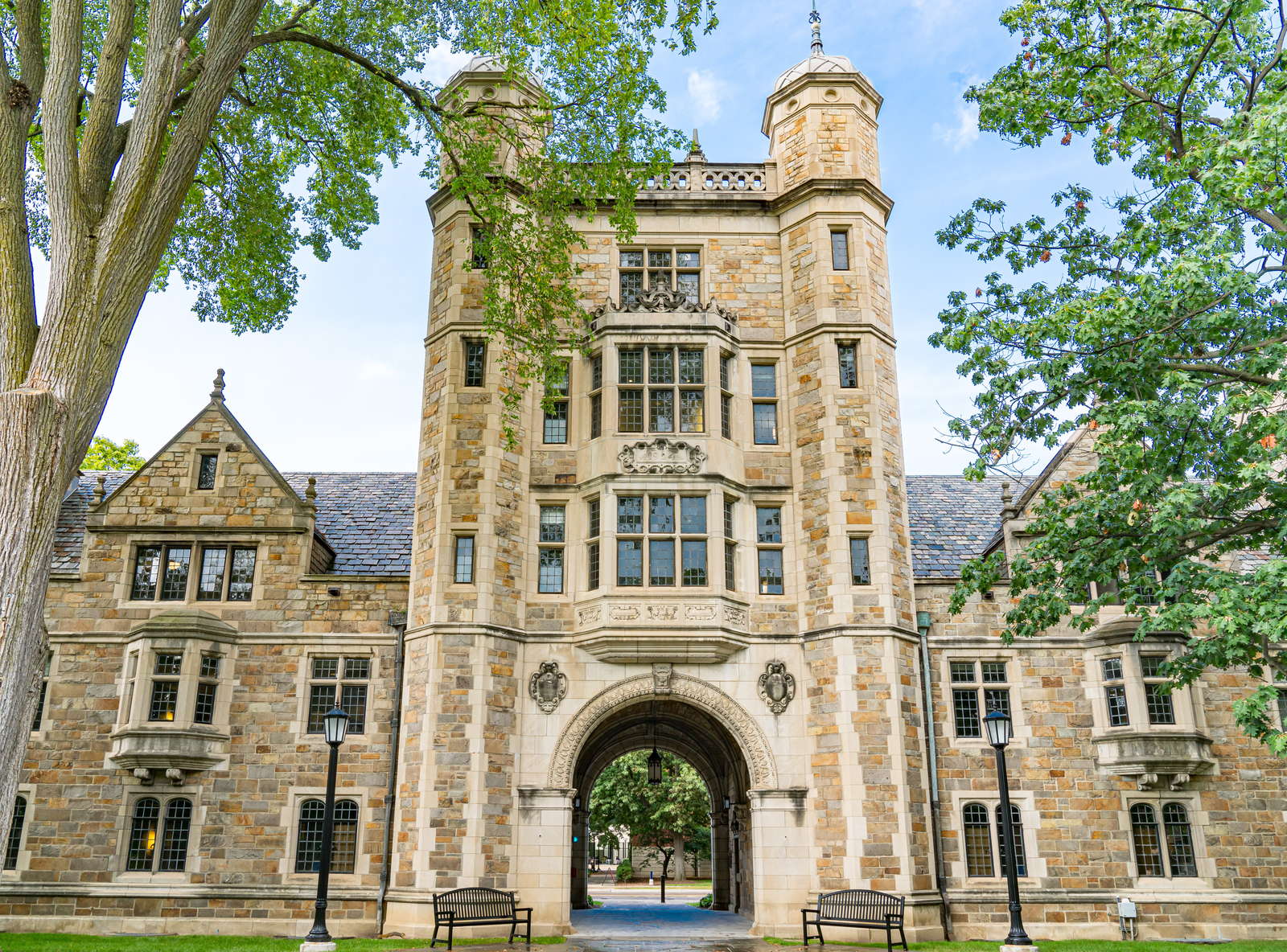
Getting into the University of Michigan requires more than just meeting the basic requirements—it's about standing out in a highly competitive pool of applicants. Students in the area can get expert support through our Ann Arbor college counseling team to build the kind of well-rounded profile UMich is looking for. With an acceptance rate of 16.42% for the Class of 2029 — and projected even lower for the Class of 2030 — UMich seeks students who excel both academically and personally.
Now, here's something most applicants don't realize: UMich's selectivity has fundamentally shifted in the past two years. The university not only became more competitive (with a record 115,125+ applications for the Class of 2030) but also introduced a binding Early Decision program for the 2025-26 admissions cycle and returned to requiring standardized test scores for Class of 2030 applicants. The application landscape looks dramatically different than it did just three years ago.
From maintaining a high GPA to crafting compelling essays, each aspect of your application contributes to your success. Let's dive into the key factors that can boost your chances of becoming part of this prestigious institution.
How to Get into The University of Michigan: The Essentials!
Securing a spot at the University of Michigan is challenging, but by focusing on key elements of your application, you can stand out in a competitive pool of applicants. Our college counselors in Ann Arbor help local students excel in academics, essays, and extracurriculars to demonstrate they're prepared to thrive as a Wolverine.
Below are the essential factors that will help you enhance your application and boost your chances of admission.
Video: How I got into Michigan with a D- (Viewing My College Admissions File)
1. Aim for a GPA of 3.9 or Higher
UMich places a high value on academic performance, with the average GPA for admitted students being 3.9, and over 38% of admitted students reporting a perfect 4.0. To remain competitive, you should aim for high grades in challenging courses like AP, IB, or honors classes.
Picture this: with 93% of accepted students holding a GPA of 3.75 or higher, your transcript is the single biggest factor in whether your application moves forward. For out-of-state students especially, you'll want to target a 3.9+ unweighted GPA, since published statistics combine in-state and out-of-state admits — and in-state students typically have higher acceptance rates.
How to Set Yourself Apart:
- Maximize your course rigor: Sign up for AP, IB, or honors classes to demonstrate your commitment to academic challenges. These courses are weighted more heavily, boosting your GPA and proving you can handle rigorous material.
- Leverage support systems: Use resources like tutoring, study groups, or office hours to ensure you stay on top of difficult subjects.
- Develop strong study habits: Organize your time effectively and prioritize challenging subjects. Identify your weaknesses early and seek help to improve, ensuring consistent performance.
2. Write Strong, Personal Essays
Essays are a critical part of UMich's holistic admissions process. They allow you to showcase your personality, experiences, and what you can uniquely bring to the campus community. UMich has specific essay prompts to guide you in expressing your individual story.
Here's the deal — the quality of writing in Michigan's supplemental essays, particularly the "community" essay, carries meaningful weight in the review process. Admissions officers report that essays often serve as the deciding factor between similarly qualified candidates.
How to Craft Standout Essays:
- Reflect on impactful experiences: Focus on significant aspects of your life, such as involvement in clubs, sports, study abroad, mission trips, community service, debate, visual or performing arts, or leadership roles. If you have alumni ties to the institution or entrepreneurial experiences, this is the time to highlight them.
- Be personal and authentic: Use your essays to share stories that reveal who you are beyond grades and test scores. Show how specific experiences have shaped your values, goals, and perspective.
3. Submit 1-2 Letters of Recommendation
UMich requires 1-2 letters of recommendation to provide deeper insight into your academic performance and character.
Make Your Recommenders Shine:
- Ask the right people: Choose teachers or mentors who know you well and can speak to your growth, leadership, and academic performance.
- Provide context: Share your resume and personal goals with your recommenders so they can craft a more personal, detailed letter.
- Request early: Ask for recommendations at least a month before the deadline to give your teachers plenty of time.
4. Excel in Leadership and Extracurricular Activities
UMich is looking for well-rounded students who demonstrate leadership in extracurriculars. Focus on quality over quantity by excelling in activities that truly matter to you.
How to Stand Out with Extracurriculars:
- Join clubs aligned with your interests: If you're interested in STEM, join the robotics team or math club. If the arts are your passion, consider participating in theater, choir, or visual arts programs.
- Seek leadership roles: Take on responsibilities such as club president, event coordinator, or team captain to showcase your leadership abilities.
- Engage in community service: Volunteering for local causes, such as tutoring or organizing charity events, will highlight your social responsibility and empathy.
5. Complete a Rigorous High School Curriculum
UMich expects applicants to complete a challenging curriculum with a focus on core academic subjects.
Plan Your High School Courses Strategically:
- Meet and exceed requirements: UMich recommends 4 years of English, at least 3 years of math, science, and social studies, and 2 years of a foreign language. If possible, go beyond the minimum by taking additional years in math and science, especially if you're targeting STEM majors.
- Choose courses aligned with your interests: Take classes relevant to your intended major. For example, prospective engineering students should prioritize AP Calculus or Physics, while humanities students might focus on AP English or History.
6. Participate in AP, IB, or Honors Programs
Taking advanced coursework like AP, IB, or honors classes demonstrates that you're ready for college-level academics.
How to Make the Most of Advanced Courses:
- Select courses related to your major: If you're aiming for a degree in business, take AP Economics or AP Statistics. STEM students should focus on AP Biology, Physics, or Calculus.
- Score high on exams: High AP exam scores (4 or 5) can earn you college credits at UMich, helping you get ahead in your academic journey.
7. Submit SAT/ACT Scores (Now Required for Class of 2030)
Now, here's a major shift you need to know about: UMich has returned to requiring standardized test scores starting with the Class of 2030 cycle. The test-optional era at Michigan is officially over. If you're applying for fall 2026 entry or later, the SAT or ACT is a required component of your application.
For the Class of 2029, the middle 50% SAT range was 1360-1530 (median 1460), and the middle 50% ACT range was 31-34.
How to Decide Which Test to Submit:
- Aim for scores at or above the median: Target an SAT around 1460+ or an ACT around 33+ to be competitive in the holistic review.
- Prepare strategically: If your initial scores don't meet the middle 50% range, invest in focused test prep before retaking. The test-required policy means there's no "opt out" path anymore.
- Take both tests if helpful: Some students perform meaningfully better on one test than the other. Try both during junior year to identify your strongest fit.
Common Application Mistakes to Avoid
Applying to the University of Michigan is a significant step toward achieving your academic and career goals. However, even the most qualified applicants can stumble by making common mistakes during the application process.
Being aware of these pitfalls and knowing how to avoid them can significantly enhance the strength of your application and increase your chances of admission.d knowing how to avoid them can significantly enhance the strength of your application and increase your chances of admission.
Video: Statement of Purpose Mistake that got me REJECTED from the University of Michigan
1. Missing Deadlines
One of the most critical mistakes applicants make is missing application deadlines. The University of Michigan has strict deadlines for Early Action, Early Decision (new for 2025-26 cycle), Regular Decision, and financial aid applications. Failing to submit any part of your application on time can result in immediate disqualification.
Tip: Create a detailed calendar that includes all important deadlines. Set reminders at least a month in advance for each deadline to ensure you have ample time to gather and submit all required materials. Double-check each deadline specific to your intended college within the university, as some programs may have earlier or additional deadlines.
2. Submitting Generic Essays
Your personal statement and supplemental essays are your opportunity to showcase who you are beyond your grades and test scores. Submitting generic essays that could apply to any university fails to highlight your unique fit with the University of Michigan.
Tip: Tailor each essay specifically to Michigan by incorporating details about its programs, values, and community that resonate with your personal and academic interests. Use specific examples and anecdotes that demonstrate how you align with Michigan's mission and how you will contribute to the campus community.
3. Neglecting to Proofread Application Materials
Errors in your application can create a negative impression, suggesting a lack of attention to detail or carelessness. Spelling mistakes, grammatical errors, and formatting issues can detract from the overall quality of your application.
Tip: Proofread all parts of your application multiple times. Consider asking a teacher, mentor, or family member to review your essays and application forms. Utilize grammar and spell-check tools, but don't rely solely on them—human review is essential for catching nuanced errors and ensuring clarity.
4. Ignoring Specific Instructions for Different Colleges
The University of Michigan comprises 19 different colleges and schools, each with its own set of requirements and expectations. Ignoring these specific instructions can lead to incomplete or inappropriate applications.
Tip: Carefully review the application requirements for each college or program you are applying to within the University of Michigan. Ensure that you submit all required materials, follow formatting guidelines, and address any unique essay prompts or additional requirements specific to your chosen field of study.
5. Failing to Showcase Leadership and Initiative
While academic excellence is crucial, the University of Michigan also values leadership and initiative. Failing to demonstrate these qualities can make your application appear one-dimensional.
Tip: Highlight your leadership roles and initiatives in your extracurricular activities, work experiences, or community service. Use specific examples to illustrate how you have led projects, inspired others, or made a meaningful impact in your various endeavors. This showcases your ability to contribute positively to the Michigan community.
6. Underestimating the Importance of Letters of Recommendation
Letters of recommendation provide valuable insights into your character, work ethic, and academic potential from the perspective of teachers and mentors. Neglecting to secure strong, personalized recommendations can weaken your application.
Tip: Choose recommenders who know you well and can speak to your strengths and achievements in detail. Provide them with ample time and necessary information about your goals and accomplishments to craft comprehensive and supportive letters. Follow up respectfully to ensure they meet submission deadlines.
7. Overlooking the Importance of Demonstrated Interest
While the University of Michigan does not prioritize traditional measures of demonstrated interest like campus visits or social media interactions, showing a genuine interest in your field of study is essential.
Tip: Express your passion and commitment to your chosen field through your essays, extracurricular activities, and letters of recommendation. Demonstrate how your interests align with Michigan's specific programs, faculty, and research opportunities, reinforcing your fit with the university's academic environment.
8. Providing Incomplete or Inaccurate Information
Incomplete or inaccurate information can lead to misunderstandings and negatively impact your application's evaluation.
Tip: Double-check all sections of your application for completeness and accuracy. Ensure that all required documents are submitted and that the information provided is truthful and consistent across all parts of your application. Honest and precise information reflects your integrity and attention to detail.
9. Not Highlighting Unique Achievements and Experiences
The University of Michigan seeks students who bring diverse perspectives and unique experiences to campus. Failing to highlight what sets you apart can make your application blend in with others.
Tip: Identify and emphasize your unique achievements, whether they are academic, extracurricular, or personal. Discuss how these experiences have shaped you and how they will contribute to the diversity and richness of the Michigan community. Highlighting your distinct qualities makes your application memorable.
10. Waiting Until the Last Minute to Apply
Procrastination can lead to unnecessary stress and rushed submissions, increasing the likelihood of errors and incomplete applications.
Tip: Start your application process early. Begin by researching the University of Michigan, gathering necessary documents, and outlining your essays well in advance of deadlines. Early preparation allows you to thoughtfully craft each component of your application and seek feedback to enhance its quality.
Detailed Application Timeline and Checklist
Staying organized and adhering to a well-structured timeline is crucial for a successful application to the University of Michigan. By following a detailed schedule and checklist, you can ensure that you meet all requirements and submit a comprehensive, polished application on time.
Application Timeline
Junior Year (11th Grade)
- Fall: Research Programs: Begin exploring the different colleges and programs within the University of Michigan to determine your areas of interest. Plan Coursework: Enroll in challenging courses, including AP, IB, or honors classes, to build a strong academic foundation. Spring: Standardized Test Preparation: Start preparing for the SAT or ACT — now required for Class of 2030+ applicants. Take a practice test to assess your strengths and areas for improvement. Engage in Extracurriculars: Take on leadership roles or start initiatives in your extracurricular activities to build a robust profile.
Summer Before Senior Year
- Research Financial Aid: Familiarize yourself with the University of Michigan's financial aid options, including scholarships and grants.
- Prepare for Standardized Tests: Finalize your preparation and schedule your test dates. With test-required admissions, allow time for retakes if needed.
- Begin Drafting Essays: Start brainstorming and outlining your personal statement and supplemental essays.
- Decide on Early Decision vs. Early Action: If UMich is genuinely your top choice and you're financially confident, the new ED option may significantly boost your chances.
Senior Year (12th Grade)
- September - October: Finalize Essays: Complete your personal statement and supplemental essays. Seek feedback from teachers or mentors and revise accordingly. Request Recommendations: Ask teachers or mentors for letters of recommendation, providing them with necessary information and deadlines. November: Early Action / Early Decision Deadline (November 1): Submit your EA or new binding ED application, including all required documents and essays. December: Special Program Deadlines: If applying to programs like the School of Music, Theatre, & Dance, ensure all additional materials are submitted by December 1. Early Decision Notification: ED admits typically receive decisions in mid-December. Financial Aid: Complete and submit the FAFSA and CSS Profile by December 15. January - February: Regular Decision Deadline (February 1): Submit your Regular Decision application, ensuring all components are complete. Prepare for Interviews: If selected for an interview, prepare thoroughly by researching the university and practicing your responses. March: Financial Aid Deadline (March 31): Submit any final financial aid materials required for consideration. April - May: Admission Decisions: Await and respond to admission decisions. If accepted, submit your enrollment deposit by May 1.
Overview of Financial Aid and Scholarships
Financing your education at the University of Michigan is a pivotal part of the admissions journey. The university is dedicated to making education accessible by offering a diverse range of financial aid options and scholarships to support qualified students. Understanding these opportunities and their application processes can significantly alleviate financial burdens, allowing you to concentrate on your academic and extracurricular endeavors.
Want to know something important? UMich remains need-blind in its admissions process for the 2026-2027 academic year, meaning your ability to pay does not factor into admissions decisions. That's a meaningful commitment from a public university and one of the strong reasons applications have surged.
Need-Based Financial Aid is available to ensure that financial constraints do not prevent talented students from attending. This aid includes grants and scholarships that do not require repayment, work-study programs for part-time employment, and favorable loans. To qualify, you must complete the Free Application for Federal Student Aid (FAFSA) and the CSS Profile, submitting any additional required financial documentation promptly.
Merit-Based Scholarships recognize academic excellence, leadership, and outstanding achievements. These scholarships range from Academic Excellence Scholarships for high GPAs and test scores to Program-Specific Scholarships tailored to fields like engineering, business, and the arts. Additionally, Diversity and Inclusion Scholarships support students from varied backgrounds, while Leadership and Service Scholarships honor those who have demonstrated significant community impact. Many merit-based scholarships are awarded automatically with your admission application, though some may require separate submissions.
Departmental and College Scholarships offer specialized funding within individual colleges and departments, such as engineering, business, or the arts. These scholarships often have specific criteria related to your intended major and may require additional applications or materials. Researching and preparing these applications early is crucial to maximize your chances of receiving these specialized awards.
Beyond university-provided aid, numerous External Scholarships and Grants are available from organizations, community groups, employers, and professional associations. Utilizing scholarship search engines like Fastweb and Scholarships.com, as well as exploring local and field-specific opportunities, can further support your education financially. Starting your search early, staying organized, and customizing each application to meet specific criteria are essential strategies for success.
The Financial Aid Office at the University of Michigan is a valuable resource, offering guidance on applying for aid, understanding your financial aid package, and exploring additional funding options. Utilize online tools, attend workshops and webinars, and seek personalized assistance from financial aid advisors to navigate the process effectively. For more information, visit the University of Michigan Financial Aid, email financialaid@umich.edu, or call (734) 615-2237.
By leveraging these financial aid and scholarship opportunities, you can make your education at the University of Michigan more affordable and focus on achieving your academic and personal goals.
What Does the University of Michigan Look for in Applicants?
In order to understand what the U of M seeks in its students, it's a good idea to take a look at the student profile of the members of the university's most recent incoming class. Important facts to know include:
- The latest acceptance rates
- Average ACT and SAT test scores
- GPA and class rank of incoming freshmen
- Special instructions for specific areas of study
- Important dates and deadlines
There are a lot of factors you should know about, from the qualities that admissions officers consider most important to general tips for getting into Michigan.
The U-M admissions committee uses key criteria during its decision-making process, including:
- Your unweighted overall GPA
- The rigor and quality of your high school classes
- Your class rank, if it's available
- Your specific interests, talents, and abilities
- Standardized test scores (required for Class of 2030 and beyond)
Other criteria that the university considers to a lesser extent include:
- First-generation status
- Teacher recommendations
- Application essays
- Personal qualities
- Work experience
- Volunteer experience
- Legacy status
- State residency
- Geographical residence
- Racial/ethnic status
By doing some research and getting to know the University of Michigan better, you'll also gain an understanding of whether it will be a good fit for you and worth the time and effort to apply.
What Documents Do You Need to Complete Your Application?
The university has provided a checklist for undergraduate applicants to help them ensure they have everything needed to submit a complete application. Prior to the application deadline, you must make sure to submit the following:
- Official high school transcripts
- A completed Common Application
- SAT or ACT scores (now required for Class of 2030+)
- One letter of recommendation from a teacher
- A non-refundable $75 application fee
- METm Duolingo, IELTS, or TOEFL scores for non-native English speakers
- School report
The school report must be submitted simultaneously with your official transcript. There are some schools that have their own requirements in addition to those of the university. These schools include:
- Penny W. Stamps School of Art & Design
- Taubman College of Architecture and Urban Planning
- School of Music, Theatre, & Dance
- Ross School of Business
The University of Michigan strongly recommends that all application materials and documents be submitted electronically. You can do this through an online document service like National Student Clearinghouse, SCOIR, or Parchment. You can also submit documents electronically via the application vendor.
It's important that you do not submit any extra documents if they are not specifically requested. Doing so can negatively impact your application.
University of Michigan Application Help: What Is the U of M Acceptance Rate?
Here's the latest reality check. For the Class of 2029 (entering fall 2025), UMich received 109,112 applications and admitted 17,915 students, resulting in an overall acceptance rate of 16.42% — slightly higher than the Class of 2028's record-low 15.64%, but still dramatically more selective than the 26.50% rate just four cycles ago.
But picture this: for the Class of 2030 cycle (entering fall 2026), Michigan received a record-breaking 115,125+ applications, with the overall acceptance rate projected to drop to approximately 12.5% based on yield management needs and the introduction of the new Early Decision program. Class of 2030 official data will be released in the upcoming Common Data Set.
To put this trajectory in perspective:
- Class of 2025: 20.15% acceptance rate
- Class of 2026: ~19% (estimated)
- Class of 2027: declining trend
- Class of 2028: 15.64% (then-record low)
- Class of 2029: 16.42%
- Class of 2030 (projected): ~12.5%
For out-of-state applicants, the situation is even more competitive — Michigan prioritizes admitting state residents, so out-of-state students should approach UMich the way they'd approach an Ivy League school. The takeaway? UMich is now operating in elite-private-university territory in terms of selectivity, even as a public university.
As you can see, the competition is fierce. If you're researching how to get into Michigan, know that you must be at the top of your game.
What GPA and Standardized Test Scores Do You Need to Get into the University of Michigan?
The rigor of your curriculum is an important consideration for admission; the admission committee favors a student taking AP and IB courses when available.
GPA
The University of Michigan does not use a weighted GPA scale; however, it does take into consideration the number of demanding courses you have taken during high school.
The average GPA of incoming freshmen in the most recent class for the University of Michigan was 3.90 (the committee uses an unweighted GPA), with 38%+ of admitted students reporting a perfect 4.0 GPA.
Want to know the full story? 93% of accepted students hold a GPA of 3.75 or higher. For in-state students, a GPA of 3.75+ puts you in the competitive range, with 3.85+ being stronger. For out-of-state students, target a 3.9+ unweighted GPA to be truly competitive.
You can report either your academic weighted GPA on your Common Application or your cumulative, and the admissions committee will recalculate it during the review.
SAT and ACT Scores
The University of Michigan reports the following scores for students who submitted standardized test scores for the Class of 2029 admitted class:
- The middle 50th percentile range for the SAT was 1360–1530 (median 1460)
- The middle 50th percentile range for ACT test-takers was 31–34
Now here's the major policy update: standardized test scores are required for the Class of 2030 cycle and beyond, as confirmed on the University of Michigan admissions website. The test-optional flexibility introduced during the COVID-19 pandemic has ended.
What Classes Should You Take in High School for U-M Admission?
You should aim to take five full-year courses during each of your four years in high school. Specific requirements and recommendations change depending on the student's specific course of study and/or major. Following are the recommended courses the university has posted:
- A minimum of two laboratory science courses
- At least two rigorous writing courses
- Four years of English
- Three years of math
- Two years of the same foreign language
- Three years of history and/or social sciences
Again, variations on these recommendations are in place according to what you will be majoring in. For example, if you'll be applying to the College of Literature, Science, and the Arts, you should take four years of a foreign language.
Engineering students are recommended to have completed two units of social science, four units of math, and four units of science with at least one unit each of physics and chemistry.
Nursing students should complete three units of math, four of English, two of social science, and four units of science, one of which is chemistry.
University of Michigan Admission Help: Does U-M Consider Demonstrated Interest?
The University of Michigan is one college that does consider demonstrated interest; however, it's not what you think.
The university does not give preference to the applicants who have taken virtual campus tours or connected the most on social media. Demonstrated interest is also not gauged in terms of how many calls or visits a student has completed.
Instead, it's all about the demonstrated interest a student has shown in their field of study. So architecture students should be able to show a demonstrated interest in architecture; nursing students should have proof of interest in nursing, etc.
This demonstrated interest is best expressed through the teacher's letter of recommendation as well as the student's responses to the essay prompts.
Here's the kicker, though: with the new Early Decision program, UMich has introduced a powerful new way for students to demonstrate interest. Applying ED is a binding commitment — and that signal of seriousness genuinely matters in the admissions calculus.
Early Decision vs. Early Action vs. Regular Decision: What's New for 2025-26
Now, here's something that fundamentally changed Michigan's admissions landscape: for the 2025-26 application cycle (Class of 2030), UMich launched a binding Early Decision pilot program alongside the existing Early Action and Regular Decision plans. This is a significant strategic shift for the university.
University Regent Sarah Hubbard explained the new ED program by stating it "will allow us to secure the best students that are interested in the University." Translation? UMich wants to lock in committed applicants earlier and improve yield rates.
Here's how each application round breaks down:
- Early Decision (NEW): Binding commitment. Apply by November 1 (or December 1, depending on program-specific deadlines), receive decisions in mid-December. If admitted, you must withdraw all other college applications and enroll at Michigan. ED is best for students who are 100% confident UMich is their top choice and who have already reviewed Michigan's net price calculator to confirm affordability.
- Early Action: Non-binding. Apply by November 1, receive decisions in late January. EA gives you an earlier answer without commitment, but historically about 25-30% of EA applicants get deferred to the Regular Decision pool.
- Regular Decision: Apply by February 1, receive decisions by early April.
Want to know one strategic insight? Industry experts and college admissions consultants widely anticipate the ED acceptance rate will be higher than the EA acceptance rate for the Class of 2030 — once data is released. Why? ED admits are contractually obligated to attend, which drives up Michigan's yield rate — a metric that influences institutional rankings in publications like U.S. News.
The bottom line? If UMich is genuinely your first choice and you're financially prepared, the new Early Decision option may offer the strongest admissions boost the university has ever provided to early applicants.
What Do You Need to Know About the Application Essays?
The University of Michigan has school-specific essay prompts that all applicants must answer. An additional prompt is required for students applying to the School of Education.
The two required prompts for all applicants are:
- Describe a community to which you belong and your place in it
- Discuss the unique qualities that attract you to the specific school or program to which you are applying, and include how that curriculum supports your interests
For students applying to the School of Education, the prompt is:
- Where would you like to teach? What type of students do you want to teach? How did you develop this commitment?
Video: Tips from the Admissions Office: What Does University of Michigan Want in the Essays?
The Common App Personal Essay
The Common Application includes seven essay prompts, and you will need to select one.
This essay must tell the admission committee something about yourself other than your test scores, grades, and course history. Answer the one prompt below that best helps you do that:
- Talk about something that is so interesting to you that you lose track of time.
- Discuss something that sparked a period of personal growth for you.
- Talk about a time when a failure or challenge affected you.
- Discuss a talent or interest you have that is so meaningful that your application would be incomplete without it.
- Discuss something someone did for you that made you thankful in a surprising way.
- Share an essay on any topic of your choice.
- Discuss a time when a belief of yours was challenged or questioned.
Your answer, no matter which prompt you choose, cannot be shorter than 250 words or longer than 650.
What Kinds of Extracurricular Activities Should You Join to Get into the University of Michigan?
Since U-M takes a holistic approach to admissions, the activities you participate in and your leadership roles are extremely important. Your activities should speak about what you've done beyond your studies.
The admissions committee wants to see what you've done to inspire your peers, how you've impacted your community, and what you do with the opportunities for volunteerism you're given.
The university seeks students who will contribute to the cultural and academic diversity of the campus. The students who do well at U-M are those who are intellectually curious and open to new experiences and ideas. Your activities should let the admissions committee know how well you will do in a dynamic and spirited environment.
Most Competitive Colleges and Schools Within UMich
Want to know something most prospective applicants miss? UMich is not a single admit-by-school institution. The university comprises 19 different colleges and schools, and the admissions difficulty varies enormously by program.
Here's the deal on the most selective divisions:
- Stephen M. Ross School of Business: One of the top undergraduate business programs in the country, Ross admits approximately 33% of in-state applicants and just 18% of out-of-state applicants — significantly more selective than the overall university rate. Direct admission requires a strong demonstrated interest in business and quantitative skill.
- College of Engineering: Highly selective, especially for popular majors like Computer Science, Aerospace Engineering, and Biomedical Engineering. The college admits students based on demonstrated math/science aptitude and project-based engineering interests.
- School of Music, Theatre, & Dance (SMTD): Requires auditions or portfolios in addition to academic credentials. Some programs accept fewer than 10% of applicants.
- Penny W. Stamps School of Art & Design: Requires a portfolio review in addition to academic application materials.
- Taubman College of Architecture and Urban Planning: Requires a portfolio and supplemental essay specific to architectural interests.
- School of Nursing: Highly competitive; requires specific science coursework and demonstrated interest in healthcare.
- School of Kinesiology: Competitive, particularly the Athletic Training and Movement Science majors.
- College of Literature, Science, and the Arts (LSA): Michigan's largest undergraduate college, with admit rates closer to the overall university average for general LSA but tighter for specialized majors like Computer Science (offered jointly with CoE), Economics, and Statistics.
For starters, here's the strategic insight: when applying to UMich, the school or college you apply to within the university dramatically affects your admit chances. A student applying to Ross with a 3.9 GPA may face longer odds than the same student applying to LSA undeclared. Match your declared major to your genuine interests and academic strengths — and consider whether a less-impacted school might be a strategic entry point.
Demographic Snapshot of the Class of 2029
Picture this: a Wolverine community that includes students from all 50 states, more than 100 countries, and a diverse range of socioeconomic backgrounds. The Class of 2029 (entering fall 2025) reflects Michigan's continued commitment to diversity even after the 2023 Supreme Court ruling on affirmative action.
Here's what the current undergraduate population looks like:
- Total Class of 2029 admits: approximately 17,915 students
- First-generation students: approximately 20% of incoming class
- International students: approximately 8.0% of incoming class (representing China, India, South Korea, Canada, Indonesia, Hong Kong, Singapore, Japan, and more)
- Asian American students: approximately 19.6% of undergraduate body
- Hispanic or Latino students: 9.1%
- Black or African American students: 4.5% (with a 17% increase in applications from this group year-over-year)
- Multiracial students: approximately 5.5%
The takeaway? Michigan continues to attract a remarkably diverse applicant pool. For Class of 2029, applications from underrepresented groups grew meaningfully — a 17% increase from Black or African American applicants and a 15% increase from Hispanic or Latino applicants. The university's holistic review and need-blind admissions policy continue to serve as on-ramps for talented students from all backgrounds.
How U-M Rates Applicants
Reviewers use five criteria to rate every applicant:
- Essays
- Awards, involvement, honors, service, and leadership
- Teacher and counselor letters of recommendation
- High school academic performance
- Educational environment
The application reader will consider different ratings and choose which one best describes the applicant. These ratings are:
- Outstanding: The applicant's materials are all exceptionally superior
- Excellent: The materials are strong but not exceptional
- Good: There are some competitive attributes but a weaker academic record
- Fair/Average: Materials are okay, but there are significant concerns about overall application strength
- Below average/poor: There are serious deficiencies in most criteria when compared to other applicants
Once a holistic review of an application is done, a final admission decision is made based on the ratings and comments. You can check your application status within three to five days of submission after you receive an email with your school ID and login credentials.
Get started early learning how to get into Michigan, and you'll have the best chance of joining thousands of other top applicants to the school consistently ranked as #20 nationally and #3 among Top Public Schools in U.S. News & World Report's 2026 Best Colleges edition.
What to Do If You're Deferred or Waitlisted at UMich
Want to know the one thing nobody tells you about UMich admissions? The university defers a significant portion of Early Action applicants — historically 25-30% — and maintains one of the longest waitlists in higher education. Both can happen even to highly qualified applicants.
Here's the reality on deferrals and waitlists at Michigan:
Deferrals from Early Action: If you're deferred to Regular Decision, you'll be reviewed again with the larger RD pool. The conversion rate from deferral to acceptance is typically 10-15%, which means roughly 2-4% of the original EA pool ultimately gets admitted through deferral. Not great odds, but not zero either.
What to do if deferred:
- Send a thoughtful Letter of Continued Interest (LOCI) to the admissions office, emphasizing recent achievements (new awards, leadership roles, improved grades) and reaffirming Michigan as a top choice
- Submit any updated transcripts showing strong first-semester senior year performance
- Avoid spamming the admissions office with multiple emails — one strong update beats five small ones
- Continue to apply to other schools where you have strong fit
Waitlist Reality: For the Class of 2029, UMich admitted 1,663 students from the waitlist — a 9% waitlist acceptance rate. Over the past 27 years, the university has admitted students off the waitlist 17 times, with an average of 200+ students admitted off the waitlist annually.
What to do if waitlisted:
- Accept your waitlist spot quickly through the applicant portal
- Submit a focused Letter of Continued Interest expressing genuine commitment
- Add one strong proof point (a new award, completed project, or significant achievement) rather than a bundle of minor updates
- Deposit at your Plan A school by the May 1 deadline, then treat the waitlist as a bonus opportunity
The bottom line? A deferral or waitlist at UMich is not a rejection — it's an invitation to demonstrate continued commitment. Many applicants ultimately convert these soft denials into Wolverine admissions through strategic, focused follow-up.
Application Checklist
Use this comprehensive checklist to stay organized and ensure that you've completed every aspect of your application to the University of Michigan:
- Official High School Transcripts Request your school to send official transcripts directly to the University of Michigan.
- Completed Common Application Fill out all required sections accurately and thoroughly.
- SAT or ACT Scores (NOW REQUIRED for Class of 2030+) Submit your test scores; the test-optional era has ended at Michigan.
- One Letter of Recommendation Obtain a strong, personalized letter from a teacher or mentor who knows you well.
- Application Fee ($75) Pay the non-refundable application fee or request a fee waiver if eligible.
- English Proficiency Scores (for Non-Native Speakers) Submit TOEFL, IELTS, or Duolingo scores if applicable.
- School Report Ensure your school submits a detailed report alongside your official transcripts.
- Supplemental Essays Complete and submit all required supplemental essay prompts specific to your chosen college or program.
- Personal Statement Craft a compelling personal statement that highlights your unique experiences and aspirations.
- Financial Aid Forms Complete and submit the FAFSA and CSS Profile by their respective deadlines.
- Additional Materials for Specific Programs Submit any extra requirements for specialized programs (e.g., portfolios for art programs, audition tapes for performing arts).
- Proofread All Application Materials Review your application for any errors or omissions before submission.
- Submit Application Electronically Use the recommended online document services (e.g., National Student Clearinghouse, SCOIR, Parchment) for submitting documents electronically.
- Track Application Status Monitor your application status through the University of Michigan's admissions portal and ensure all materials are received.
- Prepare for Interviews (If Applicable) Research the university, practice common interview questions, and prepare to articulate your fit with Michigan.
- Enroll if Accepted Submit your enrollment deposit by May 1 to secure your spot in the incoming class.
Work With Us!
Ready to turn your college admission dreams into reality? Join the 98% of students who have worked with Empowerly and been accepted into Ivy League and top 25 schools. Our college counselors are the best-rated in the country and have proven to improve college admission rates by 11x. Book your FREE consultation today.
Additional Resources
- To further enhance your application, consider exploring our comprehensive College Application Help: 15 Tips to Help You Succeed guide.
- If your GPA is around 3.5, learn which institutions might be a good fit by reading our article on What Colleges can I get into with a 3.5 GPA?.
- Crafting a compelling personal statement is crucial, and our Top 40 College Essay Ideas and Topics can help you find the perfect inspiration.