Applications
500 Best Argumentative Essay Topics for Students (2026)


Picking the perfect topic is key to writing a compelling argumentative essay. After all, without a strong topic, it will be difficult to craft a strong argument. Not sure where to start? Don't worry. Empowerly can help!
Whether you're facing writer's block or just need some extra guidance, our expert essay coaches are here to guide you through every step of the way. Read on to learn more about how to craft an argumentative essay and explore the best topic ideas to jumpstart your writing.
What is an Argumentative Essay?
An argumentative essay is an essay that takes a strong stance on an issue (your thesis) and presents evidence to support that point of view. Before you even start writing, you will have to choose a topic, thoroughly research it, and organize your evidence to support your argument.
Argumentative essays are similar to persuasive essays; after all, they both try to change the audience's mind. However, persuasive essays make broader use of emotional appeals, whereas argumentative essays focus more on the cold, hard facts.
Argumentative essays are the most important type of academic writing, forming the basis of both college assignments and professional publications like dissertations, journal articles, and non-fiction books. Not to mention, your common application essay will require argumentative writing skills, so it's important that you hone them now!
Brainstorming and Choosing an Argumentative Essay Topic
The best argumentative essays start with a strong topic. Have a brainstorming session where you list anything you might want to write about. Ask yourself, what are you passionate about? Is there something you would like to see changed in your local community, your country, or even the world? If your teacher has provided a prompt, read through it carefully and think about how you would like to address it. If you are having trouble choosing a topic, it is always best to take assistance from professional essay writing services.
Once you're done brainstorming, it's time to actually pick a topic. Consider these factors as you solidify your argument:
- What about this topic that interests you?
- Do you have a strong opinion on this topic that you can back up with empirical evidence?
- Is there a lot of research available on this topic?
- Is this topic too broad? If so, can you narrow it down further?
- What are you passionate about?
- What can you debate with facts?
And if you need help picking a topic, keep reading! We have compiled over 500 ideas to get you started.
Researching an Argumentative Essay
After you have your topic, it's time to research. You may have an idea for your thesis; however, you need to be able to back it up. At this stage, students who feel overwhelmed by research requirements sometimes turn to a professional paper writer for help organizing sources, refining arguments, and understanding how to present evidence clearly. That's why it's critical to complete your research before you start writing your essay. Along the way, you may find out that there just isn't evidence to support your point, and you may have to pivot your argument or even your topic. Additionally, as more students turn to AI tools for initial research and drafting, many schools and educators require checks for AI-generated content to maintain academic integrity. Using an AI detector for students can help ensure your work meets these standards. When it's time to present your findings, try using an alternative to interactive pdf to create a more dynamic and engaging way to showcase your work.
Students using AI for brainstorming or first drafts should still review their work carefully before submitting it. Running a draft through AI proofreading tools can help improve sentence flow, fix repetitive wording, and make arguments sound clearer and more natural without changing the writer's original point. Students using AI for brainstorming or first drafts should still review their work carefully before submitting it. Running a draft through AI proofreading tools can help improve sentence flow, fix repetitive wording, and make arguments sound clearer and more natural without changing the writer’s original point. For classroom assignments, digital assessment platforms like AssessPrep can also help educators manage essay submissions, evaluations, and feedback more efficiently.
Focus on gathering concrete evidence from credible sources like:
- Non-fiction books
- Reputable news sources
- Published scientific data
- Journal articles
- Case studies
- Interviews
If you're struggling to find sources, your teacher or school librarian will be able to help!
Argumentative Essay Structure
Once you have all your research, it's time to organize your thoughts. If you structure your thoughts in a strong outline before you start writing, your essay will practically write itself!
First and foremost, argumentative essays begin with an introductory paragraph that lays out the topic you're discussing, some background information, and a clear outline of the evidence you will be using throughout the essay. However, the most important piece of the essay is the thesis statement: the main point you will argue.
After your introduction, you should organize each of your body paragraphs around different subpoints. Each paragraph should highlight a different perspective that supports your thesis and back up your claims with evidence. Use different sources and consider refuting opposing points of view to strengthen your argument!
Finally, write a strong conclusion paragraph that summarizes your arguments and drives your point home. Leave your audience with compelling, fact-based reasons for why your thesis is correct. You can infuse the conclusion with a little bit of emotion, but keep the focus on logic.
How to Write a Strong Thesis Statement
Now, here's the deal: every great argumentative essay lives or dies by its thesis statement. Picture this — a reader skims your opening paragraph, lands on your thesis, and in one sentence decides whether your argument sounds sharp or shapeless. Want to know how to make it sharp?
A strong thesis does three things at once:
- Takes a clear, debatable position. "Social media affects teenagers" is a topic, not a thesis. "Social media companies should be legally required to limit features designed to maximize screen time for users under 16" is a thesis — it stakes out a side someone could reasonably argue against.
- Previews your main reasons. The best thesis statements hint at the supporting pillars to come, giving your reader a roadmap. For example: "...because these features harm developing brains, exploit known psychological vulnerabilities, and offer no educational benefit."
- Stays specific and narrow. Here's the kicker: a thesis you can fully defend in five paragraphs beats a sweeping claim you can only gesture at. If your thesis could be a book title, it's too broad. Narrow it until it fits your word count.
The takeaway? Spend real time on this one sentence. A precise, arguable thesis makes every other paragraph easier to write — and a vague one makes the whole essay wobble.
Best Argumentative Essay Topic Ideas For Students
Without further ado, here are 500 top argumentative essay ideas, put together by Empowerly's expert essay coaches:
1. Health Topics
- Is healthcare a fundamental right for everyone? Should people who refuse preventable care (vaccines, checkups) be deprioritized for treatment when resources are scarce?
- Should BMI be removed as a required measure of health? Would eliminating BMI as a health metric give insurance companies justification to find even less accurate ways to discriminate based on body weight?
- Should mass vaccination be required? Can parents who refuse to vaccinate their children be held criminally responsible if an outbreak occurs as a result?
- Should DNA be kept by companies who perform genealogical research? Does law enforcement have a legitimate right to access private DNA databases without a warrant in order to solve serious crimes?
- Should AI be allowed to be a part of healthcare? Are patients legally entitled to know when an AI, rather than a doctor, was responsible for their diagnosis?
2. Technology-Focused Topics
- Should self-driving cars be fully implemented in our society? When a self-driving car causes a fatal accident, is it the manufacturer, not just the vehicle, that deserves criminal charges?
- Is social media bad for us? Can parents be held legally liable for knowingly allowing their children under 13 to use social media platforms?
- Should computers be allowed in classrooms? Are schools that ban laptops obligated to provide all learning materials in digital formats for students with disabilities?
- Is technology impacting our intelligence? Would banning calculators from standardized tests give us a more honest picture of cognitive ability?
- Should we allow VR to replace the classroom, workplace, etc.? Is it fair to pay employees who choose remote VR work less than those who come in person?
3. Environmental Ideas
- Are farms hurting the environment? Do family farms deserve the same environmental scrutiny and penalties as industrial agriculture operations?
- Should someone found littering be implicated by the law? Why do corporations that produce single-use plastics face lighter consequences than the individuals who litter them?
- Is global warming real? Can politicians who publicly deny climate science legitimately serve on environmental policy committees?
- Are electric cars better for the environment? Is it hypocritical to ban gas-powered car sales before the electric grid is powered by renewable energy?
- Is technology damaging to the environment? Do tech companies have an obligation to offset the carbon footprint of every device they manufacture and sell?
4. Society and Cultural Topics
- Is there a difference in pay for men and women? Would publishing every employee's salary publicly be the most effective way to close the gender pay gap?
- Should workplaces and schools monitor employee/student social media accounts? At what point does monitoring an employee's personal social media after hours cross into unlawful surveillance?
- Should books be allowed to be banned from schools? When one group of parents successfully bans a book, are the rights of parents who wanted that book taught being violated?
- Should schools enforce the pledge of allegiance? Is disciplining a teacher for refusing to lead the pledge a violation of their own constitutional rights?
5. Economics
- Should there be a universal basic income? Would replacing all existing welfare programs with UBI leave the most vulnerable people better or worse off?
- Is cryptocurrency the future of global finance? Does any government have the legitimate authority to ban its citizens from holding cryptocurrency entirely?
- How can wealth inequality be effectively addressed? Is a legally enforced maximum net worth the only way to prevent runaway wealth concentration?
- Should student loan debt be forgiven? Would it be fair to require future students who benefit from free college to pay higher taxes for life to fund it?
- Is a four-day work week economically viable? If a worker produces the same output in four days, is there any legitimate reason to pay them less than a five-day worker?
6. Gender and Sexuality
- Should gender-neutral bathrooms be mandatory in public spaces? Is replacing all gendered restrooms in schools with single-stall gender-neutral options the most practical path forward?
- How can workplace policies better support LGBTQ+ employees? Can a company that operates in countries that criminalize homosexuality legitimately claim to support its LGBTQ+ workforce?
- Should gender reassignment surgery be covered by health insurance? At what age, if any, is it appropriate for a minor to receive gender-affirming care without parental approval?
- Is single-sex education still relevant in modern society? Is there any justification for continuing to fund single-sex schools with public money?
- How can we address the gender pay gap effectively? What happens to companies that fail to close their gender pay gap within five years — do fines alone actually change behavior?
7. Politics
- Should voting be mandatory for all eligible citizens? Does financially penalizing someone for not voting undermine the very democratic values mandatory voting is meant to protect?
- Is a two-party system effective for modern democracy? Would guaranteeing third parties equal debate access and ballot placement destabilize elections, and is that a risk worth taking?
- Should there be term limits for all elected officials? Why do term limit conversations almost never include Supreme Court justices, who hold arguably more power than most elected officials?
- How can we combat the spread of misinformation in politics? Can a politician who knowingly spreads proven misinformation legitimately continue to hold office?
- Should the electoral college system be abolished? Do small states have the right to block constitutional changes that would eliminate their outsized influence in presidential elections?
8. History
- Should historical monuments of controversial figures be removed? Who actually has the legitimate authority to make monument removal decisions — the public through a vote, or elected officials alone?
- How can we ensure a more inclusive representation in historical education? Is withholding federal funding from schools that fail to teach diverse historical perspectives a proportionate or excessive response?
- Is it ethical to use AI to recreate historical figures or events? Do descendants of historical figures deserve legal veto power over how AI recreates their ancestors?
- Should reparations be paid for historical injustices? Would means-testing reparations undermine their purpose, or would universal payments regardless of wealth be impossible to justify politically?
- How can we better preserve oral histories and traditions? If an outside researcher records and publishes an indigenous oral history, who legally owns that work?
9. Psychology
- Should mindfulness meditation be taught in schools? When a school replaces traditional counseling with mindfulness programs and a student's mental health deteriorates, who is responsible?
- Is social media addiction a clinical disorder? Can social media companies be sued for deliberately engineering addictive features the same way tobacco companies were held liable?
- How can we destigmatize seeking mental health treatment? Is rejecting a job candidate because of a known mental health history a form of illegal discrimination?
- Should employers be required to provide mental health days? Does requiring documentation to take a mental health day completely defeat the purpose of having one?
- Is the current DSM classification system effective for diagnosing mental health disorders? How much does pharmaceutical industry funding of DSM research compromise the integrity of mental health diagnoses?
10. Science and Ethics
- Should human genetic engineering be allowed? If parents genetically engineer a child for non-medical reasons and unforeseen harm results, are they legally responsible?
- Is it ethical to use animals in scientific research? Does causing unnecessary animal suffering in a research context rise to the level of criminal conduct rather than just a licensing violation?
- How should we regulate artificial intelligence development? Is a global pause on AI development until an international regulatory body is established a realistic or reckless idea?
- Should scientists be held responsible for the misuse of their discoveries? Would mandatory ethical impact statements before publishing potentially weaponizable research actually prevent harm, or just create bureaucracy?
- Is it ethical to create human-animal hybrids for organ transplantation? If a human-animal hybrid develops measurable signs of consciousness, at what point does it deserve legal protection?
11. Art and Literature
- Should AI-generated art be eligible for awards? Do human artists whose styles are replicated by AI without consent have a legitimate legal claim to compensation?
- How can we preserve endangered languages through literature? Is it worth funding literature written in an endangered language if virtually no one outside the community reads it?
- Should controversial artworks be censored in public spaces? When a city removes a publicly funded artwork, does the artist have the right to override that decision?
- Is cultural appropriation in art always unethical? At what point does artistic influence become exploitation, and who gets to draw that line?
- Should classic literature with outdated views be taught in schools? Is a teacher who refuses to teach an assigned classic text on the grounds of harmful content exercising professional judgment or insubordination?
12. Media and Communication
- Should social media platforms be held responsible for user content? Would repealing Section 230 protections make the internet safer, or would it effectively end open online communication as we know it?
- How can we combat the spread of fake news? Do news organizations that repeatedly publish misinformation deserve to keep their press credentials?
- Is internet access a basic human right? Do governments that restrict citizen internet access deserve the same international pressure as those that violate civil liberties?
- Should there be stricter regulations on targeted advertising? Is using a person's mental health data to serve them targeted ads already a form of exploitation that existing laws fail to address?
- How can we ensure media diversity in the age of conglomerates? Can a media company that owns both a newspaper and a TV network in the same market ever truly serve the public interest?
13. Business and Corporate Ethics
- Should there be a cap on CEO salaries? Is there a ratio between a CEO's pay and their lowest-paid worker's salary that any ethical company could justify exceeding?
- Is corporate social responsibility genuinely beneficial or just PR? When a company makes public CSR commitments and fails to meet them, does that qualify as false advertising?
- How can we ensure ethical supply chains in global businesses? Are consumers who knowingly buy products made with forced labor morally complicit in that exploitation?
- Should corporations have the same rights as individuals? If corporations exercise free speech rights like individuals, why aren't they subject to equivalent civic duties?
- Is it ethical for companies to collect and sell user data? Can tech executives be personally criminally liable when their platforms deliberately misuse user data?
14. Fashion and Beauty
- Should fashion brands be required to use diverse models? Do consumers have a right to know when the model they're looking at is AI-generated rather than a real person?
- How can the fashion industry become more sustainable? Would taxing fast fashion companies per garment produced actually reduce output, or just raise prices for low-income shoppers?
- Should there be age restrictions on cosmetic surgeries? When parents consent to elective cosmetic surgery for a minor, does that warrant review by child protective services?
- Is cultural appropriation in fashion always unethical? Do fashion designers have any obligation to credit and compensate the cultures that inspired their collections?
- Should beauty products be required to list all ingredients? Is hiding a fragrance formula as a "trade secret" defensible when those ingredients may be linked to health risks?
15. Food and Nutrition
- Should sugar be regulated like alcohol and tobacco? Does the food industry have the right to add sugar beyond a government-set limit to processed foods sold to children?
- Is veganism the most ethical and sustainable diet? Would removing subsidies from animal agriculture while funding plant-based alternatives actually make food more or less accessible to low-income families?
- Should GMO foods be labeled? Does a "GMO-free" label discourage consumers from choosing nutritionally superior GMO options, and is that a form of misleading marketing?
- How can we address food deserts in urban areas? Is restricting fast food chains from opening in communities already classified as food deserts paternalistic, or is it necessary public health policy?
- Should fast food advertising to children be banned? Are cartoon mascots used to market unhealthy food to children functionally the same as targeting a vulnerable population with addictive products?
16. Legal and Criminal Justice
- Should the death penalty be abolished worldwide? Do countries that retain the death penalty deserve a place at the table in international trade agreements?
- Is restorative justice more effective than punitive justice? Can a court ethically require victims to participate in restorative justice processes they never agreed to?
- Should drug addiction be treated as a health issue rather than a criminal one? Do people arrested for drug possession deserve automatic record expungement upon completing treatment?
- How can we address racial bias in the criminal justice system? Would algorithm-based jury selection actually remove racial bias, or would it just hide it behind the appearance of objectivity?
- Should AI be used in judicial decision-making? Do defendants have a right to know when an AI risk assessment tool influenced their sentencing, and currently — do they?
17. Music
- Should streaming platforms pay artists more equitably? Is there a meaningful difference between what streaming platforms do and what record labels do — and if not, why aren't they regulated the same way?
- Is music piracy still a significant issue in the digital age? Do internet service providers have any obligation to block piracy websites, or does that amount to censorship of the broader internet?
- How can we preserve endangered musical traditions? Is paying living masters of endangered musical traditions a government salary a reasonable use of public funds?
- Should explicit lyrics in music be censored? Is age-gating explicit music on streaming platforms meaningfully different from how we already restrict adult content online?
- Is AI-composed music a threat to human musicians? Would banning AI-generated music from commercial radio actually protect human artists, or just delay an inevitable shift?
18. Parenting and Family
- Should parental leave be mandatory and equal for both parents? If a father chooses not to take paternity leave, is it reasonable for that leave to be forfeited rather than transferred to their partner?
- Is homeschooling a viable alternative to traditional education? At what point does a parent's right to homeschool end and the state's responsibility to ensure a child's education begin?
- How can we better support single-parent families? Beyond financial penalties, what consequences are proportionate for absent parents who consistently fail to pay child support?
- Should children have a say in custody battles? Above what age do children deserve their own independent legal representation in custody proceedings?
- Is it ethical to use technology to select a child's genetic traits? Does eliminating hereditary disabilities through genetic selection constitute discrimination against people already living with those conditions?
19. Pets and Animals
- Should exotic animal ownership be banned? Is it ethical to force people to surrender exotic pets that have lived domestically their entire lives, even if the ban is justified?
- Is veganism the most ethical approach to pet food? Does a pet owner have the right to impose a vegan diet on a carnivorous animal like a cat, even when evidence suggests it harms the animal?
- Should animals have legal rights similar to humans? If animals are granted legal personhood, does having a pet euthanized for convenience become a criminal act?
- How can we address the issue of pet overpopulation? Would a ban on pet breeding until shelter adoption rates hit a certain threshold be enforceable, or would it just drive breeding underground?
- Should zoos be abolished or reformed? Is it ethical to release animals into the wild that have never lived outside captivity, even if doing so costs them their lives?
20. Sports
- Should performance-enhancing drugs be allowed in professional sports? If PEDs are legalized, do clean athletes deserve their own league, or does that just create two tiers of the same sport?
- How can we address gender inequality in sports? Do women's sports deserve equal broadcast time and revenue sharing even when viewership numbers are significantly lower?
- Should college athletes be paid? Is it contradictory to pay college athletes while also awarding them academic scholarships meant to fund their education?
- Is e-sports a legitimate form of sport? Do e-sports players deserve the same visa classifications and legal protections as traditional athletes when competing internationally?
- Should violent sports like boxing be banned? Do doctors have an ethical obligation to refuse to clear athletes with prior brain injuries for contact sports?
21. Travel and Tourism
- How can we make tourism more sustainable? When a tourist damages a natural or cultural site, does that rise to the level of criminal conduct in the host country?
- Should there be a global tax on air travel to offset carbon emissions? Is a progressive frequent flyer tax — where each additional flight costs significantly more — the fairest way to reduce aviation emissions?
- Is voluntourism ethical? What happens to voluntourism organizations that cannot prove a net positive impact on the communities they enter — do they deserve to operate?
- Should tourist caps be implemented in overcrowded destinations? Is allowing wealthy tourists to pay a premium to bypass tourist caps a sensible funding mechanism, or is it just another form of inequality?
- How can we preserve local cultures in the face of mass tourism? Do local governments have the legitimate authority to ban tourists from attending certain cultural ceremonies entirely?
22. Work and Employment
- Is a four-day workweek feasible and beneficial? Is reverting an employee to a five-day schedule because their output dipped a reasonable response, or a slippery slope toward micromanagement?
- Should there be a universal basic income? Is taxing automation — charging companies a fee for every job replaced by a robot — the fairest way to fund UBI?
- How can we address age discrimination in the workplace? Would anonymizing all job applications by removing names and graduation years actually reduce age discrimination, or would employers just find other signals?
- Should remote work become the new norm? At what point does requiring unnecessary in-office attendance become a form of discrimination against employees with disabilities or caregiving responsibilities?
- Is automation a threat or opportunity for the job market? Do companies that lay off workers due to automation owe those workers at least two years of funded retraining?
23. Youth and Adolescence
- Should the voting age be lowered? If the voting age drops to 16, is it inconsistent to keep the age of criminal responsibility any higher?
- How can we address the mental health crisis among youth? Do social media companies owe a proportional contribution to a national youth mental health fund based on the size of their underage user base?
- Should smartphones be banned in schools? When a parent insists their child carry a phone for safety reasons, does that override a school's right to enforce a ban?
- Is social media harmful to adolescent development? Do platforms that deliberately design addictive features targeting teenagers deserve the same legal liability that tobacco companies eventually faced?
- Should sex education be mandatory in all schools? When parents opt their children out of sex education, are they required to ensure equivalent education happens at home?
24. Gaming
- Are violent video games linked to real-world violence? If a minor who committed violence is proven to have consumed a specific game extensively, does the developer bear any legal responsibility?
- Should loot boxes be regulated as a form of gambling? Is the only honest rating for any game containing loot boxes an adult-only classification?
- How can we address gaming addiction? Do game developers have an obligation to build mandatory daily playtime limits into products used by minors?
- Should esports be included in the Olympics? Can the Olympics include games with violent content, or does that contradict the values the Games are meant to represent?
- Is virtual reality gaming the future of the industry? When a user sustains a physical injury while immersed in a VR platform, does legal liability fall on the company that built that world?
25. Film and Television
- Should streaming services be required to produce local content? What is the appropriate penalty for a streaming platform whose library represents less than a minimum percentage of the country it operates in?
- How can we increase diversity in Hollywood? Do films that receive government tax incentives have an obligation to meet diversity benchmarks in casting and crew?
- Should historical accuracy be prioritized over artistic license in films? Do films that distort historical events owe audiences a legal disclaimer, similar to the way tobacco use in film is currently disclosed?
- Is binge-watching culture harmful? Are streaming platforms that auto-play the next episode nudging users toward compulsive consumption, and does that cross an ethical line?
- Should AI be used in film production and scriptwriting? Is a film produced primarily by AI genuinely eligible for awards that were established to honor human creativity?
26. Personal Finance
- Should financial literacy be mandatory in schools? Is it reasonable to prohibit banks from offering credit cards to individuals who have not completed a certified financial literacy course?
- Is cryptocurrency a viable investment option? Do financial advisors who recommend cryptocurrency to retirees bear personal liability if those investments collapse?
- How can we address the student debt crisis? Do universities whose graduates have the highest loan default rates bear any responsibility for those outcomes?
- Should there be a wealth tax? When billionaires renounce citizenship to avoid a wealth tax, does the country they leave have the right to permanently bar them from doing business there?
- Is the traditional concept of retirement becoming obsolete? Is it fair to raise the retirement age for physically demanding jobs in the same way it might be raised for office workers?
27. Religion
- Should religious education be mandatory in schools? Can a publicly funded school that teaches religious education justify giving significantly more time to one faith than others?
- How can we promote interfaith dialogue and understanding? Do religious leaders who publicly incite hatred toward other faiths deserve the same hate speech protections as private citizens?
- Should religious institutions be taxed? At what point does a church endorsing a political candidate become a forfeiture of its tax-exempt status?
- Is secularism the best approach for diverse societies? Do government officials have the right to cite personal religious belief as justification for policy decisions that affect non-believers?
- Should religious symbols be banned in public institutions? Can a ban on religious symbols in public institutions be applied fairly if it disproportionately targets minority faiths while leaving majority symbols in place?
28. Transportation
- Should private car ownership be discouraged in urban areas? Is charging urban residents a fee simply for owning a car, even one they rarely drive, a legitimate policy tool or government overreach?
- Is high-speed rail the future of intercity travel? How aggressively should governments use eminent domain to acquire private land for high-speed rail corridors?
- How can we make public transportation more accessible? Is completely free public transit, funded entirely by taxpayers, a viable model for cities of all sizes?
- Should self-driving cars be allowed on public roads? Once self-driving cars are proven statistically safer than human drivers, do human drivers still deserve the right to operate on public roads?
- Is space tourism ethical given its environmental impact? Can space tourism be ethically justified while commercial aviation has not yet decarbonized?
29. Social Media
- Should social media platforms be held responsible for user content? Do social media executives deserve personal criminal liability when content on their platforms directly leads to real-world violence?
- How can we combat online harassment and bullying? Would eliminating anonymous accounts reduce harassment, or would it simply expose vulnerable users to even greater risk?
- Should there be age restrictions for social media use? Is requiring government-issued ID verification for every social media account the only way to meaningfully enforce age restrictions?
- Is social media addiction a real disorder? Do social media companies owe addiction treatment funding to users the same way tobacco companies were eventually forced to fund anti-smoking campaigns?
- How can we protect user privacy on social platforms? What if users owned their personal data and could sell it directly — would that fundamentally change the power dynamic between people and platforms?
30. Military and War
- Should military service be mandatory? Is requiring conscientious objectors to perform an equivalent term of civilian service a fair compromise, or does it still violate their beliefs?
- Is the development of autonomous weapons ethical? Do autonomous weapons that make kill decisions without human oversight already meet the definition of a war crime under international law?
- How can we better support veterans? Do private military contractors have any moral obligation to provide veterans' benefits equivalent to those offered by the government?
- Should private military contractors be regulated? Is there any legitimate justification for private military contractors operating in conflict zones where the host government did not request them?
- Is nuclear disarmament achievable? What real leverage do non-nuclear nations actually have to pressure nuclear states into disarmament?
31. Human Rights
- Should access to clean water be recognized as a human right? Do corporations that pollute water sources deserve the same international pressure as governments that violate human rights?
- How can we effectively combat human trafficking? Do countries with high rates of sex tourism bear the same moral responsibility as countries that harbor terrorist organizations?
- Should corporations be held accountable for human rights violations? Can a corporate executive be tried in the country where a human rights violation occurred, even if their company is headquartered elsewhere?
- Is internet access a basic human right? Do governments that shut down internet access during political unrest deserve automatic international sanctions?
- How can we protect the rights of stateless individuals? Is birthright citizenship for every person born on Earth, regardless of parental status, the most logical solution to statelessness?
32. Medicine
- Should healthcare be universal and free? In a universal healthcare system, is it ever justifiable to deny coverage for conditions directly caused by documented lifestyle choices?
- Is human gene editing ethical? Do countries that ban gene editing have any moral claim to benefit from treatments developed in places where it is legal?
- Should vaccination be mandatory? Is it fair to charge unvaccinated individuals higher insurance premiums to offset the cost their choices place on the system?
- How can we address the opioid crisis? Do pharmaceutical executives whose companies fueled the opioid crisis deserve personal criminal prosecution, or are corporate fines sufficient?
- Should euthanasia be legalized? Does a doctor who morally objects to euthanasia have an obligation to refer a patient to a willing provider rather than simply refusing?
33. Space Exploration
- Should we prioritize space exploration over Earth's problems? Do billionaires who fund private space companies owe a proportional tax contribution to the Earth problems their rockets make worse?
- Who should own resources mined from asteroids or other planets? Can a private company that mines an asteroid legitimately claim those resources as property, or do they belong to all of humanity?
- Is it ethical to colonize other planets? If microbial life is discovered on Mars, does all human colonization of that planet become permanently off-limits?
- Should space debris cleanup be mandatory for space agencies? When a country's satellite creates debris that damages another nation's spacecraft, does financial liability automatically follow?
- How can we make space exploration more sustainable? Do rocket launches deserve the same level of environmental impact assessment required for major industrial projects on Earth?
34. Philosophy
- Is free will an illusion? If free will is proven to be an illusion by neuroscience, does the entire legal concept of criminal responsibility collapse?
- Can artificial intelligence be conscious? If an AI demonstrates measurable signs of suffering, does harming it become a criminal act?
- Is moral relativism valid? If moral relativism is valid, does international human rights law become an imposition of one culture's values on others?
- Should we prioritize the greater good over individual rights? Can individuals ever be ethically compelled to sacrifice their bodily autonomy, such as donating blood or organs, to save multiple lives?
- Is there a meaning to life beyond what we create? Do schools have a responsibility to teach nihilistic philosophies alongside counter-arguments, or does that cross into ideological instruction?
35. Culture
- How can we preserve endangered cultures? Is it ever ethical for a government to restrict members of an endangered culture from assimilating into mainstream society in order to preserve their heritage?
- Is cultural appropriation always harmful? Do artists have any obligation to seek permission from a cultural community before commercially using elements of that culture?
- Should indigenous languages be officially recognized? At what cost should governments be required to offer services in every officially recognized indigenous language?
- How can we promote cultural diversity in globalized societies? Do dominant cultures have any responsibility to limit their media exports in order to protect smaller cultures from being overwhelmed?
36. Technology and Privacy
- Should facial recognition technology be regulated? Do law enforcement agencies that use facial recognition without a warrant deserve the same penalties as those conducting an illegal search?
- Is data privacy a fundamental right? Is it time for companies to pay users directly every time their data is sold to a third party?
- How can we protect children's privacy online? Can any app that collects data from users under 13 justify its presence in a public app store?
- Should encryption have backdoors for law enforcement? If a government-mandated encryption backdoor is exploited by a foreign power, does the government bear financial liability to affected citizens?
- Is it ethical for companies to sell user data? Do data brokers have any legitimate reason to resist allowing individuals to see and permanently delete every piece of data held about them?
37. Housing
- Should housing be a fundamental right? Do landlords who leave properties vacant while homelessness exists in the same city deserve financial penalties?
- How can we address homelessness effectively? Is withholding federal funding from cities that criminalize homelessness a proportionate or excessive federal response?
- Is gentrification inevitably harmful? Do long-term residents of gentrifying neighborhoods have a legitimate claim to right of first refusal if their landlord decides to sell?
- Should there be rent control in major cities? Is it inconsistent to apply rent control to long-term leases while allowing short-term rental platforms like Airbnb to operate without the same restrictions?
- How can we make housing more sustainable? Can any new home that fails to meet minimum energy efficiency standards legitimately receive a certificate of occupancy?
38. Government
- Is direct democracy feasible in the digital age? Do citizens have the right to override any law passed by their legislature through a majority online vote, and what could go wrong if they did?
- Should there be term limits for all elected officials? Why do term limit conversations so rarely include the unelected bureaucrats and agency heads who often hold more lasting policy power than elected officials?
- How can we combat corruption in government? Is a permanent, lifetime ban from public office the right consequence for a politician convicted of corruption?
- Should voting be mandatory? Is a "none of the above" option on the ballot a necessary counterbalance if voting is ever made mandatory?
39. Celebrity Culture
- Does celebrity activism have a meaningful impact? Do celebrities who publicly endorse political causes owe their audiences a disclosure of any financial conflicts of interest?
- Should celebrities be held to higher moral standards? When brands continue working with celebrities who have been credibly accused of serious misconduct, do those brands share in the responsibility?
- How does celebrity culture affect youth? Would restricting the follower counts that minors can see on celebrity accounts meaningfully reduce harmful social comparison?
- Is the paparazzi industry ethical? Does photographing someone without consent on public property, when done persistently and for profit, already meet the legal definition of harassment?
- Should social media influencers be regulated like traditional celebrities? Do influencers who promote financial products like crypto or investments owe their audiences the same disclosures as licensed financial advisors?
40. Climate Change
- Should there be a global carbon tax? Do countries that refuse a global carbon tax deserve import tariffs on all goods exported to nations that participate?
- How can we effectively transition to renewable energy? Is it ever legitimate for a government to forcibly retire fossil fuel infrastructure before the end of its operational life?
- Should climate change denial be treated as misinformation? Do news outlets that platform climate denial bear any legal responsibility for demonstrable public harm?
- Is geoengineering a viable solution to climate change? Does any single country have the right to unilaterally deploy geoengineering technology when neighboring countries have objected?
- How can we address climate refugee crises? Do historically high-emission nations have a legal obligation to accept climate refugees proportional to their cumulative carbon output?
41. Digital Age
- How can we bridge the digital divide? Is nationalizing internet access and removing private companies from the market entirely the only way to guarantee universal coverage?
- Should digital literacy be taught in schools? Do teachers who are not digitally literate have an obligation to retrain, or does requiring that infringe on their professional autonomy?
- Is the attention economy harmful to society? Do apps that maximize engagement at the expense of user wellbeing deserve the same regulatory treatment as addictive substances?
- How can we combat digital addiction? Can tech companies be held legally liable when a user develops a clinically diagnosed digital addiction from their platform?
- Should there be a right to disconnect from work-related communications? Do employers who contact employees after hours without emergency justification deserve financial penalties?
42. Nature
- Should natural resources have legal rights? If a river is granted legal personhood, does polluting it carry the same legal weight as harming a person?
- How can we effectively combat deforestation? Do countries that continue deforestation deserve to sell agricultural products grown on cleared land internationally?
- Should wildlife corridors be mandatory in urban planning? When a developer builds on a designated wildlife corridor, does that rise to the level of criminal conduct rather than a civil violation?
- Is rewilding a viable conservation strategy? Do farmers whose livestock is killed by rewilded predators have a right to full market-value compensation from the government?
- How can we address the decline in insect populations? Is an immediate ban on pesticides linked to insect population collapse justified even if it significantly raises food prices for consumers?
43. Pop Culture
- How does pop culture influence societal norms? Do pop culture products that reinforce harmful stereotypes deserve government-mandated content warnings, similar to cigarette labels?
- Should streaming platforms be required to preserve cultural content? When a streaming platform deletes titles that were never released in any other format, do they bear legal responsibility for that cultural loss?
- Is cancel culture a form of accountability or mob justice? Do people who organize coordinated online harassment campaigns against public figures deserve legal consequences for that conduct?
- How can we promote diversity in pop culture? Do separate diversity-weighted award categories uplift underrepresented work, or do they inadvertently reduce it to a secondary tier?
- Should fanfiction be protected under copyright law? Do creators have a legitimate right to demand that all fanfiction featuring their characters be removed from the internet?
44. Immigration
- Should there be open borders? In an open border system, do new arrivals have a right to equal access to social services from day one, regardless of how long they have contributed?
- How can we combat xenophobia and promote integration? Do hate crimes targeting immigrants deserve mandatory minimum sentences that remove judicial discretion?
- Should citizenship be birthright? If birthright citizenship is made conditional on parental legal residency, who decides what counts as legal enough?
- How can we address the global refugee crisis? Do wealthy nations that refuse refugee quotas owe financial contributions to a global refugee support fund instead?
- Should immigration policies be based on merit or humanitarian needs? Is a points-based merit immigration system inherently discriminatory against people born into poverty through no fault of their own?
45. Writing
- Is AI-generated writing a threat to human authors? Do publishers have an obligation to disclose when a book was written or substantially assisted by AI before putting it on sale?
- Should classic literature with outdated views be taught in schools? Is assigning an edited version of a classic text that removes slurs a reasonable adaptation or an act of censorship?
- How can we preserve endangered languages through literature? Does funding an author who writes in an endangered language with a very small readership represent a good use of public money?
- Is fan fiction a legitimate form of literature? Do fan fiction authors who profit commercially from their work without a license deserve the same treatment as counterfeiters?
- Should there be stricter regulations on plagiarism in the digital age? Is using AI to paraphrase existing work meaningfully different from copying it directly, and do current academic policies treat it that way?
46. Consumerism
- Is ethical consumption possible under capitalism? Do companies that market products as ethical or sustainable without independent verification deserve to face false advertising claims?
- How can we promote sustainable consumption? Would taxing consumers who buy above a set threshold of fast fashion items annually actually change behavior, or just punish people with lower incomes?
- Should there be limits on advertising? Is a complete ban on advertising in public spaces, as some cities have already implemented, a reasonable quality-of-life policy or an attack on free commerce?
- Is the sharing economy a solution to overconsumption? Do platforms like Airbnb and Uber have an obligation to classify their most active participants as employees entitled to full benefits?
- How can we address planned obsolescence? Is requiring manufacturers to provide spare parts and software updates for a minimum of ten years a reasonable consumer protection, or an innovation-killer?
47. Aging and Elder Care
- How can we combat ageism in society? Is age discrimination in hiring currently treated with the same legal seriousness as racial or gender discrimination, and if not, why not?
- Should there be a maximum age limit for elected officials? Who should administer mandatory cognitive fitness tests for older candidates — an independent medical board, or a government body — and does either option create too much room for abuse?
- Is aging a disease that should be treated? If life-extension therapies become available, will they only be accessible to the wealthy, and does that make developing them ethical?
- How can we improve the quality of life in nursing homes? Do nursing home operators whose residents die from preventable neglect deserve criminal negligence charges rather than just civil penalties?
- Should euthanasia be an option for the elderly? Are elderly individuals in financial distress genuinely choosing euthanasia freely, or are they being quietly coerced by economic circumstances?
48. Urban Development
- How can we create more sustainable cities? Do developers who refuse to incorporate green infrastructure in new urban projects deserve to have their building permits denied?
- Should there be a limit on city size? Does any government have the legitimate authority to stop people from freely moving to an already overcrowded city?
- How can we address urban food deserts? Is it fair to require grocery chains to open locations in underserved communities as a condition of operating in affluent ones?
- Is gentrification inevitably harmful? Do cities have an obligation to tax property value increases caused by public infrastructure investment and use the proceeds to protect long-term residents?
- Should cities be designed for people or cars? Is eliminating parking minimums in areas with limited public transit a bold urban vision or a policy that punishes lower-income residents?
49. Marriage and Relationships
- Should polygamy be legalized? If polygamy is legalized, do all partners in that marriage deserve the same legal protections and inheritance rights as spouses in a two-person marriage?
- How can we address domestic violence effectively? Does automatic permanent loss of child custody following a domestic violence conviction serve justice, or does it bypass the due process both parties are owed?
- Should marriage be privatized? Without government recognition of marriage, how would inheritance, medical decision-making, and parental rights be determined for long-term couples?
- Is monogamy natural or a social construct? Do schools have a responsibility to present non-monogamous relationship structures as equally valid lifestyle options in relationship education?
- How can we support healthy relationships in the digital age? Do dating apps have an obligation to disclose whether their matching algorithms are designed to maximize long-term compatibility or simply keep users engaged longer?
50. Language and Linguistics
- Should English remain the global lingua franca? Does requiring non-English-speaking countries to conduct international business in English entrench a form of linguistic colonialism?
- How can we preserve endangered languages? Do children of indigenous communities have an obligation to learn their ancestral language in school even if their parents object?
- Is inclusive language necessary for social progress? Do institutions that mandate inclusive language policies risk infringing on employees' freedom of expression?
- Should sign language be taught in all schools? Do hearing children who learn sign language deserve academic credit equivalent to learning a spoken foreign language?
- How does language shape our perception of reality? Do courts have an obligation to consider linguistic and cultural differences in how a defendant understood a situation when determining criminal intent?
51. Infrastructure
- How can we make infrastructure more resilient to climate change? Do private developers have any obligation to fund climate-resilient upgrades to public infrastructure adjacent to their projects?
- Should internet infrastructure be considered a public utility? When a private ISP fails to provide minimum service speeds to rural communities by a government-set deadline, does nationalization become the appropriate response?
- Is privatization of infrastructure beneficial? Can a private company that manages public infrastructure ever legitimately be allowed to declare bankruptcy rather than find a buyer and maintain service?
- How can we address the global sanitation crisis? Do nations that provide inadequate sanitation infrastructure deserve the same international pressure as those that violate civil rights?
- Should we prioritize repairing existing infrastructure or building new? Do government officials who approved infrastructure projects that failed within their expected lifespan bear any personal financial responsibility?
52. International Relations
- Is the United Nations still relevant? Would abolishing the permanent Security Council veto improve international outcomes even if it caused major powers to leave the UN entirely?
- How can we effectively combat global terrorism? Do countries that fund terrorist organizations deserve to face automatic military action authorized under international law?
- Should there be an international court with real enforcement power? Can a sitting head of state ever legitimately be arrested and tried by an international court while still in office?
- Is economic sanctions an effective foreign policy tool? Do sanctions that primarily harm civilian populations rather than governments already meet the definition of collective punishment under international law?
- How can we promote global cooperation on climate change? Do countries that fail to meet their Paris Agreement commitments deserve binding financial penalties enforced by an independent international body?
53. Artificial Intelligence
- Should AI development be regulated globally? Do countries that refuse to join a global AI regulatory framework deserve to be cut off from AI technologies developed by participating nations?
- Can AI ever be truly ethical? At what point does an AI system that refuses instructions from its operator on ethical grounds become a problem rather than a feature?
- How can we address AI bias? When an AI system produces demonstrably biased outcomes in high-stakes contexts, is taking it immediately offline the only responsible response?
- Should AI be granted legal personhood? If AI is granted legal personhood, do the companies that created it bear liability for its actions the way parents can be held responsible for a minor child?
- Is strong AI (AGI) a threat to humanity? Does AGI research already pose enough risk to justify treating it under the same international non-proliferation framework as nuclear technology?
54. Renewable Energy
- Should nuclear energy be considered renewable? Do countries that classify nuclear as renewable deserve the same green subsidies as those powered by solar and wind?
- How can we make renewable energy more accessible? Do energy companies that refuse to invest in renewables in low-income communities deserve to keep their operating licenses?
- Should fossil fuel companies be held liable for climate change? Do fossil fuel executives who knowingly suppressed climate science for decades deserve personal criminal liability?
- Is 100% renewable energy feasible for all countries? Do developed nations have an obligation to fund renewable energy infrastructure in developing countries as a condition of their own carbon neutrality claims?
- How can we address the environmental impact of renewable energy infrastructure? Do communities that host wind farms or solar fields on their land have a right to a share of the energy revenue generated there?
55. Genetic Engineering
- Should human genetic enhancement be allowed? When parents genetically engineer a child for non-medical reasons and unforeseen harm results years later, does legal responsibility fall on them?
- How can we regulate CRISPR technology? Do scientists who perform unauthorized human gene editing deserve criminal prosecution regardless of whether the outcome was beneficial?
- Is it ethical to create genetically modified organisms for food? Does cross-contamination of organic crops with GMO material, however it occurred, justify revoking an organic certification?
- Should parents be allowed to choose their child's genetic traits? Is selecting against traits associated with disability fundamentally different, legally or morally, from selecting for traits associated with intelligence?
- How can we ensure genetic privacy? Do employers and insurers have any right to access an individual's genetic information, even with that person's explicit consent?
56. Freedom of Speech
- Should hate speech be protected under free speech? Do victims of documented hate speech have a legitimate right to sue speakers for emotional damages in civil court?
- How can we balance free speech and online content moderation? Do content moderation decisions by private platforms deserve independent judicial review the same way government censorship does?
- Should corporations have free speech rights? Is corporate political speech already subject to truth-in-advertising laws, and if not, why not?
- Is academic freedom under threat? Do professors facing termination for their published academic views have a right to demand a public tribunal rather than a private HR process?
- How does national security impact freedom of speech? When a journalist publishes classified information that prevents greater harm, does the public interest defense outweigh the prosecution?
57. Globalization
- Has globalization increased inequality? Do multinational corporations have any obligation to pay the same wages in every country they operate in regardless of local cost of living?
- How can we make globalization more equitable? Do wealthy nations have an obligation to open their markets to developing countries unconditionally before demanding the same in return?
- Is cultural homogenization an inevitable result of globalization? Do global streaming platforms have any responsibility to cap the percentage of any single country's content they distribute internationally?
- Should there be a global minimum wage? Do companies that manufacture in countries below a proposed global minimum wage deserve to be barred from selling products in countries that enforce it?
- How can local economies thrive in a globalized world? Do governments have the right to implement protectionist policies for industries deemed essential to national security without facing WTO penalties?
58. Gun Control
- Should the right to bear arms be a fundamental right? Do gun manufacturers bear civil liability to mass shooting victims the same way pharmaceutical companies were eventually held liable for opioid deaths?
- How can we balance gun rights with public safety? Is mandatory liability insurance for gun owners a reasonable parallel to car ownership requirements, or a backdoor form of gun control?
- Should teachers be armed in schools? Do schools that arm teachers owe significantly higher liability insurance premiums, and who is responsible for paying them?
- Is gun violence a public health issue? Does the CDC have a right to research gun violence with the same unrestricted authority it applies to other leading causes of death?
- How can we address the root causes of gun violence? Do states that refuse to implement gun safety measures bear federal liability for gun violence that crosses state lines?
59. Historical Interpretation
- Should historical figures be judged by modern standards? Is there a meaningful moral difference between a statue of a founding father who enslaved people and a statue of someone whose entire legacy was built on oppression?
- How can we ensure diverse perspectives in historical education? Do state legislatures have the legitimate authority to mandate or ban specific historical narratives in public school curricula?
- Should governments apologize for historical wrongs? Does a government apology for historical injustice create a legal obligation to pay reparations, and if not, is it meaningful at all?
- Is objective historical truth possible? Do history textbooks have an obligation to present contested historical events with multiple national perspectives, even when those perspectives directly contradict each other?
- How can we combat historical revisionism? Do governments have the legitimate authority to criminalize denial of specific historical atrocities, as some already do with Holocaust denial?
60. Reproductive Rights
- Should abortion be legally unrestricted? Do late-term abortion restrictions deserve to be applied differently based on the reason for the procedure, such as fetal anomaly versus personal choice?
- How can we ensure access to contraception globally? Does foreign aid from wealthy nations have any business being conditional on recipient governments guaranteeing access to contraception?
- Should surrogacy be regulated or banned? Is commercial surrogacy fundamentally different from altruistic surrogacy, and who gets to draw that line?
- Is forced sterilization ever justified? Do surviving victims of documented forced sterilization programs have a right to compensation regardless of current statute of limitations laws?
- Should men have a say in abortion decisions? If men are granted legal standing in abortion decisions, does automatic financial and legal responsibility from the moment of conception necessarily follow?
61. Social Justice
- Is affirmative action still necessary? Would class-based preferences adequately address racial inequity, or does erasing race from the equation ignore a fundamentally race-specific problem?
- How can we effectively combat systemic racism? Do institutions found to have systemic racist practices deserve federal oversight even when no individual discrimination was intended?
- Should reparations be paid for historical injustices? Do reparations make more sense paid only to direct descendants, or to all members of an affected group regardless of traceable ancestry?
- Is meritocracy a myth? Is "merit" as defined by standardized test scores a legitimate sole criterion for selective admissions, or is that definition itself the problem?
- How can we promote intersectionality in social justice movements? Do social justice organizations that claim to represent a community have any accountability to that community when they consistently fail to address multiple axes of oppression?
62. Cybersecurity
- Should governments have encryption backdoors? When a government-mandated encryption backdoor is exploited by a foreign adversary, do affected citizens have a legitimate legal claim against their own government?
- How can we protect critical infrastructure from cyber attacks? Do private companies that operate critical infrastructure deserve to be nationalized if they consistently fail to meet minimum cybersecurity standards?
- Should there be a global cybersecurity treaty? Do nations that refuse to sign a global cybersecurity treaty deserve trade restrictions from those that have?
- Is complete online anonymity a right? In genuinely urgent circumstances, do law enforcement agencies have any legitimate basis to de-anonymize users without a warrant?
- How can we combat state-sponsored hacking? Does a confirmed state-sponsored cyberattack on another nation's infrastructure already constitute an act of war under existing international law?
63. Democracy
- Is democracy the best form of government? Do democracies that fail to meet international standards of press freedom and judicial independence deserve to be recognized as legitimate by other democracies?
- How can we combat voter suppression? Do election officials found guilty of deliberate voter suppression deserve mandatory prison sentences rather than just removal from office?
- Should voting be mandatory? In a mandatory voting system, do people who are incarcerated, unhoused, or lack government ID deserve full exemption from penalties?
- Is social media a threat to democracy? Do social media platforms have any business running political advertising at all?
- How can we increase political participation among youth? Is making civics education a mandatory graduation requirement nationwide a reasonable minimum bar, or does it risk becoming ideological indoctrination depending on who designs the curriculum?
64. Cryptocurrencies
- Should cryptocurrencies be regulated by governments? Do crypto exchanges have an obligation to carry the same deposit insurance as traditional banks?
- Is Bitcoin mining environmentally sustainable? Is operating Bitcoin mining in a country that has not achieved a minimum percentage of renewable energy on its grid already indefensible?
- Can cryptocurrencies replace traditional banking systems? Do governments have the legitimate authority to ban cash entirely in favor of a national digital currency?
- Should central banks issue their own digital currencies? If a central bank digital currency includes programmable restrictions on how money can be spent, does that cross the line into government overreach?
- How can we prevent cryptocurrency-based money laundering? Would requiring all crypto wallets to be linked to verified real-world identities effectively end financial privacy in digital transactions — and is that a price worth paying?
65. Disabilities
- How can we make education more inclusive for students with disabilities? Do schools that consistently fail to meet disability accommodation standards deserve to lose accreditation?
- Should companies be required to meet disability employment quotas? Is a company that meets disability employment quotas while providing inferior working conditions actually in violation of the spirit of those quotas?
- Is genetic screening for disabilities ethical? Do insurance companies have any legitimate reason to use genetic screening results to deny coverage for disability-related conditions?
- How can we make public spaces more accessible? Do private businesses that fail accessibility standards owe individuals affected by those failures the right to sue directly, rather than relying on government enforcement?
- Should sign language be taught in all schools? Is it inconsistent that sign language still does not count as a foreign language credit in most school systems?
66. Disease and Pandemics
- Should vaccines be mandatory? Are healthcare workers who refuse vaccination legally barred from patient-facing roles in a way that adequately protects vulnerable patients?
- How can we better prepare for future pandemics? Do wealthy nations have an obligation to share pandemic preparedness resources with lower-income countries as a condition of WHO membership?
- Is it ethical to prioritize certain groups for medical treatment during a pandemic? Is a patient's vaccination status a legitimate factor in organ transplant priority decisions?
- Should there be a global disease surveillance system? Do countries that conceal outbreak data from a global surveillance system deserve automatic international sanctions?
- How can we address vaccine hesitancy? Do healthcare providers who spread vaccine misinformation deserve to lose their medical licenses permanently?
67. Marketing
- Should targeted advertising to children be banned? Do platforms that continue targeting ads at children after a ban deserve criminal charges rather than civil fines?
- Is subliminal advertising ethical? Does any use of a proven psychological bias or cognitive shortcut in advertising already qualify as deceptive under existing consumer protection law?
- How can we regulate influencer marketing? Do influencers who fail to disclose paid partnerships deserve the same legal consequences as companies running deceptive advertising campaigns?
- Should there be stricter rules on health claims in advertising? Do companies that make false health claims owe the public a mandatory correction campaign in addition to financial penalties?
- Is neuromarketing an invasion of privacy? Do companies have any right to conduct neuromarketing research on consumers without obtaining explicit informed consent first?
68. Biology
- Should human cloning be allowed? If a human clone is created, does it have the same legal rights as the person it was cloned from — and who becomes its legal guardian?
- Is it ethical to create human-animal hybrids for research? At what percentage of human DNA does a hybrid organism deserve legal personhood, and who should have the authority to draw that line?
- How can we ethically advance stem cell research? Do unused IVF embryos have a default obligation to be donated for stem cell research unless parents explicitly opt out?
- Should we bring back extinct species through de-extinction? If a de-extincted animal cannot survive in the wild and must live in permanent captivity, does that justify bringing it back at all?
- Is it ethical to create artificial life forms? If an artificial life form develops measurable self-awareness, does its creator become legally responsible for its wellbeing?
69. Consumer Behavior
- How does social media influence consumer decisions? Do algorithms proven to drive compulsive purchasing behavior already qualify as predatory under existing consumer protection law?
- Is ethical consumption possible in a capitalist system? Is a government body the only credible authority to validate "ethical" product certifications, given how thoroughly companies have exploited self-reporting?
- Should there be regulations on psychological tactics in marketing? Do dark patterns in digital design — like making cancellation harder than sign-up — already meet the legal definition of fraud?
- How can we promote sustainable consumption? Would mandatory "cost of disposal" labeling on products meaningfully change consumer behavior, or would most shoppers simply ignore it?
- Is the 'sharing economy' changing consumer behavior for the better? Do gig economy platforms have an obligation to prove their workers earn above minimum wage after expenses before being allowed to operate in a given market?
70. Equality
- How can we effectively close the gender pay gap? Do companies that cannot explain gender pay disparities after accounting for role and experience deserve automatic penalties, even without proof of discriminatory intent?
- Should there be quotas for underrepresented groups in leadership positions? When companies miss diversity quotas and face only fines, is that already a sign the penalties are too weak to drive real change?
- Is meritocracy a myth in modern society? Are legacy admissions at universities already the clearest example of institutionalized anti-meritocracy in plain sight?
- How can we address unconscious bias in hiring processes? Would legally required blind resume screening — removing names, schools, and graduation years — actually reduce unconscious bias, or would employers just find other proxies?
- Should inheritance be heavily taxed to promote equality? Is a 100% inheritance tax above a certain threshold the most honest way to fund equal opportunity, or does it punish family loyalty rather than structural inequality?
71. Journalism
- How can we combat the spread of fake news? Do news outlets deserve standardized, independently assigned bias ratings the same way food products carry nutrition labels?
- Should journalists be protected under international law? Do countries that deliberately target journalists in conflict zones already meet the threshold for automatic referral to the International Criminal Court?
- Is citizen journalism a threat or opportunity for traditional media? Do citizen journalists who break major stories have any claim to the same legal protections as credentialed press?
- How can we ensure media diversity in the age of conglomerates? Can a single company that owns both content creation studios and distribution platforms ever genuinely serve a diversity of public interests?
- Should social media platforms be considered publishers? If platforms are classified as publishers, do individual editors and moderators face personal legal liability for content that causes harm — and is that workable?
72. Innovation
- How can we foster innovation in education? Do schools that consistently rank in the bottom percentile for student innovation outcomes deserve mandatory restructuring?
- Should there be ethical guidelines for technological innovations? Do companies have an obligation to complete an independent ethics review before launching products that interact with human psychology?
- Is the patent system helping or hindering innovation? Is a five-year patent limit on life-saving drugs — after which they enter the public domain — a reasonable public health policy or an innovation-killer?
- How can developing countries boost their innovation capacity? Do wealthy nations have any obligation to transfer certain technologies to developing countries as part of trade agreements?
- Should governments invest more in basic research or applied innovation? Do private companies that profit from research conducted at publicly funded universities owe a percentage of those profits back to the institution?
73. Public Policy
- How can we make evidence-based policymaking the norm? Do policies that are independently proven to cause harm have any business remaining in effect while under review?
- Should there be term limits for elected officials? Is a ten-year post-office lobbying ban the minimum necessary to make term limits meaningful rather than symbolic?
- How can we increase public participation in policy-making? Do citizen assemblies chosen by lottery have any legitimate claim to binding authority over certain types of legislation?
- Is universal basic income a viable policy solution? After five years of national UBI data collection, do citizens deserve a direct referendum on whether to continue it?
- How can we design policies to address long-term challenges like climate change? Do politicians have an obligation to file long-term impact assessments for all major legislation, similar to environmental impact statements, before a vote takes place?
74. Human Behavior
- How much of our behavior is influenced by genetics vs. environment? Do genetic predispositions toward violent behavior deserve consideration as mitigating evidence in criminal sentencing?
- Can human behavior be accurately predicted by AI? Do AI behavioral prediction tools used in hiring, lending, and law enforcement deserve an immediate ban until they can be proven free of bias?
- How does social media affect human behavior and relationships? Do platforms have an obligation to show users evidence of how their own behavior has changed since joining?
- Is free will an illusion? If neuroscience conclusively proves free will is an illusion, does the entire legal framework of personal responsibility need to be rebuilt from scratch?
- How can we effectively change harmful societal behaviors? Do governments have the right to use behavioral nudge techniques on citizens without explicit consent if those nudges demonstrably improve public health outcomes?
75. Activism
- Is online activism (slacktivism) effective? Do corporations that change policies in response to social media pressure have any obligation to report whether those changes were sustained after public attention faded?
- How can we protect the rights of activists globally? Do countries that imprison activists for peaceful protest deserve automatic suspension from international trade agreements?
- Should corporations engage in social activism? Do shareholders have the right to sue corporate boards for engaging in social activism that does not serve the company's financial interests?
- Is civil disobedience justified in democratic societies? Do protesters who engaged in civil disobedience deserve lighter sentences when the law they were breaking was subsequently changed as a direct result of their action?
- How can activism be more inclusive and intersectional? Do activist organizations that receive public funding have an obligation to demonstrate inclusive leadership structures to qualify for grants?
76. Addiction and Substance Abuse
- Should all drugs be decriminalized? Does a blanket decriminalization policy make moral sense when applied equally to substances like fentanyl and methamphetamine alongside cannabis?
- How can we effectively address the opioid crisis? Do doctors who over-prescribed opioids during the crisis bear personal criminal responsibility even if they were acting within the guidelines of the time?
- Is sugar addiction a real phenomenon? Do food companies that exceed a certain sugar threshold per serving have any obligation to carry addiction warning labels?
- Should alcohol advertising be banned? Is it already indefensible that alcohol advertising runs freely on platforms where a significant percentage of users are minors?
- How can we better support families affected by addiction? Do family members of people with addiction disorders have a right to paid caregiving leave equivalent to medical leave?
77. Agriculture and Farming
- Should GMOs be banned in food production? Do countries that ban GMOs but import food produced with GMO crops have any obligation to label those imports accordingly?
- How can we make agriculture more sustainable? Is redirecting all agricultural subsidies away from conventional farming and toward sustainable practices a workable policy or an economic shock that low-income consumers would bear most heavily?
- Is vertical farming the future of agriculture? Does a vertical farm that draws heavily on non-renewable electricity actually deserve to be called sustainable?
- Should agricultural subsidies be eliminated? If subsidies are eliminated, do small family farms deserve a separate safety net while large agribusinesses are left to compete without protection?
- How can we address the decline in global bee populations? Do farmers who use pesticides linked to bee population collapse bear financial liability for damage to neighboring farms that depend on pollination?
78. Architecture
- How can architecture combat climate change? Do existing buildings that fail to meet modern sustainability standards have any business remaining in operation beyond a government-set retrofit deadline?
- Should there be a global style of architecture? Do international architects working in developing countries have any obligation to incorporate local architectural traditions, or does requiring that limit creative freedom unfairly?
- How can we preserve historical architecture while modernizing cities? Do private owners of historically designated buildings deserve full government compensation for every restriction placed on how they can modify their own property?
- Should there be limits on skyscraper heights? Does the shadow a skyscraper casts on surrounding public spaces give neighboring residents a legitimate legal basis to challenge construction?
- How can architecture promote social interaction in urban spaces? Do developers who build housing that demonstrably increases social isolation among residents bear any regulatory responsibility for that outcome?
79. Global Issues
- How can we effectively address global wealth inequality? Does a global tax on billionaire wealth require an enforcement body with the authority to seize assets across borders — and is that politically achievable?
- Should there be a world government? Would a world government with the authority to override national constitutions on issues like climate or human rights represent genuine progress, or the end of meaningful sovereignty?
- How can we ensure global food security? Do countries that hoard food surpluses while neighboring nations face famine already meet the threshold for international sanctions?
- Is globalization a net positive for developing countries? Do developing countries have a legitimate right to impose tariffs on imports from wealthier nations without facing WTO retaliation?
- How can we create a more sustainable global economy? Is replacing GDP with a wellbeing index as the primary measure of national success a visionary reform or an unworkable standard that no country would voluntarily adopt?
How to Choose the Right Topic for Your Assignment
Now that you've scrolled through 500 ideas, here's the deal: the sheer number can feel paralyzing. Picture this — you've bookmarked twelve topics and you're no closer to deciding than when you started. Want to know how to actually narrow it down? Use these filters to move from a long list to the one topic that's right for your assignment.
- Match the topic to your assignment length. A 500-word essay needs a tightly focused topic ("Should your school district ban phones during class?"), while a 10-page research paper can handle something broader ("How should governments regulate AI development?"). Pick a scope you can fully cover in the space you have.
- Check that evidence actually exists. Before you commit, do a quick search. If you can't find at least three or four credible sources in ten minutes, the topic may be too niche or too new — and you'll struggle to support your thesis.
- Choose something you can stay neutral enough to argue. Here's the kicker: the best argumentative topics are ones where you can genuinely see both sides. If you're so emotionally attached that you can't fairly represent the opposing view, your essay will read as a rant instead of an argument.
- Consider your audience. A topic that works for a class debate might not suit a formal academic paper. Think about who's reading and what they'll find credible and engaging.
- Pick something that genuinely interests you. You'll spend hours researching and writing — boredom shows on the page. The "sub-questions" under each topic above are designed to spark a more specific, original angle, so use them as a launching pad.
The takeaway? Don't agonize over finding the "perfect" topic. A solid topic you're motivated to research beats a flashy one you can't support. Once you've picked, the structure and thesis tips above will carry you the rest of the way.
Common Argumentative Essay Mistakes to Avoid
For starters, even a great topic can be undermined by a few avoidable errors. Want to know what separates a top-scoring essay from a mediocre one? Often, it's not the idea — it's the execution. Here are the most common mistakes students make, and how to sidestep them.
- Choosing a topic that isn't actually debatable. "Pollution is bad" isn't an argument; everyone agrees. Make sure your thesis takes a position a reasonable person could oppose.
- Ignoring the counterargument. Here's the deal: a strong argumentative essay doesn't pretend the other side doesn't exist. Acknowledge the strongest opposing point, then explain why your position still holds. This makes you more credible, not less.
- Relying on emotion instead of evidence. Remember, argumentative essays run on facts. Emotional appeals have their place in the conclusion, but your body paragraphs need data, examples, and credible sources.
- Using weak or biased sources. A random blog or an outdated statistic can sink your credibility. Prioritize peer-reviewed studies, reputable news outlets, government data, and expert interviews.
- Forgetting to cite (or mishandling AI tools). With more students using AI for brainstorming and drafting, academic integrity standards have tightened. Always cite your sources properly, and check your school's policy on AI assistance before you submit. Using AI to organize your thinking is fine at many schools; submitting AI-written work as your own usually isn't.
- Writing a vague conclusion. Don't just restate your intro. A strong conclusion drives your thesis home, synthesizes your evidence, and leaves the reader with a final, memorable point.
The bottom line? Avoiding these six pitfalls will instantly raise the quality of your essay. Combine a debatable topic, a sharp thesis, strong evidence, and a fair treatment of the opposing view, and you've got the recipe for an argument that actually persuades.
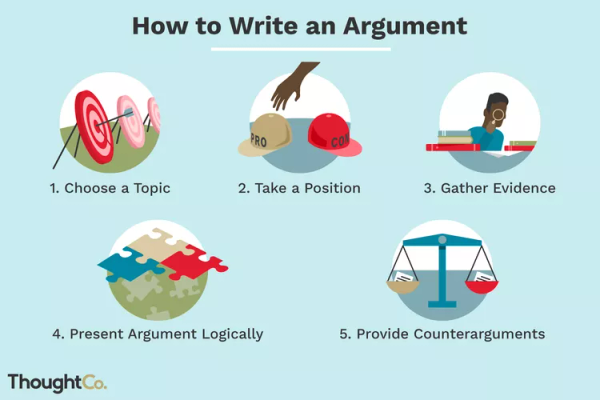
Argumentative Essay Help with Empowerly
We hope this article helps you get started with your argumentative essay, but it is just the tip of the iceberg! For more personalized guidance, reach out to Empowerly. Our essay experts can guide you through every step of the process, from brainstorming your argumentative essay to polishing the final draft. You'll never have to worry about writer's block again!
However, essay coaching is just one part of Empowerly's comprehensive college counseling services. We also provide standardized test prep, custom application strategies, and academic and extracurricular planning. Our personalized approach to college applications has been proven to work, with 98% of our students getting accepted to Ivy League and top 25 schools. Book your FREE consultation today.
ADDITIONAL RESOURCES
Looking for help navigating the college application process? Start with our comprehensive guide, College Application Help: 15 Tips to Help You Succeed.
Are you curious about the nuances of college admissions decisions? Our article, What's the Difference Between Deferred vs Waitlisted?, provides clarity on these common outcomes and what they mean for your future.
Finally, if you're considering independent college counseling, read 10 Tips for Finding an Independent College Counselor to learn how the right counselor can help you achieve your college goals.