Applications
Brown University vs. Dartmouth College: Complete Comparison

When it comes to college rivalries, Brown and Dartmouth share Ivy League prestige and centuries of history. Yet despite the many years entrenched in close competition, the rivalry remains friendly. Why? Because both schools attract top caliber students whose aim is mutual excellence; students who take learning seriously but also want a real life outside the classroom or stadium.
So, when it comes to choosing a college, which one is a better match for you? Let's learn more about Brown vs. Dartmouth to find your best-fit in this guide.
History and basics
In terms of providing an excellent education, both Brown and Dartmouth have excelled over their lengthy tenures. Let's review the fast facts about each of the contenders.
About Brown University
“The University” is known for its unique open-ended curriculum.
- Founded: 1764
- Type: Private research university
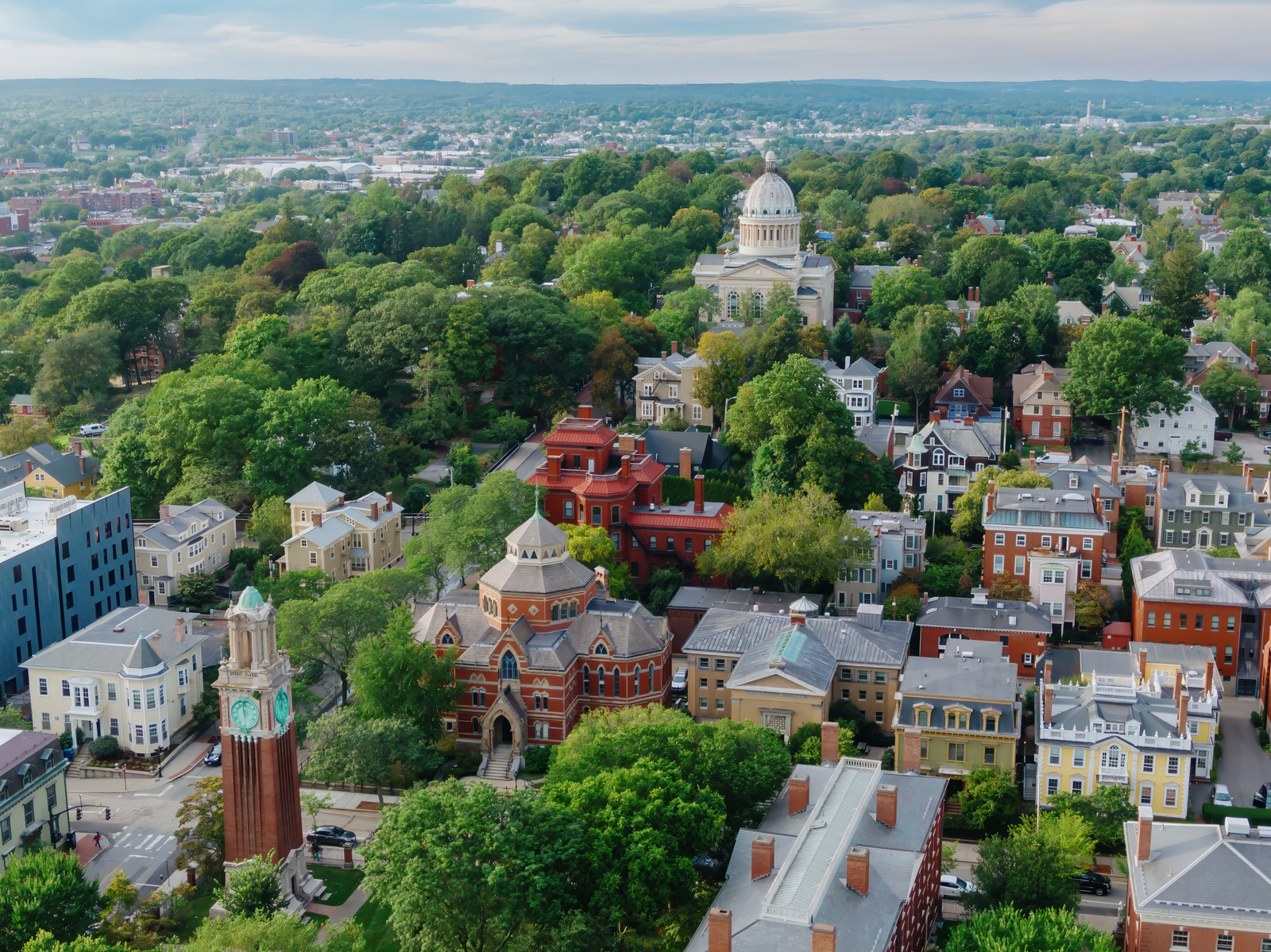
- Setting: Providence, Rhode Island, in an active small city environment
- Campus size: 143 acres on College Hill
- Student body: 7,272 undergraduates, 11,005 total students
View the campus in a short virtual tour video here:
About Dartmouth College
“The College” is known for the quintessential New England college experience.
- Founded: 1769
- Type: Private Ivy League institution with strong undergraduate focus plus graduate schools
- Setting: Hanover, New Hampshire, classic college town with a rural feel
- Campus size: 269-acre main campus, plus extensive regional land holdings
- Student body: 4,570 undergraduates, 6,938 total students
See the campus for yourself in a digital tour here:
Prestige and rankings
Prestige and rankings shouldn't matter that much in your overall decision-making process. But for what it's worth, both schools sit tied for the same spot in the 2026 national conversation.
- Brown: tied for No. 13 (National Universities) in the U.S. News & World Report 2026 Best Colleges
- Dartmouth: tied for No. 13 (National Universities) in the U.S. News & World Report 2026 Best Colleges
Here's an interesting wrinkle: in past cycles these two have traded spots, but for 2026 they're functionally equivalent in the eyes of U.S. News. Translation? Don't let rankings be the deciding factor. The fit, culture, and curriculum differences matter far more than a single rung on a list that often shifts year over year.
Quick fit signal
Looking for a vibe check?
Brown leans city-adjacent, artsy, flexible, and self-directed. Who thrives at Brown?
- Self-directed learners who enjoy designing their own path.
- Students mixing STEM, arts, and humanities.
- People energized by city life and flexible social structures.
Dartmouth leans residential, outdoorsy, tradition-forward, and tightly knit. Who thrives at Dartmouth?
- Students who value community rhythm and shared traditions.
- People who like academic structure with flexibility.
- Outdoors-oriented students who want strong alumni loyalty.
Admissions and acceptance rates
Looking at the numbers, it's no surprise that both Brown and Dartmouth remain in the “hyper-competitive” zone when it comes to selecting the incoming class. So let's take a closer look at the admissions and acceptance rates.
Brown acceptance rate (Class of 2029)
- 42,765 applications
- 2,418 admitted
- 5.65% acceptance rate
Brown admissions also highlights a competitive Brown/RISD Dual Degree pathway, with 748 applicants and 15 enrolled in the cited cycle.
To read more about trends in the Brown admissions rate, check out our write-up for the 2025 and 2024 cycles.
Dartmouth acceptance rate (Class of 2029)
- 28,230 applicants
- 1,702 admitted
- 6% admission rate
To read more about the recent Dartmouth admissions rates, check out this report on the 2024 cycle.
What selectivity means for your strategy
You absolutely need to take time to put the best possible application together. It won't happen in a matter of hours before the deadline.
- Aim for academic excellence plus a clear personal arc.
- Treat both as “reach” options for almost everyone.
- Use a balanced list with targets and safeties, even with top grades.
Even among the other big fish of the Ivy League pool, both Brown and Dartmouth are no cakewalk.
Early Decision vs. Regular Decision: a strategic note
Now, here's something most applicants overlook: both Brown and Dartmouth offer binding Early Decision, and the acceptance rates for ED applicants run noticeably higher than RD. For the Class of 2029, Brown's ED admit rate hovered around 13-14% (roughly 2.5x the regular cycle), while Dartmouth's ED admit rate ran approximately 17-18% (close to 3x the regular cycle).
But here's the catch — ED is binding, meaning if you're admitted, you're committing to attend and withdraw your other applications. That makes ED a fantastic tool only when you've truly identified your top-choice school after deep research, campus visits, and self-reflection. Don't apply ED just to game the numbers; admissions readers can tell when an ED essay lacks genuine fit.
If you're confident Brown or Dartmouth is your clear first choice, applying ED can meaningfully shift the odds in your favor. If you're still deciding between them — or between either of them and another reach school — you're better off applying Regular Decision and keeping your options open.
Academics comparison
Both schools offer elite liberal arts plus strong STEM. What makes them different?
Open Curriculum at Brown
Brown's signature feature is the Open Curriculum. Brown describes an approach built on student choice and academic exploration, including fewer core distribution requirements than peers.
What students tend to love:
- Freedom to shape an interdisciplinary path.
- Space for double concentrations, creative combinations, and academic pivots.
- Classroom culture with high discussion energy and strong student voice.
What students need to handle:
- More responsibility for planning.
- More self-advocacy when choosing rigor and sequencing.
- Less external structure for students who want a prescribed path.
D-Plan at Dartmouth
Dartmouth's D-Plan sets the student experience apart through a flexible year-round calendar with terms across the year and options for off-campus plans. Dartmouth describes the D-Plan structure and its role in shaping study, research, and internship timing.
What students tend to love:
- Built-in flexibility for internships, global study, and research.
- Clear rhythm for focus periods and off terms.
- Strong alignment with outdoor seasons and campus traditions.
What students need to handle:
- Faster pacing during terms.
- More planning for off-term housing, work, or travel.
- Less “everyone together, same schedule” feeling compared with a standard two-semester model.
Strengths and campus learning culture
Brown's freedom rewards initiative but punishes passivity. Dartmouth's structure supports momentum but can feel limited to students who dislike shared pacing. Both have real tradeoffs.
Brown often draws students toward…
- Interdisciplinary work blending CS, design, public policy, and the humanities.
- Research pathways tied to a large research university ecosystem.
- Creative communities in writing, music, theater, and visual arts, supported by a city arts scene.
Dartmouth often draws students toward…
- Undergraduate-centered teaching with small-school intensity inside an Ivy brand.
- Strong pipelines into finance and consulting, plus strong STEM and health pathways.
- Field-based learning, outdoor leadership, and tight faculty access.
Class size and faculty access
Want to know the practical reality of these academic philosophies? Class sizes tell the story.
Dartmouth maintains a 7:1 student-to-faculty ratio, with the majority of undergraduate classes enrolling fewer than 20 students. Picture this: most students will know their professors personally by name, attend faculty office hours regularly, and many will collaborate on research starting as early as freshman year. The teaching-first culture is real — even at the senior faculty level, instructors lead introductory courses rather than handing them off to graduate students.
Brown runs a 6:1 student-to-faculty ratio, but classroom size depends heavily on the department. Introductory courses in popular concentrations (computer science, economics, biology) can reach 200+ students in lecture format, though they almost always pair with smaller discussion sections. Upper-level seminars routinely cap at 15-20. The R1 research environment means many professors balance teaching with active research labs, which translates to strong undergrad research opportunities — but you may need to seek them out rather than have them come to you.
The bottom line? If guaranteed small classes and faculty intimacy matter most, Dartmouth has the edge. If you'd rather trade some intimacy in intro courses for the depth of a major research university, Brown delivers.

The student verdict: vibe and social scene
Families often search “Brown vs Dartmouth reddit” because the vibe feels hard to measure from brochures. So what's the deal?
Brown social life themes
- Greek life exists but functions differently, with non-residential structures described by Brown Residential Life.
- Social life often spreads across student groups, arts spaces, cafes, and the Providence scene.
- Students often describe a more individualistic “build your own circle” culture.
Dartmouth social life themes
- Greek life plays a large role. Dartmouth admissions content reports roughly 60% student Greek affiliation.
- A residential campus pushes social life inward, with tight friend groups and recurring traditions.
- Outdoors culture shows up weekly: skiing, hiking, and cold-weather grit.
Sports and spirit
Both schools compete in Ivy athletics and carry pride, with different flavors.
- Brown: Ivy athletics plus strong student organization life, with a city-adjacent identity. Traditions with a creative twist, including iconic campus symbols like the Van Wickle Gates lore.
- Dartmouth: Strong school identity around “Big Green,” traditions, and outdoors. Many social events orbit campus and residential life.
Location lifestyle: Providence vs. Hanover
Now, here's the kicker: where you live for four years shapes daily life as much as what you study. And these two cities couldn't be more different.
Providence (Brown). A real city with roughly 190,000 residents, Providence offers a genuine urban experience without the overwhelming scale of Boston or New York. Within a 10-minute walk of campus, you'll find restaurants representing dozens of cuisines, independent bookstores, music venues, art galleries, and the Providence WaterFire installation that draws thousands during summer events. Boston is just an hour by train (regular MBTA Commuter Rail service connects the two), and New York City sits a 3-hour Amtrak ride away. Internships in finance, biotech, design, and the arts are accessible during the school year — not just summer break.
Hanover (Dartmouth). A genuine New England college town of about 11,000 residents, Hanover delivers something Providence cannot: total immersion in campus culture. The town essentially exists for the College. There's a main street with a few restaurants, a movie theater, an excellent independent bookstore, and the Hopkins Center for the Arts, but social life largely centers on campus. The trade-off comes in extraordinary access to the outdoors — the Appalachian Trail crosses through, ski mountains are 30-45 minutes away, and the Connecticut River is right at the edge of campus. For students who want fewer urban distractions, this is a feature, not a bug.
The honest truth? If you crave city energy and want regular access to professional, cultural, and social variety beyond your university, Brown's setting fits better. If you want a self-contained college experience where the school IS your social world for four years, Dartmouth's setting becomes a major asset.
Outcomes: careers, salaries, and alumni paths
Outcomes follow student goals and campus pipelines.
Brown outcomes
Brown reports high rates of employment or graduate and professional school placement for recent graduates. In fact, Brown University's 2023 Career Outcomes Report for the Class of 2022 shows that 97% of graduates were employed, attending graduate/professional school, or engaged in full-time service/fellowships within six months of graduation.
One major reason? It's an academic launching pad. Brown's R1 research university scale often supports pathways into graduate study, research labs, public service, and creative industries. Top fields for Brown graduates continuing their education include medicine, law, and various PhD programs.
Dartmouth outcomes
Dartmouth's career outcomes materials report strong placement across finance, consulting, tech, and related fields, with compensation figures reported in class outcome releases. According to the Dartmouth College 2023 Career Outcomes Report for the Class of 2022, the median starting salary was $90,000, and the median signing bonus was $15,000.
Another strength is their student bond. The Dartmouth College Center for Career Design highlights a strong alumni network, with over 80,000 active alumni globally. Alumni support is often cited as a key factor in networking and securing roles, particularly in competitive fields like finance and consulting.
Cost of attendance and financial aid
Here's the honest deal about cost: both schools carry sticker prices that look terrifying on paper, but most families pay far less than the published figure thanks to robust need-based aid.
Brown's cost of attendance for 2025–2026: approximately $97,284 (tuition $71,700, plus housing, meals, fees, and personal expenses). The Brown Promise initiative eliminates packaged loans from all undergraduate financial aid awards, replacing them with grants. Brown meets 100% of demonstrated financial need, and the average financial aid recipient pays a net price of around $26,776 per year.
Dartmouth's cost of attendance for 2025–2026: approximately $95,490 (tuition $69,207, plus housing, meals, fees, and personal expenses). Dartmouth also meets 100% of demonstrated financial need, and families earning under $125,000 with typical assets generally qualify for zero parent contribution and no required loans. The average aid recipient pays a net price of around $20,322 per year — making Dartmouth one of the most generous packages in the Ivy League for middle-income families.
The bottom line? If your family's income falls below roughly $200,000, you may qualify for substantial aid at both schools — and at the lower end of that range, you may pay essentially nothing. Run the Brown Net Price Calculator and the Dartmouth Net Price Calculator before making any cost-based decisions. The sticker price almost never reflects what you'll actually pay.

Questions to help you decide between Brown vs. Dartmouth
Use these prompts as a decision checklist.
1) Structure vs freedom
- Do you want a school-built framework for pacing and terms, or do you want maximum freedom to design an academic path?
2) Social center of gravity
- Do you want a residential community where most social life happens on campus, or a campus where social life spreads into a city?
3) Weather and daily energy
- Does winter motivate you, or drain you?
- Do you want a walkable city routine, or a rural campus routine?
4) Career pipeline fit
- Do you want a campus where finance and consulting recruiting feels central, or a campus where creative, research, and interdisciplinary pathways feel central?
5) How you build belonging
- Do you thrive when a community feels small and tightly connected?
- Do you thrive when community comes from chosen clubs, projects, and scenes?
Common misconceptions about Brown and Dartmouth
Want to know what trips up most applicants? They make decisions based on outdated impressions or surface-level stereotypes. Let's clear up the most common ones:
“Brown's Open Curriculum means you can avoid hard classes.” Not really. While Brown doesn't impose distribution requirements, every concentration (Brown's word for major) has its own rigorous required sequence. A computer science concentrator at Brown takes essentially the same demanding CS coursework as a CS major elsewhere — they just have more freedom in non-major electives. The Open Curriculum is about flexibility, not avoidance.
“Dartmouth is just for finance and frat bros.” That stereotype is decades out of date. While Dartmouth does have strong finance recruiting and an active Greek system, the actual student body increasingly skews toward engineering (Thayer School), computer science, environmental studies, and global health. Female enrollment is now over 50%, and Greek life — while still significant — looks very different from the Animal House caricature. Roughly 40% of students are unaffiliated, and many social spaces operate independently of the Greek system.
“Brown is the easy Ivy.” Brown is not academically easier than its peers. The grading culture is sometimes more flexible (an S/NC option for some courses, no calculated GPA on transcripts in some cases), but the actual coursework rigor matches Yale, Princeton, and other Ivies. Confusing flexibility with leniency is a serious miscalculation.
“Dartmouth is isolated and you'll be miserable in winter.” Hanover is rural, but it's not remote. Boston is a 2.5-hour drive, and many students take weekend trips. As for winter — yes, it's cold and snowy, but the campus is built for it. Most students embrace the winter culture (skiing, ice skating on Occom Pond, Winter Carnival traditions). If you genuinely hate cold weather, Dartmouth probably isn't your best fit. If you're neutral or curious about winter sports, you'll likely find it energizing rather than draining.
“The schools are basically interchangeable because they're both Ivy League.” This is the biggest misconception of all. As we've covered throughout this guide, Brown and Dartmouth differ in curriculum philosophy, social structure, location, career pipelines, and student culture. Choosing between them based on “which Ivy is harder to get into” misses the entire point.
What current students wish they had known
Picture this: you're now a sophomore at one of these schools, looking back at your application year. What do current students say they wish they'd understood earlier?
From Brown students: “The freedom is amazing, but it's also a lot of responsibility. Plan your concentration requirements early, otherwise you can find yourself scrambling junior year.” Many also mention that Providence is more of an asset than they expected — the food scene, the arts community, the proximity to other colleges (RISD literally borders Brown's campus) all add to daily life beyond what brochures convey.
From Dartmouth students: “The D-Plan changes everything. I had a sophomore summer term on campus that turned into one of the best terms of my life. But you also need to plan housing carefully for off-terms — it's not always easy to find affordable housing for a 10-week internship in a major city.” Many also mention how integrated the Greek and non-Greek social scenes are, and how outdoor life surprised them either positively or negatively.
The takeaway? Talk to current students before deciding. Both schools have student ambassadors, virtual panels, and social media communities where applicants can ask honest questions. Use those resources before committing.
Choose the school that matches your life
Choosing the right college is more about finding a “best fit” for who you are, rather than just picking the most famous school. To find that fit, you should start by thinking about your own priorities — like your intended major, how far you want to be from home, and what kind of social “vibe” makes you feel comfortable.
Start with facts, then shift to lived experience. Tour in person if possible. If travel is out of your reach, schedule virtual visits, attend student panels, and ask direct questions about advising, housing, internships, and social life.
If you want a guided approach, consider Empowerly. Our unique Brown and Dartmouth resources, plus broader Ivy League strategy guidance, offer a structured way to align academics, activities, and essays with each school's priorities. To learn more about our programs, book a free consultation on our website and we'll walk you through the process and answer any questions you have.