Choosing a School
Dartmouth Acceptance Rate: How Hard is it to Get In?
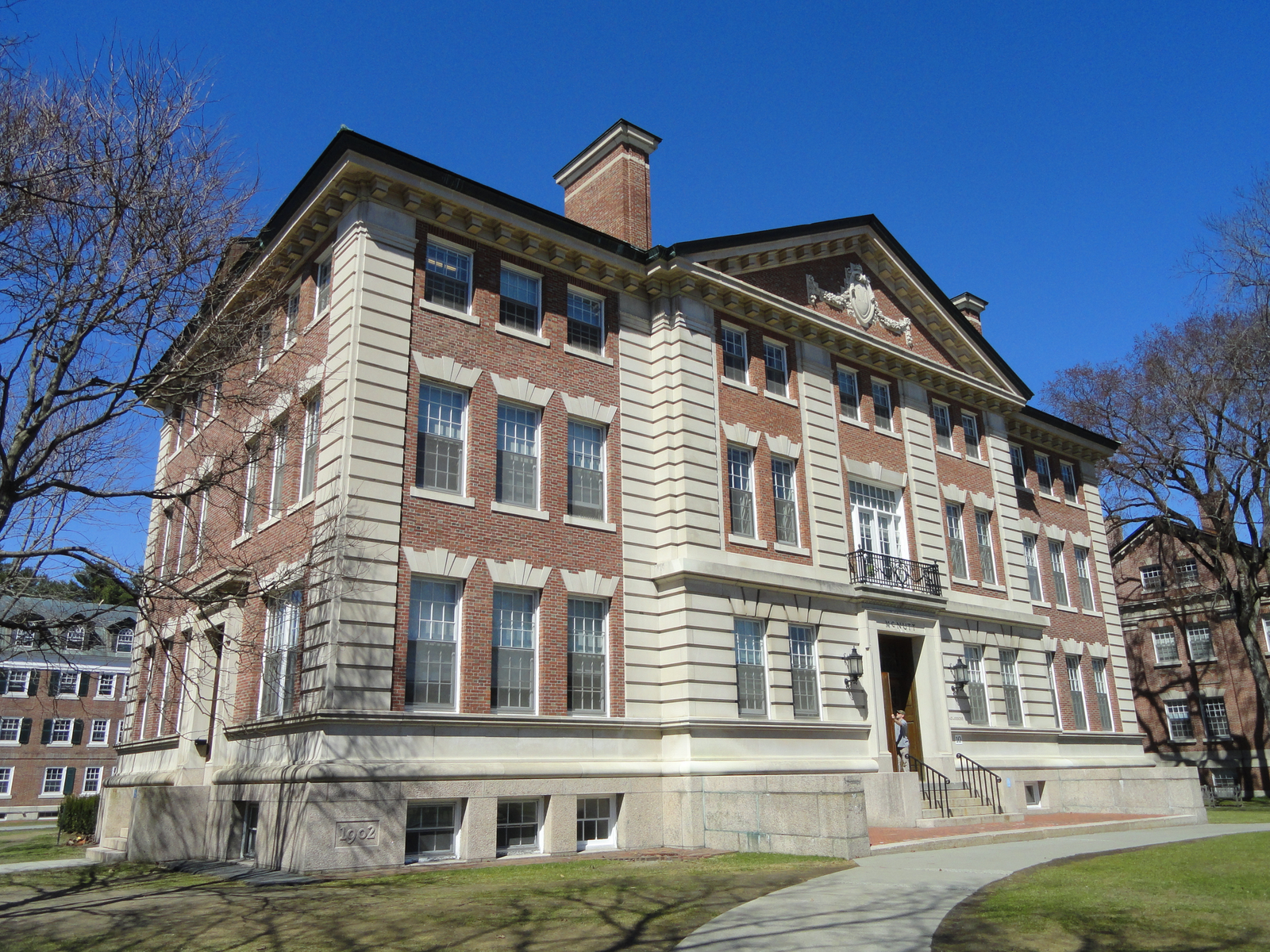
Dartmouth College, located in Hanover, New Hampshire, is a beacon of thought leadership, excellence, and tradition. It provides students with an incredible environment to learn, grow, and excel in their fields. As one of the oldest universities in the country, Dartmouth paves the way for students to learn from top faculty and resources and carry on the legacy of academic and professional excellence spanning from the late 1700s. As one of the Ivy League institutions, Dartmouth College is a top choice for students to apply globally, but what does it take to get in? Today, we will explore the newly released Dartmouth acceptance rate for the Class of 2028 and provide you with information that can help you determine whether Dartmouth is the right fit for you!
Breaking Down the Dartmouth Acceptance Rate – Class of 2030
Dartmouth released its Class of 2030 admissions data on March 26, 2026 (Ivy Day). Here's the latest:
Total applicants – 28,863
Acceptance rate for Class of 2030 – 5.8%
Total admitted – 1,687 students
Expected to enroll – 1,175 students (Fall 2026)
With the college admissions landscape becoming increasingly more competitive, acceptance rates have dropped to all-time lows (and Dartmouth is no exception!). For the Class of 2030, Dartmouth accepted just 5.8% of students — slightly down from the 6.03% admit rate for the Class of 2029. According to Dartmouth College, only 1,687 students were provided admission to the university out of the 28,863 applications received from this admissions season — the second-largest applicant pool in Dartmouth's history.
This marks the sixth consecutive year in which Dartmouth's selectivity has been at 6% or less. Applications have surged 35% over the past six application cycles, cementing Dartmouth's place among the most competitive universities in the world.
Here's a quick look at how Dartmouth's admit rates have trended over recent cycles:
- Class of 2030: 5.8% (1,687 admits / 28,863 applications)
- Class of 2028: 5.40% (1,710 admits / 31,656 applications) — record-low at the time
- Class of 2029: 6.03% (1,702 admits / 28,230 applications)
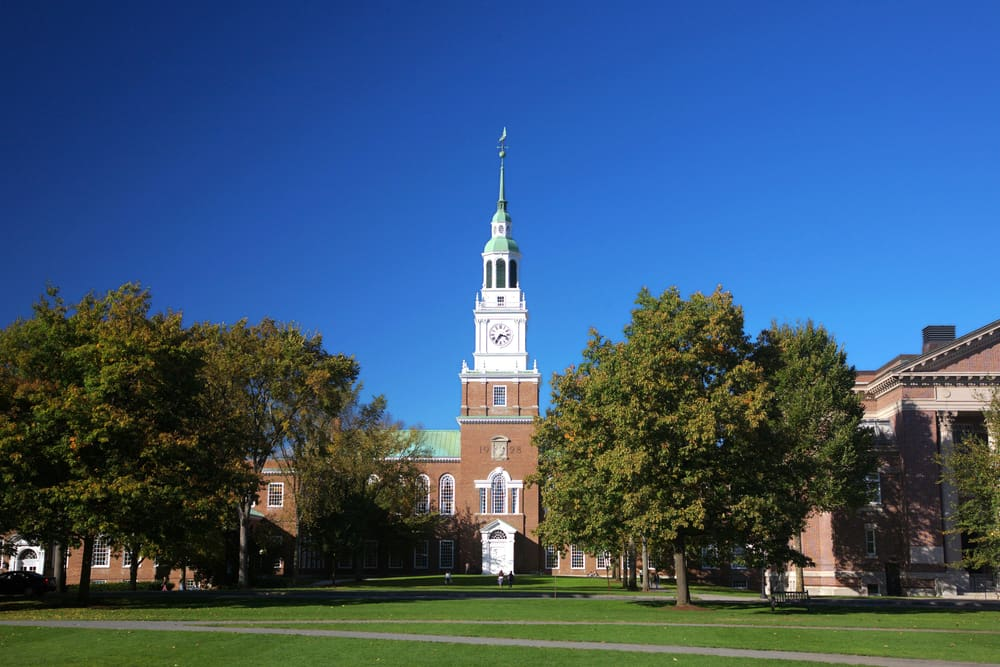
Many students accepted to Dartmouth will benefit from the institution's new middle-income affordability initiative. Dartmouth has raised the threshold for free tuition to families earning less than $175,000 per year with typical assets — a significant increase from the previous $125,000 threshold. Additionally, the university notes that "together with the existing low-income threshold for a parent contribution of zero, … an estimated 19.3% of the admitted class of 2028 qualify to attend Dartmouth College without financial assistance from their parents."
An estimated 27% of admitted Class of 2030 students qualify for free tuition based on family income, with an additional 21% expected to receive a Pell Grant.
Heads up: applications for the Class of 2030 were received from all 50 states, Washington, D.C., Puerto Rico, and 59 countries worldwide. Worth noting: 93 students in the Class of 2030 were admitted through QuestBridge, the national access organization supporting high-achieving students from low-income backgrounds — up from 75 students in the Class of 2028. Other key demographics:
- First-generation college students: 15%
- Legacy students: 11%
- U.S. citizens and permanent residents of color: 41%
What Can Acceptance Rates Tell Us?
When applying to any university, acceptance rates can tell a lot about the university and what you can expect when gaining admission. For instance, many of the top universities have extremely low percentages of admitted students, meaning the students they are looking for are among the top thinkers in the world. The Dartmouth acceptance rate provides us with a deeper look into the true caliber of excellence the university upholds within the students who attend. Dartmouth College accepts students who have showcased the highest level of academic, extracurricular, and personal achievement and of the type of academic it expects students to strive to become.
Additionally, students who are accepted also fit the profile of what a university is looking for at a comprehensive level, including being a student who will enhance the university's community, contribute to new ideas and new perspectives, and uphold the university's values at all levels. According to Dartmouth, "Every student we admit brings something unique to the community: a combination of qualities, experiences, and point-of-view that isn't duplicated by any other student. Our holistic selection process is grounded in the concept that the whole is more than merely the sum of its parts." Students looking to attend should learn how to incorporate these principles into their student profiles, taking on academic and extracurricular roles and experiences during high school that show universities like Dartmouth why they will be a helpful addition to the institution's community.
93% of admitted Class of 2030 students submitted standardized test scores placing them in the top 25% of test-takers at their high schools. Dartmouth reinstated mandatory SAT or ACT scores in February 2024 (effective for the Class of 2029 onward) — making the Class of 2030 the second admissions cycle under the restored testing requirement. Heads up: this means if you're applying to Dartmouth, you must submit either SAT or ACT scores. There is no test-optional pathway at Dartmouth for 2026-2027 applicants.
Is Dartmouth College a Good Fit For You?
Choosing the right university is an important decision that can help shape your future and set you up for your professional, academic, and personal life likely for years to come. But how do you know if Dartmouth is the right fit for you? There are several things to consider when adding Dartmouth to your college list, including but not limited to:
Academic Fit
Dartmouth College is a leading institution for academic and intellectual excellence. However, students should expect higher academic rigor, which they will need to adjust to succeed at this university. Dartmouth follows the quarter system, which comprises four academic quarters of 10 weeks each year. This means that courses move quickly, and students must be up for the challenge. Nonetheless, there are many benefits to this academic system, including the ability to take more courses than in a semester system. As a result, students can include different classes to enhance their experience, such as courses related to their interests or areas they would like to explore outside of their major. However, this entails the need for students to develop strong time management skills to keep up with their course load and to maintain a robust academic plan as they progress through their degree.
Dartmouth's 6:1 student-to-faculty ratio is among the lowest in the Ivy League, meaning students get significant face time with world-class professors. Big news for 2026: the average admitted Class of 2030 student ranks in the top 10% of their high school graduating class, with over 25% projected to be valedictorians or salutatorians.
Campus Culture & Location
Another critical aspect of choosing a university is determining whether the campus culture fits you. As one of the oldest institutions in the United States, Dartmouth's commitment to blending tradition and new innovation makes it a desirable place for students to learn and grow academically and personally. Students attending Dartmouth can enjoy a variety of student activities and groups, academic clubs, athletics, Greek Life, and much more, and create a robust experience in which they can grow and thrive. Additionally, students living on and around campus can enjoy beautiful nature, classic architecture, and a community that will support them throughout their academic and personal pursuits.
Additionally, Dartmouth's location in New Hampshire allows students to enjoy a beautiful suburban campus with mild springs and summers, colorful falls, and snowy winters. Students attending enjoy hiking, skiing, camping, rock climbing, and exploring the great outdoors while still feeling connected to their university's culture. It's important to consider whether attending a university within this environment is where you see yourself thriving and whether the rural setting aligns with your lifestyle preferences and interests outside of academics.
In their "Why Dartmouth?" essays for the Class of 2030, one in three admitted students cited a desire to be part of a Dartmouth culture that values dialogue and free expression — a recurring theme in admissions decisions. Worth knowing: this suggests Dartmouth is particularly looking for students who can engage thoughtfully across viewpoints and contribute to intellectual diversity on campus.
Financial Fit
Finally, it's important to consider financial fit when deciding whether a university is right for you. Attending Dartmouth can be expensive, even with the generous financial aid packages offered to eligible students. Therefore, evaluating your family's financial situation and exploring available scholarship and financial aid options is essential to determine if attending Dartmouth is financially feasible for you. Moreover, it's important to consider the long-term return on investment in terms of career prospects and earning potential. According to Forbes, on average, Dartmouth College early career alums earn a median compensation of $105,623 per year. Still, many students take on student debt and loans they must repay in the following years, so considering the pros and cons of investing in a Dartmouth education can be crucial to choosing whether it is the right choice for you.
Dartmouth's 2026-2027 total cost of attendance is $98,946, broken down as follows:
- Tuition: $71,697
- Fees: $2,426
- Housing: $13,032
- Meals: $8,746
- Books, supplies, miscellaneous: $3,046
Despite the high sticker price, Dartmouth's expanded financial aid policies mean many families pay significantly less:
- Families earning under $175,000: Free tuition (with typical assets)
- Families earning under $125,000: Zero parent contribution with no loans
- Class of 2030 scholarship offered: $53.2 million in need-based aid (record-high)
- Average grant awarded: $74,000+ (covering 77.5% of total cost of attendance)
The bottom line? Dartmouth's sticker price is high, but for most families, the net cost is dramatically lower than it appears. Always run Dartmouth's Net Price Calculator before assuming the school is unaffordable.
Dartmouth ED vs RD: The Strategic Advantage
Now, here's something most Dartmouth acceptance rate articles skip over — the enormous advantage of applying Early Decision. Let's break it down.
The ED Acceptance Rate Advantage
Worth knowing: while Dartmouth doesn't publicly release Class of 2030 Early Decision data, historical patterns are clear. Across recent classes, Dartmouth's Early Decision acceptance rates have run roughly 4-5x higher than Regular Decision rates:
- Class of 2026 ED: 21.27% (vs RD ~4.86%)
- Class of 2027 ED: 19.94% (vs RD ~4.63%)
- Class of 2028 ED: 19.18% (vs RD ~3.66%)
- Class of 2029 and 2030 ED: Estimated 18-22% range (Dartmouth has stopped publishing ED-specific data)
Big news for 2026: Dartmouth has joined a growing trend among elite schools to withhold mid-cycle ED statistics. Dean Kathryn Bezella explained that releasing ED data may discourage talented Regular Decision applicants — a deliberate move tied to President Sian Leah Beilock's emphasis on student wellness.
When ED Makes Sense (and When It Doesn't)
Heads up: Early Decision is binding — if admitted, you must enroll at Dartmouth and withdraw all other applications. Worth knowing: ED is the right choice if:
- Dartmouth is unquestionably your top choice (no other school would tempt you away)
- Your family doesn't need to compare financial aid offers before deciding
- Your application is at its strongest by November 1 (ED deadline)
- You have strong test scores already taken (Dartmouth is test-required)
ED may NOT be right if:
- You need to compare merit scholarships from multiple schools
- You're still strengthening your application (improving scores or grades)
- Your family's financial situation is uncertain
- You're not 100% sure about Dartmouth's quarter system or rural location
The takeaway? If Dartmouth is genuinely your top choice and you can afford it, applying ED could meaningfully increase your odds. The 18-22% ED rate is dramatically more favorable than the 4-5% RD rate.
Dartmouth's Financial Aid in 2026: The Full Picture
Here's the kicker — Dartmouth has invested heavily in financial accessibility over the past two years. Let's walk through what this actually means for prospective students and families.
The $175K Free Tuition Policy
Big news for 2026: Dartmouth raised its free tuition threshold from $125,000 to $175,000 per year for families with typical assets. This puts Dartmouth among the most generous Ivies for middle-class families — alongside Yale's $200,000 free tuition threshold and Harvard's $200,000 fully-funded threshold.
The $53.2M Scholarship Pool
Worth knowing: Dartmouth offered a record-high $53.2 million in need-based scholarships to the Class of 2030, up from $52.6 million for the Class of 2029. The average scholarship is projected at over $74,000, covering 77.5% of the total cost of attendance.
Zero Parent Contribution at $125K
Heads up: families earning less than $125,000 per year with typical assets receive Dartmouth's "Zero Parent Contribution" package — meaning no expected family contribution and no loans required to fund the education.
QuestBridge Partnership
Worth noting: Dartmouth admitted 93 students through QuestBridge for the Class of 2030 (up from 75 for the Class of 2028). QuestBridge is the leading national access program connecting high-achieving, low-income students with full-tuition scholarships at top universities.
The bottom line? Dartmouth's sticker price ($98,946) is intimidating, but the institution's commitment to financial accessibility makes it dramatically more affordable than it appears. For middle and lower-income families, Dartmouth can actually be one of the most affordable options on a college list.
Understanding the D-Plan and Quarter System
Big news: one of Dartmouth's most distinctive features is its D-Plan — a flexible academic calendar that sets it apart from every other Ivy League school. Here's why this matters for prospective students.
What is the D-Plan?
Worth knowing: Dartmouth operates on a quarter system (four 10-week terms per year) rather than the traditional semester system used by other Ivies. The D-Plan allows students to customize their academic calendar by choosing which terms to attend on-campus and which to take off for:
- Study abroad at one of Dartmouth's many international programs
- Off-campus learning with the Tuck Bridge Program, internships, or research
- Personal time for family, travel, or independent projects
The Sophomore Summer Requirement
Heads up: Dartmouth requires all students to be on campus during the Sophomore Summer term — a defining feature of the Dartmouth experience that builds class unity and provides access to smaller class sizes and unique programming.
Why D-Plan Flexibility Matters
Worth noting: the D-Plan enables academic and career opportunities that wouldn't fit a traditional semester schedule:
- Multiple internships during the school year (taking off-terms strategically)
- Year-round research opportunities with faculty
- More course flexibility — students can fit in 3 courses per term, totaling 35 courses by graduation
- Strategic gap terms without falling behind peers
The takeaway? The D-Plan is a major reason students choose Dartmouth. It's also worth highlighting in your "Why Dartmouth?" essay — admissions readers want to see that you understand and would take advantage of this unique structure.
What Current Dartmouth Students Actually Say
Let's hear from people who would know best — current Dartmouth students and recent applicants. Here's a synthesis of recurring themes from 2025-2026 reviews on Reddit, College Confidential, and Niche:
- "The 'Why Dartmouth?' essay needs to show real understanding of the D-Plan and quarter system." Most-cited essay advice from admitted students
- "The Hanover community really is as close-knit as advertised — sometimes too much so." Recurring theme about the rural, intimate campus
- "Apply ED if Dartmouth is truly your top choice — the odds are dramatically better." Universal advice
- "Don't underestimate the test-required policy." Strong testing scores aren't optional anymore
- "The financial aid actually delivers — I came expecting to pay way more." Common sentiment among middle-income admitted students
- "The winter is no joke — visit before committing if you can." Practical climate consideration
- "Greek life is more central here than at other Ivies." Important culture fit consideration
- "Faculty access is real — professors actually know your name." A defining Dartmouth feature
- "Dialogue across viewpoints is genuinely valued." Cultural theme that admissions emphasizes
- "Sophomore Summer changed my entire Dartmouth experience." Recurring positive memory
The consistent thread? Students universally describe Dartmouth as a tight-knit intellectual community that rewards genuine engagement — both in admissions and after enrollment. The recurring advice: demonstrate authentic understanding of what makes Dartmouth unique (D-Plan, Hanover community, dialogue culture) rather than treating it as just another Ivy.
______________
Many students dream of attending Dartmouth College, but to be successful applicants, they must gain an edge in the admissions process. But how? That's where Empowerly can help! Don't let the low Dartmouth acceptance rate discourage you.
How Empowerly Can Help You Get Into Dartmouth University
Empowerly is a team of admissions counselors and former admissions officers who are dedicated to helping students find their edge in the admissions process. Our team has a range of tools and resources to help you showcase your unique strengths and turn them into a compelling application that will impress admissions officers. Applying to Ivy League institutions like Dartmouth is a challenging process, but Empowerly is here to help you feel more confident and prepared. With our guidance and support, you can make the most of your hard work and achieve your college admission goals!