Grade Levels
How to Get Into Loyola Marymount University

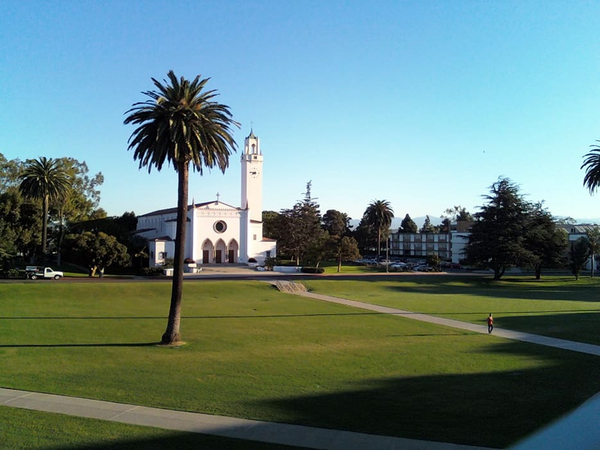
Loyola Marymount University is one of the most prestigious Jesuit universities in the United States and the oldest Catholic university west of the Mississippi River. Founded in 1911, LMU has a long history. This private university rests on 150 acres of beautiful land in Los Angeles, California — perched on the Westchester bluffs with stunning views of the Pacific Ocean and the city skyline.
Today, the school provides valuable opportunities for students to reach an expansive array of career goals. The university offers:
- 58 minor programs
- 1 education doctorate
- 46 master’s degree programs
- 1 doctorate in juridical science
- 55+ undergraduate major programs
- 14 credential programs
- 1 juris doctorate (LMU Loyola Law School)
One of the Jesuit tradition’s original foundations is something LMU excels at—service to others. There are ten service organizations at Loyola Marymount University and the Center for Service and Action. The students at this dedicated university contribute almost a quarter million hours of donated time each year to various community-based organizations. Not only that, taking religious-centered courses is a requirement for graduation.
With approximately 10,179 total students (about 7,336 undergraduates and 2,843 graduate students), Loyola Marymount University has a student-to-faculty ratio of 11 to 1, with 150+ registered student clubs and organizations on campus. Seven schools and colleges make up the university, and the average undergraduate class size is 20 students.
Here's the thing — a lot has shifted at LMU since this guide was first published. The acceptance rate has dropped from 51% to ~45%, the SAT range has shifted (now 1260-1430), and tuition for 2025-26 has climbed to $65,367. Plus, LMU's School of Film and Television continues to be ranked among the top film schools in the country (#5 by Hollywood Reporter). We've fully refreshed this guide with the latest May 2026 information.
If you’re hoping to spend your college years as a student at LMU, it’s essential that you understand what kinds of students the school seeks, what the profiles of accepted students look like, and how you stack up against your peers who will also be applying for admission to LMU.
The Loyola Marymount Acceptance Rate: Is It Hard to Get into LMU?
Loyola Marymount is a fairly competitive college. In order to succeed, you will need to ensure your grades are high, your service to others is exceptional, and your extracurriculars present a well-rounded profile.
- Overall acceptance rate (most recent cycle): approximately 45%
- Total applications received: approximately 23,000+
- Students admitted: approximately 10,400
- Early Decision/Early Action acceptance rate: approximately 55.2% — significantly higher than Regular Decision
- Yield rate: approximately 15%
This is a significant shift from earlier years — the LMU acceptance rate sat at 51% just a few cycles ago. Big news for 2026: while applications have leveled off slightly, LMU's selectivity has tightened as the university continues to attract stronger applicants nationally. Worth knowing: applying Early Decision can substantially boost your chances, with ED admit rates running about 10 percentage points higher than the overall rate.
Your individual chances of being accepted to the school depend on your academic profile and several other factors. From grades to extracurriculars to test scores and volunteer work, you need to have everything in order to get into LMU!
The LMU Acceptance Rate: Class Rank, GPA, and Test Scores
Academics are crucial to determining your chances of acceptance at LMU. Applicants with a history of excellence in the classroom exemplify part of the Jesuit ideal of service. Of course, other parts of that service should be evident in additional areas to create a stand-out application for admissions.
GPA
HHigh school students who applied and were accepted to Loyola Marymount University had an average cumulative GPA of approximately 3.97. About 36% of admitted students graduate with a perfect 4.0 GPA. Heads up for 2026: the academic profile of admitted students has continued to climb each year — the average GPA is now well above 3.9, meaning a 3.85 is closer to the floor for serious consideration than a "competitive" target.
Class Rank
Not every high school participates in ranking students in each class. If yours does, Loyola Marymount will consider your rank when deciding whether to invite you to attend the school or not. While you are learning about the Loyola Marymount University acceptance rate, you should also pay attention to the average class rank of incoming freshman students.
For recent admitted classes, almost three-quarters (72%) of students graduated in the top 25% of their class. In addition, 37% of accepted students graduated in the top decile of their high school class.
SAT and ACT Test Scores
As you have browsed the internet for information about the Loyola Marymount University acceptance rate, you may have come across information about the change in testing the university has followed over the past few years. Currently, submitting your SAT and ACT scores is optional for LMU.
Worth noting: while many top schools (Harvard, MIT, Stanford, Caltech, UT Austin, UF, UGA, Georgia Tech) returned to test-required admissions for the 2025-26 cycle, LMU has remained test-optional through 2026.
Nonetheless, the test scores of those who submit are impressive:
- Middle 50% SAT range (most recent cycle): 1260–1430
- Middle 50% ACT range: 28–32
- Average admitted SAT: 1336
- Average admitted ACT: 30
LMU uses superscoring (their "Highest Section" Score Choice policy), which means they'll consider your highest section scores across multiple SAT test dates. So if you scored 700 in Reading on one test and 720 in Math on another, LMU will combine them for a 1420 superscore. Big news for applicants: this gives you flexibility to retake the SAT and only highlight your strongest sections.
Understanding the Loyola Marymount Acceptance Rate: What Is LMU Looking for in Students?
Even though Loyola Marymount is a Catholic university, that doesn’t mean it excludes students of other faiths or beliefs. The school welcomes everyone to attend as part of its mission to foster respect among all students and an appreciation of the different faiths people have.
However, if you are Catholic, you will likely be very comfortable on campus since the foundation of the school’s curriculum, programs, and classes is the Jesuit tradition.
Community Service and Volunteering
The university is interested in students who demonstrate the ideals of the Jesuit tradition, including service. Therefore, if you have a history of contributing to your school and your community and a track record of volunteering your time and effort to worthy causes, it will help you stand out to the admissions committee.
Academics and Adventure
As far as academics are concerned, LMU seeks students who are inquisitive, ambitious, and bright. The admissions committee looks for students with solid academic records and a history of high performance in numerous subjects.
The university offers numerous opportunities for internships, community-based learning experiences, and study-abroad excursions around the globe. It seeks students to participate in and grow these programs. Worth knowing: LMU sends students to nearly 90 countries each year through its study abroad programs, including signature offerings in Bonn, Germany; Rome, Italy; and Beijing, China.
High School Courses and Preparation
Although there are no stringent requirements for high school courses to get into Loyola Marymount, the school recommends that applicants complete the following courses to prepare for the rigorous academics at LMU:
- One year of academic electives
- Three years of social sciences
- Three years of a foreign language
- Three years of mathematics
- Four years of English
- Two years of laboratory science
Some of the most popular offerings that Loyola Marymount offers prospective students are the summer programs for high schoolers. If you’re considering applying for admission at LMU, you may be interested in its pre-college summer happenings.
Attending one of the summer programs can give you the opportunity to experience life at the university first-hand. You’ll come away with a more educated perspective to help you decide whether LMU is the right college for you.
Loyola Marymount Acceptance Rate: How Does LMU Rank Students?
According to LMU’s most recent Common Data Set, the school considers numerous factors when choosing applicants for its next incoming freshman class. There is one admissions factor that Loyola Marymount considers to be “very important”: your grade point average, or GPA.
The committee considers the following “important”:
- Your character
- The caliber of your personal essay
- Your skills and talent
- The rigor of your high school courses
The following criteria are “considered”:
- Test scores (SAT and ACT when required)
- Your class rank, if applicable
- Whether you are a legacy student
- Your work experience
- Whether you’re a first-generation student
- Teacher recommendations
- Your volunteer work
- Your extracurricular activities
Factors that are not considered include your residence, religion, race, or ethnicity. Loyola Marymount also does not consider any interviews or demonstrated interest. Heads up: since LMU does not track demonstrated interest, you don't need to attend information sessions, take campus tours, or contact admissions officers to "show interest" the way you would at schools like BC, BU, or Tulane. Focus your energy instead on a stellar application.
How to Improve Your Chances of Getting into LMU
Despite the competitive Loyola Marymount University acceptance rate, you can boost your chances of admission success in a few different ways.
Achieve a 1370 SAT or 31 ACT Score
Even when submitting test scores is optional, it's still important if you want to boost your chances of being accepted to LMU. Aim for an SAT of 1370+ or ACT of 31+ — these scores sit comfortably in the upper half of LMU's middle 50% range and signal academic preparedness. You can take the SAT or ACT more than once to achieve a high enough score to impress the admissions committee at LMU.
Now, here's something most guides won't tell you — at test-optional schools, submitted scores still matter when they're strong. Roughly 50-60% of LMU admitted students submit test scores, and admissions readers do consider those scores positively. If your scores are at or above the 50th percentile of LMU's admitted student range (about 1340 SAT / 30 ACT), submitting will likely strengthen your application.
Write Inspiring, Engaging Essay Answers
Essays are a common part of just about every college application. They allow applicants to relay personal things about them, helping the admissions committees get to know them as more than just test scores and GPA numbers.
This highly-ranked college offers the opportunity to respond to two optional essay questions; it’s recommended that you do so. When cultivating your answers, be careful not to just repeat statistical information found elsewhere on your application.
Instead, you might discuss something from your family life or relationship with friends. You can talk about extracurriculars and your experiences with volunteering in your community, too. Be sincere and genuine; don’t stuff your answer full of words you think will impress the admissions committee, because they won’t.
Earn a GPA of at Least 3.85
The average GPAs of students accepted to LMU rise through the years, which means it becomes more difficult to gain admission. Aim to earn at least a 3.85 GPA, but a 3.97+ is ideal. Remember that there is only one admissions factor that LMU considers to be very important: your GPA. Course rigor matters as much as raw GPA — if your school offers AP, IB, or honors courses, take them. LMU values academic challenge alongside high marks.
How to Get into Loyola Marymount University
When you're ready to apply to LMU, submit your completed application along with any supporting documentation and your application fee before the appropriate deadline. Here are the 2025-26 application deadlines:
- Early Action (non-binding): November 1
- Early Decision I (binding): November 1
- Early Decision II (binding): January 8
- Regular Decision: January 15
The application fee is $75 (with fee waivers available for income-eligible students through the Common App). LMU accepts both the Common Application and the LMU-specific application.
Top Programs at LMU: Where the University Wins
Now, here's something most college guides skip over — your major matters more than the school's overall ranking. Here's where LMU genuinely outperforms its peer institutions.
School of Film and Television (SFTV)
LMU's School of Film and Television is the flagship program of the university — and arguably one of the most underrated film schools in the country. Hollywood Reporter has consistently ranked SFTV among the top 5 film schools in the U.S., and the school has produced major working filmmakers including Brian Helgeland, Francis Lawrence (director of The Hunger Games franchise), and James Wan. The school's location near Hollywood means students can intern at major studios (Disney, Warner Bros, Sony, Netflix) during the school year — an advantage few film schools can match.
College of Business Administration (CBA)
LMU's CBA is AACSB-accredited (the gold-standard accreditation for business schools, held by less than 5% of business schools worldwide). The school is particularly strong in entrepreneurship, finance, and marketing. Big news for 2026: CBA's Hilton Center for Entrepreneurship is one of the most active student startup ecosystems in California, with regular pitch competitions and direct connections to LA's growing tech and creative industries.
Frank R. Seaver College of Science and Engineering
The Seaver College houses LMU's growing engineering programs, including biomedical engineering, mechanical engineering, electrical engineering, and computer science. The college's location in Silicon Beach (LA's growing tech corridor between Santa Monica and El Segundo) gives engineering and CS students direct access to major tech employers including Google, Microsoft, Snap Inc., and SpaceX.
Bellarmine College of Liberal Arts
LMU's largest undergraduate college houses English, History, Philosophy, Political Science, Psychology, and Theatre Arts. Theatre at LMU is particularly notable — the program ranks #1 for drama and theater arts at LMU according to College Factual, with strong industry connections in the LA theater scene.
School of Education
LMU's School of Education is one of the largest credential-granting institutions in California, producing thousands of teachers, counselors, and administrators each year. The school's Center for Equity for English Learners is a national leader in research on supporting multilingual students.
Frank Sinatra School of Animation
A signature offering within SFTV, this program is among the top 10 animation programs in the country, with alumni working at Pixar, DreamWorks, Disney Animation, and major game studios.
The bottom line? If your major is in film, animation, business, theatre, or engineering, LMU offers genuinely top-tier programs that compete with much higher-ranked universities. The location in LA is a particularly underrated competitive advantage.
Cost of Attendance & Financial Aid for 2025-26
Let's talk about something that can completely reshape what you'll actually pay — financial aid. Here's the full breakdown for the 2025-26 academic year:
Sticker Price (2025-26)
- Tuition and Fees: $65,367
- Room and Board: approximately $18,000
- Books and Supplies: approximately $2,000
- Personal Expenses: approximately $2,500
- Total Cost of Attendance (COA): approximately $88,072 - $89,401
What Most Students Actually Pay
Here's the kicker — 88% of LMU undergraduates receive grants or scholarships. The average aid package looks like this:
- Average need-based scholarship/grant: $38,804 (for first-year students)
- Average aid amount overall: $24,107
- Net price for federal loan recipients: approximately $45,394
- Net price for the average student receiving need-based aid: approximately $54,946
Major Scholarships Worth Knowing
- Presidential Scholarship: Full-tuition merit scholarship for top applicants — among the most prestigious awards LMU offers
- Trustee Scholarship: Significant merit award for high-achieving students
- Loyola Scholarship: Need-based aid for students with demonstrated financial need
- Marymount Scholarship: Merit-based award honoring LMU's Marymount heritage
- Departmental Scholarships: Specific awards available for film, business, theatre, education, and other programs
The bottom line? LMU's sticker price is intimidating, but the average aid package brings the real cost down to roughly $45,000-55,000 per year for many students. Always run the LMU Net Price Calculator before assuming you can't afford the school.
What Current Students Actually Say About LMU
Let's hear from the people who would know best — current students. Here's a synthesis of what's repeatedly come up in 2025-26 student reviews on Niche, Reddit, and Unigo:
- "The location is unreal. You're literally on a bluff overlooking the Pacific Ocean. Sunset views from campus are some of the best in LA."
- "SFTV is the real deal. I had three internships at major studios by junior year — that's just not possible at most film schools."
- "The Jesuit identity is genuine, not performative. Service to others is woven into the curriculum and culture in ways that actually matter."
- "Class sizes are small. My biggest class so far has been 28 students. Most of my classes have been 15-20."
- "Be ready for LA prices. Off-campus housing in Westchester or Playa Vista is expensive. Plan to live on campus for at least two years."
- "Career services is solid. Apple, Disney, Goldman Sachs, and Amazon all recruit on campus regularly."
- "Word to the wise: if you want a typical college sports culture (big football games, tailgates), this isn't it. Basketball is the big sport here."
The consistent thread? LMU students universally describe the location, small class sizes, and industry connections (especially in film/TV and business) as the biggest benefits. Worth knowing: 74% of LMU graduates land jobs within six months, with about 23% pursuing graduate school.
LMU Application Strategy: ED vs. ED2 vs. Regular Decision
Here's something rarely covered in head-to-head LMU guides — but something that can dramatically shape your odds: how you use Early Decision and Early Action.
LMU offers four application pathways, each with different strategic implications:
Early Action (Non-Binding) — Deadline November 1
- Decision released: mid-December
- Acceptance rate: approximately 50-55%
- Best for: Strong applicants who want an early decision but also want to compare financial aid offers from multiple schools
- Not binding — you can still apply elsewhere and decide by May 1
Early Decision I (Binding) — Deadline November 1
- Decision released: mid-December
- Acceptance rate: approximately 55.2% — the highest of any LMU admissions round
- Best for: Applicants who are 100% certain LMU is their first choice and don't need to compare financial aid offers
- Binding — if accepted, you must enroll and withdraw applications elsewhere
Early Decision II (Binding) — Deadline January 8
- Decision released: mid-February
- Acceptance rate: typically 50-55%
- Best for: Applicants who decide LMU is their first choice after fall admissions decisions from other schools
- Binding — same rules as ED I
Regular Decision — Deadline January 15
- Decision released: late March / early April
- Acceptance rate: approximately 40-43% (lower than the overall rate because ED admits fill many seats)
- Best for: Applicants who want to compare LMU with multiple options or who need fall semester grades to strengthen their application
The bottom line? If LMU is your clear first choice and you're financially prepared to commit, applying ED I gives you the strongest statistical advantage (about 10 points higher than the overall rate). If you need to compare aid offers, Early Action gives you the same early timeline without the binding commitment.