



Florida State University is one of the nation’s most competitive public institutions, and the numbers show it.
For the Class of 2029, FSU received over 80,000 applications and admitted approximately 20,000 students, resulting in a ~25% acceptance rate. That makes FSU one of the hardest public universities to enter in the Southeast — sitting in the same selectivity tier as schools like Georgia Tech and the University of North Carolina.
Here’s the thing: competition is especially strong if you’re applying to FSU from out of state. 31% of Florida residents were admitted, compared to only 16.5% of non-residents. That’s a meaningful gap that completely changes your strategy depending on where you live.
Before you plan your application strategy, you need a realistic picture of what it takes to be competitive—and students working with our Miami college counseling team get exactly that kind of tailored, Florida-focused guidance.
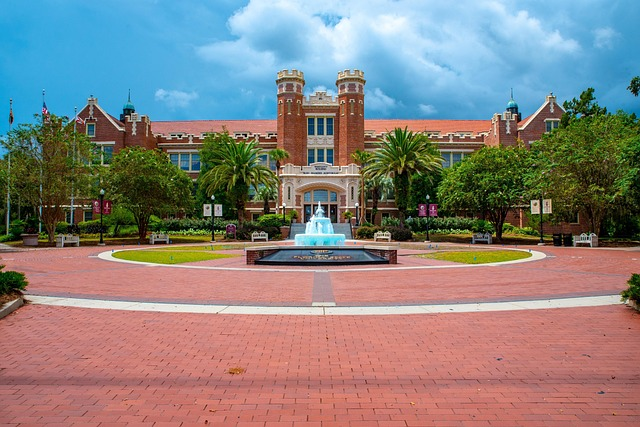
Florida State University Acceptance Rate: How Hard Is It to Get into FSU?
FSU’s selectivity has increased dramatically over the past few years. Here’s a quick view of how the acceptance rate has changed:
- Class of 2025: 37%
- Class of 2026: 25%
- Class of 2027: 25%
- Class of 2028: 24%
- Class of 2029 (Fall 2025): ~25%
More students apply each year, and fewer students are admitted. Meaning you need strong grades, advanced coursework, and a focused application to stand out.
Why the Acceptance Rate Is Dropping
Several factors drive FSU’s growing selectivity:
- Applications are up more than 150% since 2016.
- Admitted students are stronger academically each year.
- FSU aims to maintain a high-achieving, diverse student body.
- FSU’s national rankings continue to climb. FSU is now ranked #54 in National Universities and #23 among Top Public Universities in the 2026 U.S. News & World Report rankings — up from being unranked in the top 30 publics just five years ago.
- Bright Futures and value rankings drive demand. FSU was named the #1 Best Value Public University in Florida by the Princeton Review and ranks #16 nationally for value, drawing more in-state and out-of-state applicants every cycle.
Even with rising competition, you can strengthen your chances by understanding what a successful applicant looks like.
What’s the Average Profile of Students Accepted to Florida State University?
FSU releases detailed statistics about enrolled freshmen. These numbers help you understand where you stand and what goals to set.
GPA Expectations
FSU’s admitted students have some of the highest GPAs in the country for a public university:
- Average unweighted GPA: 3.71
- Average weighted GPA: 4.26
- 95% of admitted students have a weighted GPA of 3.75 or higher
This means you’ll need mostly As in a challenging schedule to be competitive.
Class Rank
Your position in your graduating class also matters:
- 76% of enrolled students were in the top 10%
- 90% were in the top 25%
If you’re not in the top quarter of your class, you’ll need strong scores, strong rigor, or exceptional involvement to balance your profile.
Course Rigor
Rigor is the most important factor in FSU admissions. Admitted students typically have:
- Nine or more AP, IB, dual enrollment, or AICE courses
FSU wants proof that you can handle college-level academics long before you arrive on campus.
Test Scores
For the Class of 2029, enrolled students scored:
- SAT mid-50% range: 1290–1400
- Reading: 640–710
- Math: 630–700
- ACT mid-50% range: 29–32
If your scores fall within (or above) these ranges, you’ll be in a strong position. Worth knowing for 2026: While many flagship publics nationally returned to test-required this cycle (UF, UGA, UT Austin, Texas A&M, Auburn, Georgia Tech, MIT, Dartmouth, and most Ivies), FSU has been continuously test-required since 2021 — so this is one less surprise on your application checklist.
Academic and Personal Background
FSU enrolls students from all across Florida and the world:
- Students admitted came from all 67 Florida counties
- 21% of admitted students were first-generation college students
- Students represented 48 countries and all 50 states
The Florida State Acceptance Rate: What Does FSU Look For?
FSU uses a holistic admissions process, but not all factors are weighted the same. Here’s how the admissions committee prioritizes your application:
-> Very Important
- Rigor of high school coursework -> This is the single most influential factor. FSU wants students who have challenged themselves with AP, IB, AICE, or dual-enrollment classes.
-> Important
- GPA
- Class rank
- Standardized test scores
- Extracurricular activities
- Essay quality
- Talent and achievements
- Character and personal qualities
- First-generation status
- Volunteer work
- Work experience
- State residency
- Geographic context
-> Considered but Not Required
- Senior-year course load
- Years of world language
- Special circumstances noted in the application
-> Not Considered by FSU
- Demonstrated interest (visits, emails, tours)
- Interviews
- Legacy status
- Recommendation letters
- Religious affiliation
- Race or ethnicity
FSU’s policy gives every student a fair, consistent review. Your application needs to show:
- Strong academics
- Sustained involvement
- Clear goals
- Personal growth
- Readiness for a challenging college environment
9 Key Factors to Increase Your Chances of Getting Into FSU
FSU evaluates your entire academic path, the choices you make, and the consistency you show from freshman year through senior fall.
These nine factors represent what matters most in the admissions review and how you can use each one to strengthen your application.
1. Maintain a High GPA of at Least 3.6

Your GPA is one of the strongest predictors of your chances at FSU. Recent class data makes this clear:
- Average unweighted GPA: 3.71
- Average weighted GPA: 4.26
- 95% of enrolled freshmen had a weighted GPA above 3.75
If your GPA is around 3.6 or higher, you’re aligned with admitted students. FSU uses your core academic classes to calculate an Academic Index, so courses like English, math, science, social studies, and world language carry the most weight.
If your GPA is lower, focus on two things:
1. Strong upward trends
A turnaround from Bs to As in junior year can help you stay competitive, especially if you build momentum in advanced courses.
2. Strategic senior-year scheduling
FSU wants to see a rigorous senior year. The classes you choose (especially math) influence how competitive you look. Never load your senior year with “easy A” courses. Maintain a schedule that reflects readiness for college-level work.
2. Aim for an SAT Score of 1300–1430 or ACT Score of 29–32

FSU requires test scores, and they are an important part of the admissions review. The mid-50% scores for enrolled students show the current benchmark:
- SAT: 1290–1400
- ACT: 29–32
Your goal should be to score within or above these ranges.
FSU also superscores, which means they combine your highest section scores across all test dates. This policy gives you a major advantage. If you excelled on one section in March and another in June, FSU will use both highest scores.
To strengthen this part of your application:
1. Retest strategically
Focus on improving one section at a time. Superscoring rewards targeted progress.
2. Use official practice tests
These mirror real test pacing and question patterns, giving you more accurate performance data.
3. Submit early scores, then continue testing
FSU needs one official score by the time you apply. Any new scores sent before final deadlines will still be reviewed.
For many students, a strong test score helps offset a slightly lower GPA or fewer advanced courses. Treat this part of your application as an opportunity, not a hurdle.
3. Take AP, IB, AICE, or Dual Enrollment Courses

FSU labels course rigor as the single “very important” factor in admissions. Meaning you’ll need strong grades in challenging courses.
Admitted students typically have:
- Nine or more advanced courses (AP, IB, AICE, or dual enrollment)
- A strong senior schedule, especially in math and science
- Higher-level coursework that aligns with their intended major
Why rigor matters so much:
- It predicts your ability to succeed in FSU’s academic environment.
- It demonstrates that you pushed beyond minimum graduation requirements.
- It helps contextualize your GPA — As in advanced classes communicate more strength than As in regular-level classes.
If your school offers limited advanced courses, don’t worry. FSU evaluates rigor in context. What matters is taking the most challenging path available to you.
4. Get Involved in One or Two Meaningful Extracurriculars

FSU does not want a long list of unrelated activities. They want depth.
This means:
- Consistent involvement over multiple years
- Clear contributions or demonstrated growth
- Leadership roles, even informal ones
- Activities connected to your interests or major
Examples of meaningful involvement include:
- A leadership role in a service club
- A long-term athletic commitment
- Research or academic competitions
- Work experience that shows responsibility
- Arts involvement through music, theater, or visual arts
- Community-based volunteering with measurable impact
FSU cares about how you spent your time, the skills you gained, and the initiative you demonstrated.
If you’re earlier in high school, choose two or three activities you can commit to.
5. Start Your FSU Essay Early (Even Though It’s Optional)

FSU’s essay is optional, but it can significantly strengthen your application. Many competitive applicants choose to submit it, which means you should too.
Why the essay matters:
- It gives the admissions team insight into your voice, values, and goals.
- It can highlight context behind your academic choices.
- It allows you to demonstrate talent, leadership, resilience, or creativity.
- It becomes a differentiating factor in a pool of applicants with similar GPAs and test scores.
Write early enough to revise, refine, and receive feedback. Your essay should show clarity, self-awareness, and alignment with what FSU values: drive, curiosity, and engagement.
6. Apply as a Florida Resident (If You Qualify)

FSU gives an admissions advantage to Florida residents. The Class of 2028 acceptance rate illustrates this difference:
- 31% acceptance rate for Florida residents
- 16.5% for out-of-state applicants
Residency doesn’t guarantee admission, but it boosts your chances because:
- FSU is a public institution serving the state of Florida.
- Tuition benefits encourage in-state enrollment.
- State-funded spots prioritize Florida students.
If you live in Florida, this advantage works in your favor. If you don’t, you can still be competitive — you’ll just need stronger academics or standout achievements. Florida residents also benefit from the Bright Futures Scholarship, which can cover up to 100% of tuition at FSU for top scorers — making the in-state value proposition almost unbeatable.
7. Participate in FSU’s Summer Bridge Program (If Eligible)

The CARE Summer Bridge Program supports:
- First-generation students
- Students from low-income backgrounds
- Students facing significant socioeconomic barriers
Participants receive:
- Academic support
- Advising
- A supportive early transition to campus
- A pathway to FSU admission if accepted into the program
If you qualify, this program gives you additional consideration in the admissions process. Students admitted through CARE become part of a strong academic community with targeted resources.
If you meet the eligibility criteria, this may significantly improve your chances.
8. Don’t Worry About Legacy or Recommendations — FSU Doesn’t Consider Them

FSU has one of the cleanest, least biased admissions policies among public universities. They do not consider:
- Teacher or counselor recommendations
- Legacy status
- Demonstrated interest
- Interviews
- Religious affiliation
- Race or ethnicity
This means your application is judged purely on what you’ve earned, not the advantages you have.
You don’t need to:
- Visit campus
- Email admissions officers
- Attend recruitment events
- Submit extra letters
Your academic and personal record speaks entirely for itself.
9. Apply Early to FSU for Better Visibility on Your Application

FSU doesn’t offer binding early decision, but they do offer early action for Florida residents. Even for regular applicants, applying early gives you distinct benefits:
- Faster processing and review
- More time for FSU to receive updated test scores
- Earlier admissions decisions
- Reduced risk of missing deadlines
- Flexibility to correct application mistakes
Key deadlines include:
- Early Action (Florida residents only): October 15, 2025
- Regular Decision: December 1, 2025
- Rolling Deadline: March 1, 2026
Submitting early signals readiness, organization, and seriousness — qualities that matter in a competitive review.
SAT/ACT Breakdown: What You Need to Know for FSU
Unlike many public institutions that moved to test-optional policies, FSU requires SAT or ACT scores for every applicant. While many other flagship publics — UF, UGA, UT Austin, Texas A&M, Auburn, Georgia Tech, and most Ivies — have only just returned to test-required this year, FSU has been continuously test-required since 2021. That long-standing policy means FSU’s testing benchmarks are well-established and reliable.
FSU publishes detailed testing ranges every year. The most recent enrolled student data shows:
- SAT mid-50% range: 1290–1400
- ACT mid-50% range: 29–32
These numbers reflect students who enrolled, not just those who were admitted. In other words, these are the scores that align most closely with students who were competitive enough to receive an offer and accept it.
How Superscoring Helps You
FSU uses superscoring for both the SAT and the ACT. That means the admissions team takes:
- Your highest SAT Math score from any test date
- Your highest SAT Reading/Writing score from any test date
- Or for ACT, your highest individual section scores from multiple sittings
They combine these to create your strongest possible score profile. This policy gives you flexibility in how you prepare. If your math score is lagging behind, you can spend a few weeks focusing only on math and retaking the test without worrying about dropping your reading score.
How to Strengthen Your Testing Strategy
Your goal is to move into the upper end of the published ranges. Doing so can compensate for a slightly lower GPA or fewer AP/IB courses. A strong score, especially above 1350 SAT or 31 ACT, can help balance out weaknesses in other areas.
Here’s how to sharpen your testing plan:
- Use practice tests for diagnostics. These show you which sections need the most attention.
- Study in focused blocks. Choose one section at a time to refine.
- Retake strategically. Because FSU superscores, you benefit from incremental improvements.
- Test earlier when possible. Sending an early score meets FSU’s submission requirement, and you can continue retesting afterward.
If you’re aiming for competitive majors like business, engineering, or biological sciences, scoring in the upper 1300s or low 1400s helps place you in a stronger admissions position.
FSU Key Dates and Application Policies
FSU’s application timeline gives you several pathways, but missing a deadline can eliminate opportunities. Staying organized is one of the simplest ways to give yourself an admissions advantage.
Early Action (Florida Residents Only)
Deadline: October 15, 2025
If you qualify, this pathway gives you an earlier review and a mid-December decision. It’s a strong option if your grades and scores are already competitive by fall.
Regular Decision
Deadline: December 1, 2025
This is the main pathway for most applicants. Submitting by this date ensures full consideration for admission and priority financial aid opportunities.
Rolling Deadline
Deadline: March 1, 2026
FSU continues reviewing applicants into early spring. Seats become more limited later in the cycle, so applying close to March 1 reduces your chance of admission.
Important Testing Policy
FSU requires at least one official SAT or ACT score by the time you submit your application. Additional scores can be submitted later and will be reviewed as long as they arrive before the final score deadlines.
Financial Aid Timing
FAFSA opens in October. FSU recommends submitting by December 1 to ensure priority consideration for grants and need-based aid. The FAFSA simplification rollout has stabilized for the 2026–27 cycle, so timelines are now back to normal — submit early to maximize your aid package.
Required SSAR Submission
You must complete the Self-Reported Student Academic Record (SSAR). This is a detailed, self-entered transcript of every course and grade from 9th to 11th grade. Missing this step will delay or invalidate your application.
No Supplemental Essays
FSU does not require additional writing beyond your main essay. If you’re applying through the Common App, put your time into making your personal statement as strong as possible.
Scholarships and Honors at Florida State University
Paying for college is a major part of your planning, and Florida State University offers several opportunities that reward academic strength, leadership potential, and intellectual curiosity.
University Freshman Scholarship: Automatic Consideration
Most students first encounter FSU’s University Freshman Scholarship, a merit-based award that requires no separate application. When you submit your application to FSU, the admissions team automatically evaluates you for this scholarship based on your academic record.
Students typically receive up to $2,400 per year for four years, which can significantly reduce in-state or out-of-state tuition costs. Since this award is tied directly to academic performance, students with GPAs at the top of FSU’s admitted range — especially those with strong SAT or ACT scores — tend to be the strongest candidates.
This scholarship is designed to reward consistency. If your transcript shows steady high achievement, a strong senior course load, and rigorous academic preparation, you’ll likely be in the running.
Presidential Scholars Program: FSU’s Top Undergraduate Award
If you want the most comprehensive support FSU offers, the Presidential Scholars Program is the university’s highest honor for incoming freshmen. This award provides up to $31,200 in total funding over four years, making it one of the most competitive and generous merit packages in Florida.
Beyond the financial benefits, the program offers major academic advantages:
- Priority registration
- A dedicated faculty mentor
- Leadership training
- Funding for undergraduate research, global study, or service experiences
- Access to a community of high-achieving peers
The Presidential Scholars Program looks for students who push themselves academically and show initiative beyond the classroom. Students admitted to this program typically sit at the top of the applicant pool in terms of GPA, course rigor, and long-term commitment to academic pursuits.
To be considered, you must submit your FSU application early enough to meet the program’s timeline. Early fall applicants — especially those who complete the application by the October 15 Florida resident early action deadline — have the strongest chance of being reviewed.
FSU Honors Program: Small Classes and Advanced Opportunities
If you’re looking for an experience that feels more intimate inside a large public university, the FSU Honors Program is worth exploring. The program provides smaller class sizes, close collaboration with faculty, curated advising, and clear pathways to research experiences.
Admission to the Honors Program is competitive. The strongest candidates typically have:
- GPAs well above the middle 50%
- A rigorous senior-year course load
- Strong performance in AP, IB, dual-enrollment, or AICE courses
- High test scores that place them in the upper end of FSU’s enrolled ranges
Students interested in the Honors Program should pay attention to its earlier deadlines. If you apply by mid-October, you receive priority consideration. Applications submitted closer to the March deadline may still be reviewed, but spaces are more limited.
The program attracts students who want a deeper academic experience — the type of environment where you can begin research early, design independent projects, and build close relationships with faculty who later write detailed recommendation letters for graduate school or scholarship committees.
Top Programs at FSU: Where Your Major Lands You in the Best Position
Here’s something most college guides skip over — and it can shape your entire application strategy: FSU’s best-known programs are also its most competitive. Knowing which majors carry extra weight in admissions helps you craft an application that fits.
FSU’s Most Selective Majors
Some FSU majors admit at significantly lower rates than the overall university average. These programs typically require you to apply directly into them as a freshman, and they often expect higher GPAs and test scores:
- Engineering (FAMU-FSU College of Engineering): A unique joint program with Florida A&M University, ranked among the strongest engineering programs in Florida. Direct admission is competitive, particularly for biomedical and chemical engineering.
- Computer Science: Demand has risen dramatically, with admit rates for direct-admit CS noticeably tighter than the overall FSU rate.
- Nursing: FSU’s College of Nursing has a separate, highly competitive secondary admission process for sophomores. Pre-nursing freshmen typically need a 3.5+ to remain on track.
- Business (College of Business): The Honors Program in Business and direct-admit pathways into accounting and finance are highly competitive — the College of Business is consistently ranked top 50 nationally.
- Film: FSU’s College of Motion Picture Arts is ranked top 5 nationally for film schools (with alumni working at Pixar, Lucasfilm, and major studios). Admission is portfolio-based and exceptionally selective.
FSU’s Standout Strengths
Beyond the most-selective programs, FSU has nationally recognized depth in:
- Public Policy & International Affairs: The Askew School and DeVoe L. Moore Center are highly regarded, with strong placement into D.C., NGOs, and federal agencies.
- Criminology & Criminal Justice: Consistently ranked top 5 nationally, with extensive research opportunities and strong law school placement.
- Meteorology: FSU’s meteorology program is recognized as one of the best in the country, particularly for hurricane and tropical weather research.
- Music: The College of Music is one of the largest and most respected music schools in the South, with strong tracks in performance, education, and music therapy.
- Dance: FSU’s School of Dance is ranked among the top dance programs nationally.
The takeaway? If you’re applying to a high-demand major, your benchmark scores need to land in the upper range of FSU’s published mid-50% — not just within it.
What Current FSU Students Actually Say
Now, let’s hear from the people who would know best — current students. Here’s a synthesis of what’s repeatedly come up in 2025–26 student reviews on Niche, Reddit, and Unigo:
- “FSU’s value as an in-state Florida student is unbeatable.” Bright Futures + the University Freshman Scholarship can cover most or all tuition. Many in-state students graduate with little to no debt.
- “Tallahassee is more of a real city than people expect.” It’s the state capital, so there are extensive internship opportunities in government, lobbying, and policy that wouldn’t exist at a typical college town the same size.
- “Direct admit to selective majors is the hardest part.” Students who apply general first and try to internal-transfer into business, engineering, or nursing report it being significantly harder than direct admission.
- “Game days at Doak Campbell are unreal.” With Coach Mike Norvell’s program rebuilding and Florida State’s deep football traditions, fall game days at the 79,000-seat stadium remain a defining part of the FSU experience.
- “The honors college actually delivers.” Students consistently praise the small-class experience, faculty mentorship, and research access through the Honors Program — distinguishing it from honors programs at peer universities.
The consistent thread? FSU students love the value, location, and program depth — but they universally caution that getting into your specific desired major is far more challenging than getting into FSU overall.
Common Mistakes That Hurt Your FSU Application
Let’s talk about something rarely covered — and something that could quietly cost you your spot. Even strong applicants sometimes lose their FSU acceptance to easily avoided mistakes. Here are the most common ones:
1. Skipping or Rushing the SSAR
The Self-Reported Student Academic Record is required, and missing it (or filling it in wrong) is one of the top reasons applications get delayed or rejected. Cross-check every grade against your transcript. Get this done before you submit your application, not after.
2. Neglecting Senior-Year Math
FSU specifically watches for senior-year math. Dropping math entirely after junior year — even with strong overall grades — signals a lack of academic ambition. If you’ve completed Algebra II by sophomore year, take pre-calculus, calculus, statistics, or AP Calculus AB/BC senior year.
3. Submitting Test Scores from Only One Sitting
FSU superscores, which means more sittings = more chances for your superscored composite to climb. Many students cost themselves 30–50 points by sitting once in the fall and not retaking. Plan for two SAT sittings minimum.
4. Treating the Optional Essay as Truly Optional
Yes, the essay is technically optional. But at a school with a 24–25% admit rate and a holistic process, “optional” effectively means “highly recommended.” Submitting the essay shows commitment and gives admissions a fuller picture of you.
5. Underestimating Out-of-State Selectivity
If you’re applying from outside Florida, you’re competing in a 16.5% admit pool — closer to a top-30 private. Out-of-state applicants need to apply early, present higher scores, and lead with extracurricular distinction.
6. Forgetting About the Honors Program Deadline
The Honors Program has earlier deadlines than the general application. If you’re a strong student and don’t apply early enough, you can be admitted to FSU but miss the Honors Program window — losing access to small classes, research funding, and faculty mentorship.
7. Waiting Too Long for the Rolling Deadline
The March 1 rolling deadline isn’t a “safe backup.” By March, FSU has already filled the majority of its incoming class. Applying in late February or March means competing for a tiny number of remaining seats.
The fix for all of these? Plan your FSU application like a project, not a form. Build a checklist by junior spring, hit your test dates, complete the SSAR by October, and submit the optional essay. Treat the timeline with intent — and FSU rewards you accordingly.
Let’s Build the Profile FSU Is Looking For
Getting into Florida State University takes more than solid numbers, as you can see above. You’ll need a clear strategy, the right classes, steady academic growth, and a thoughtful approach to your application.
You don’t need to be perfect to be competitive. You need direction. You need a plan that matches your strengths, fills your gaps, and helps you present the strongest version of yourself.
If you want expert guidance as you build your path, we’re here to help. Empowerly counselors work with students across Florida and the rest of the country to create application strategies that work.
We’ll help you choose the right courses, strengthen your academic story, and increase your chances of getting in.
