



The University of Oregon (UO) and Oregon State University (OSU) are two of the top schools in the Pacific Northwest. As Oregon’s premier universities, they have a fierce (yet friendly) competition both on and off the field.
But which school is right for you? If you want to attend college in Oregon, UO vs. OSU is a difficult question. While it’s easy to get caught up in the natural beauty of the campus or the infectious school spirit, choosing the right college is one of the most impactful decisions of your life, and it’s important to weigh your options carefully.
Here’s the good news: you don’t have to make this monumental choice alone. Empowerly’s expert college counselors have compiled an in-depth, fully updated comparison of the University of Oregon and Oregon State University to help you determine which is the right school for you in 2026 and beyond.
Finding the Best College for You
At Empowerly, we know that finding the right college is about more than just prestige; it’s about finding the environment where you’ll thrive, both as a student and a person. Both UO and OSU offer world-class programs, vibrant campus cultures, and countless career opportunities. But the key is determining which one aligns with your unique needs.
So where do you start? As you build your college list and compare UO vs. OSU, consider factors like your intended major, learning style, and career aspirations. There are so many different things that can affect your college experience, so it’s important that you consider every angle before submitting an application.
If this sounds daunting, don’t worry. Empowerly can help. We will guide you through every step of the college admissions process, from writing stellar essays to making key admissions decisions. This article is the first step in your college journey, but if you need more personalized advice, schedule a free consultation with one of our expert counselors today.
A Brief Overview of UO and OSU
Let’s start with a quick overview of UO vs. OSU.
University of Oregon
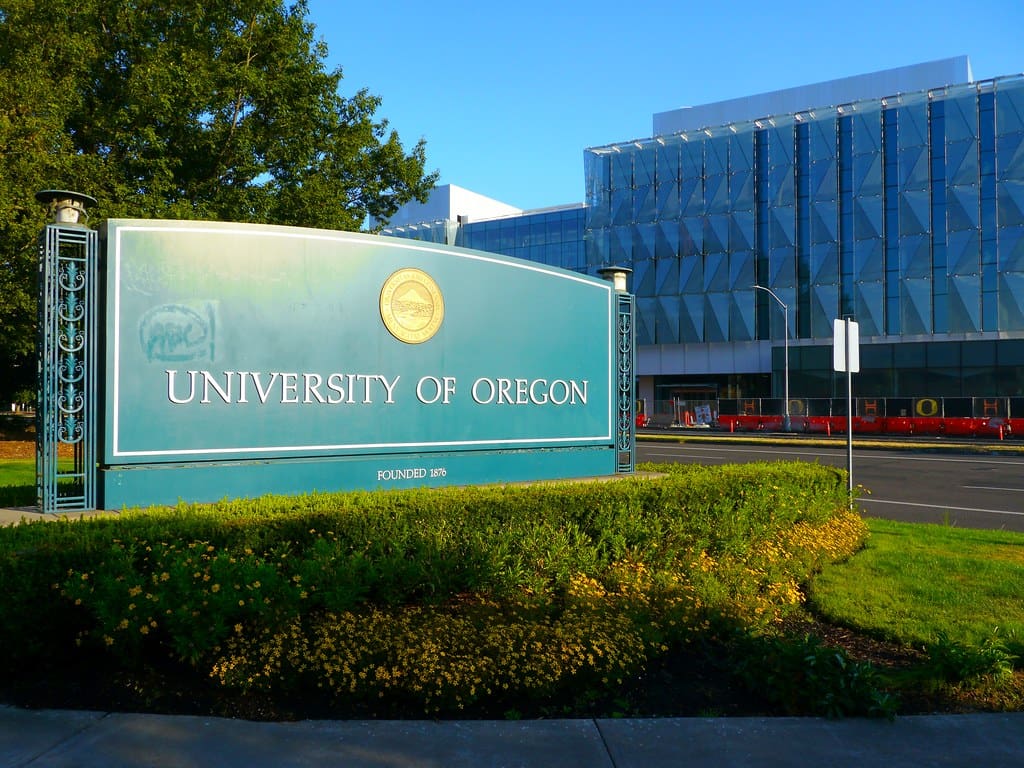
The University of Oregon prides itself on its exceptional faculty members, cutting-edge research opportunities, and commitment to critical thinking. UO is widely recognized for its strong programs in journalism, business, environmental studies, and architecture, and it remains the only Oregon institution in the prestigious Association of American Universities (AAU).
- History & Mission: Established in 1876, the University of Oregon is a public flagship research university dedicated to academic excellence and innovation.
- Location: Situated in Eugene, Oregon, UO’s lush, tree-lined 295-acre campus perfectly showcases the natural beauty of the Pacific Northwest.
- Size: With over 20,600 undergraduates and approximately 4,000 graduate students as of fall 2024, UO balances big-school resources with the personalized attention students might expect at a slightly smaller institution.
- 2026 Ranking: UO is ranked #110 in National Universities and #54 in Top Public Schools in the U.S. News & World Report 2026 Best Colleges edition.
Oregon State University
Oregon State University is fiercely committed to expanding access to quality higher education. OSU is particularly renowned for its engineering, agriculture, oceanography, and forestry programs, as well as its contributions to sustainability research.
- History & Mission: Founded in 1868 as a land-grant institution, OSU focuses on research, public service, and practical education.
- Location: Located in Corvallis, Oregon, OSU combines the charm of a small college town with cutting-edge research facilities on a 422-acre campus.
- Size: OSU serves around 31,250 undergraduates and over 5,000 graduate students, making it the largest university in Oregon and noticeably larger than UO.
- 2026 Ranking: OSU is ranked #143 in National Universities and #74 in Top Public Schools in the U.S. News & World Report 2026 Best Colleges edition.
Compare and Contrast: UO vs. OSU
Now, let’s directly compare UO vs. OSU on some key metrics to uncover which school may be better aligned with your preferences, interests, and goals.
Prestige and Ranking
The University of Oregon consistently ranks as one of the top public research universities in the nation. It is a hub for innovation, particularly in the field of environmental science. UO’s School of Journalism and Communication is also considered one of the best programs in the country for media studies, advertising, and public relations. UO’s College of Education has earned a spot among the top 15 graduate programs in the nation, and the Lundquist College of Business continues to climb in national rankings.
Oregon State University has rightfully earned a strong reputation in STEM fields, especially engineering, environmental studies, and agricultural sciences. OSU’s College of Engineering is nationally recognized, and its groundbreaking research in sustainability, forestry, and oceanography has attracted global attention. Here’s what really sets OSU apart: it’s one of only three U.S. universities to hold land-grant, sea-grant, sun-grant, and space-grant designations, a quadruple distinction that fuels research funding north of $480 million annually.
Acceptance Rate
Both UO and OSU prioritize educational accessibility, which is reflected in their acceptance rates. With a 79% acceptance rate as of the 2026 admissions cycle, OSU is considered a moderately selective school, blending academic rigor with accessibility. UO’s slightly higher acceptance rate of approximately 85% underscores their commitment to providing opportunities to a broad range of students.
But here’s the catch: while these acceptance rates may seem generous, both UO and OSU have steadily become more competitive over the past several years as application volume rises. Both UO and OSU use a holistic admissions process, which looks beyond GPA and test scores to consider factors such as leadership, community involvement, personal essays, and letters of recommendation. This approach gives students with diverse backgrounds, talents, and experiences a chance to succeed.
Average Cost of Attendance
UO and OSU both offer strong value propositions, especially for in-state students. Here are the latest tuition figures for the 2025-2026 academic year:
| In-state tuition & fees | Out-of-state tuition & fees | |
| University of Oregon | $15,904 | $43,919 |
| Oregon State University | $15,117 | $40,077 |
However, you should remember that tuition isn’t the only cost associated with going to college. It’s important to take housing, meals, transportation, books, and other expenses into account. Picture this: when you factor in everything, the four-year total cost of attending OSU comes out to roughly $128,820, while UO’s total can climb meaningfully higher for out-of-state students.
The good news? Both universities offer a variety of merit-based scholarships and need-based financial aid. At OSU, 48% of first-year students receive need-based financial aid, with an average net price of $18,894 for federal loan recipients. At UO, 42% of first-year students receive need-based aid, with an average net price of $20,543. Oregon residents can also take advantage of programs like the Oregon Opportunity Grant, and out-of-state students should research university-specific scholarships that can provide substantial support.
Sports
Sports are integral to the identities of both institutions, fueling their long-standing rivalry and capturing their vibrant school spirit. UO and OSU students have eagerly looked forward to the annual game between the Ducks and Beavers for over a century.
The University of Oregon’s Ducks are known nationwide for their high-octane football program and their close partnership with Nike, which originated from alumni Phil Knight. The school’s athletic facilities, uniforms, and recruitment strategies are often at the forefront of college sports innovation. As of August 1, 2024, Oregon competes in the Big Ten Conference, a major realignment that has dramatically expanded its national exposure and broadcast reach.
OSU’s Beavers, while equally passionate, shine in baseball, with a storied program that has claimed three College World Series titles (2006, 2007, and 2018). Now, get this: starting in the 2026-27 season, Oregon State is a foundational member of a reconstituted Pac-12 Conference, joining Washington State, Boise State, Colorado State, Fresno State, San Diego State, Utah State, and Texas State. With 17 varsity teams that compete in Division 1 and dozens of sports-related clubs, athletic students at OSU have plenty of opportunities to showcase their school spirit.
History of the Rivalry
UO and OSU have one of the most storied rivalries in college sports, dating back to 1894. It was originally called the “Civil War,” but while that moniker has been retired since 2020, the intensity and passion remain. Game-day traditions like OSU’s “Chainsaw Crew” and UO’s “Shout” anthem energize fans and players alike.
Want to know the most recent results? On September 20, 2025, No. 6 Oregon defeated Oregon State 41-7 at Autzen Stadium, with quarterback Dante Moore throwing for 305 yards and a career-high four touchdowns. Oregon now leads the all-time football series 70-49-10. Due to conference realignment, the rivalry game will take a one-year break in 2026 before resuming in 2027 under a newly announced agreement that secures at least six more matchups.
UO and OSU’s friendly rivalry extends well beyond sports, challenging students to go above and beyond in academics and community service to prove that their school is the best.
Student Life
Student life at the University of Oregon is characterized by creativity and innovation. Eugene’s vibrant cultural scene, combined with its stunning natural beauty, creates a dynamic environment for students. With over 300 student organizations, UO provides ample opportunities for leadership and involvement. Add the famous Oregon Bach Festival, which draws more than 40,000 attendees each year, and you have a campus where the arts and academics blend seamlessly.
In contrast, OSU offers a more traditional college-town atmosphere in Corvallis, where students enjoy a tight-knit community and hands-on learning opportunities. The university’s emphasis on practical experience is evident in its co-op programs, undergraduate research initiatives, and signature programs like Beaver Bonanza and Mom’s Weekend that have become campus institutions.
Though different, both campuses have active Greek life, a variety of intramural sports, and a rich calendar of events. UO and OSU are committed to enriching students’ learning and personal development beyond the classroom. If you’re passionate about making an impact, each school offers exciting internship opportunities, leadership roles, and community service opportunities.
Student Outcomes
Graduates from UO and OSU enjoy strong career prospects across a variety of industries. Thanks to each institution’s comprehensive career services—including job fairs, internship placements, and alumni mentoring programs—students are set up for success after graduation.
Here’s where it gets interesting: UO alumni excel in media, marketing, and environmental advocacy, often finding opportunities in creative and innovative fields. The median salary for UO graduates six years after graduation is approximately $46,084. Notable graduates include actress Kaitlin Olson, Olympian Steve Prefontaine, author Ken Kesey, and Nike co-founder Phil Knight.
OSU alumni are widely recognized for their expertise in technical and scientific disciplines, with a median post-graduation salary of $50,843 six years after earning their degree. Standout OSU alumni include Pixar production designer Harley Jessup, former International Monetary Fund manager George Abed, and NVIDIA founder and CEO Jensen Huang—who has become one of the most influential figures in modern technology and is now among the world’s wealthiest individuals.
Admissions Requirements: What You Need to Apply to UO or OSU
Before you can compare campus vibes, you need to actually get accepted. So what does it take to gain admission to either Oregon flagship in 2026? Both universities accept the Common Application and operate test-optional admissions policies, meaning SAT or ACT scores are no longer required for first-year applicants—though many students still choose to submit them.
Here’s what you need to know about academic profiles at each school:
- University of Oregon: Admitted students typically present an unweighted GPA of 3.4 or higher, with middle-50% SAT scores ranging from 1130 to 1360 and ACT scores from 22 to 30. UO’s Early Action deadline is November 1, while the Regular Decision deadline is January 15. Applicants must submit a $65 application fee (which can be waived for qualifying students).
- Oregon State University: Admitted students typically present a high school GPA averaging around 3.70, with middle-50% SAT scores from 1140 to 1400 and ACT scores from 24 to 31. OSU offers rolling admissions for many programs, with a priority deadline of November 1 and a final freshman application deadline of February 1. The application fee is also $65.
Now, here’s the bottom line: while neither school requires test scores, strong applicants typically distinguish themselves through rigorous high school coursework (AP, IB, honors, or dual enrollment), demonstrated leadership in extracurricular activities, thoughtful personal essays that showcase fit with the institution, and one or two strong letters of recommendation. Both schools place significant weight on essays as a window into who you are as a person.
If you’re an out-of-state or international applicant, both UO and OSU offer specialized programs and pathways. OSU’s INTO Oregon State University program provides international students with academic English and pathway courses, while UO’s American English Institute supports students who need language preparation before beginning their degree.
Advice for Students: Choosing Between UO and OSU
So, how do you choose between UO and OSU? Ultimately, it will all come down to your academic interests, career goals, and unique preferences. Here are a few key factors that can influence your decision.
Academic Priorities
When it comes to college decisions, academics should be your first priority. If you’re passionate about journalism, advertising, environmental design, business, music, or the arts, UO may be your best fit. Its nationally recognized programs and cutting-edge resources provide students with the opportunities they need to excel. The School of Journalism and Communication, in particular, has produced Pulitzer Prize winners, Emmy recipients, and leaders at major outlets like ESPN, The New York Times, and NPR.
On the other hand, if you’re drawn to STEM fields like engineering, agriculture, oceanography, computer science, or environmental studies, OSU’s strong emphasis on science and hands-on research makes it an ideal choice. The university is a leader in sustainability and innovation, offering unique opportunities for students interested in solving real-world challenges. OSU’s College of Engineering houses the largest computer science program in Oregon, and its forestry and oceanography programs are routinely ranked among the top in the nation.
Cost and Financial Aid
For many families, cost is a deciding factor. UO and OSU offer significant discounts for Oregon residents, but even if you are an out-of-state student, you may be eligible for financial aid and scholarships. Both schools provide robust merit-based and need-based aid programs, so it’s important to explore your options, both on a state and institutional level.
Here’s a tip most families miss: investigate the Western Undergraduate Exchange (WUE), which allows students from participating Western states to attend either UO or OSU at significantly reduced tuition rates—often capped at 150% of in-state tuition. That can mean tens of thousands of dollars in savings over four years.
Campus Culture
While your classroom experience is important, the campus environment can have a big impact on your college experience. UO’s urban, creative atmosphere is ideal for students who will thrive in Eugene’s progressive, artsy setting. The city is known for its food trucks, craft breweries, music scene, and the iconic Saturday Market, all of which contribute to a campus life that feels deeply integrated with its community.
OSU, with its smaller, community-focused campus in Corvallis, offers a more traditional college-town experience. Here, strong community ties and collaborative learning opportunities are a hallmark of student life. Corvallis has been repeatedly recognized as one of the safest and most bike-friendly cities in America, and its slower pace can be a perfect environment for students who want to focus deeply on their studies.
Post-Graduation Opportunities
College is an amazing time of your life, but ultimately, it is about preparing you for your future, so it’s important that you consider the ways your school will support you post-graduation. Both UO and OSU have extensive alumni networks that can provide a strong foundation for your career.
UO’s alumni often excel in creative industries, such as media and advertising, with connections to global companies like Nike and major journalism outlets. OSU’s graduates are prominent in technical fields, often landing roles at top engineering firms, agricultural companies, tech giants like Intel and HP, and research institutions. With over 215,000 living alumni worldwide, OSU’s network is one of the most expansive in the Pacific Northwest.
Be sure to consider each school’s career services, mentorship programs, and alumni connections in your chosen field when making your decision.
Personal Preferences
Both UO and OSU have outstanding programs, but they may not necessarily be the right fit for you. Think about your personal learning style and social preferences. Do you see yourself thriving in UO’s dynamic, fast-paced environment, or do you prefer the close-knit, hands-on experiences that OSU offers? Consider how each campus’ setting, class sizes, and overall culture align with your goals and personality.
If you are an out-of-state or international student, consider the resources and support each university offers to help you adjust to life in Oregon. Investigate which school’s support services, cultural clubs, and community networks best align with your needs.
Final Tip: Visit Both Campuses
There’s no substitute for visiting the campuses in person. Walking the grounds, sitting in on classes, and talking to current students can provide invaluable insight into day-to-day life at each university. Both UO and OSU offer campus tours, information sessions, and opportunities to attend events that showcase their unique cultures.
If travel isn’t feasible, take advantage of virtual tours and online Q&A sessions to gather as much information as possible. Many high schoolers also find it helpful to follow each school’s social media accounts and student-run YouTube channels to get an authentic, unfiltered look at student life.
Frequently Asked Questions About UO vs. OSU
Still have questions? Here are answers to the most common questions students ask when comparing the University of Oregon and Oregon State University in 2026.
Is UO or OSU harder to get into?
OSU is slightly more selective than UO. As of the 2026 cycle, OSU’s acceptance rate sits at approximately 79%, while UO’s hovers around 85%. That said, both schools use holistic admissions, which means your essays, recommendations, and extracurricular involvement matter just as much as your numbers.
Which school is better for engineering: UO or OSU?
Hands down, OSU is the better choice for engineering. Oregon State’s College of Engineering is one of the largest in the Pacific Northwest, with nationally ranked programs in mechanical, civil, electrical, and computer engineering. UO does not have a traditional engineering school, though its Knight Campus for Accelerating Scientific Impact has expanded bioengineering and applied science offerings in recent years.
Which school is better for business?
UO’s Charles H. Lundquist College of Business has a slight edge, particularly for students interested in sports business, marketing, and entrepreneurship. Its Warsaw Sports Marketing Center is one of the only programs of its kind in the country. OSU’s College of Business is strong as well, especially for students interested in supply chain management, finance, and business analytics.
Are UO and OSU still rivals after the Pac-12 breakup?
Absolutely. While Oregon now competes in the Big Ten and Oregon State has helped rebuild the Pac-12, the two schools have committed to continuing the rivalry. The 2025 game was played in Eugene, and after a one-year hiatus in 2026, the rivalry resumes in 2027 with at least six more games scheduled.
Which school has better student outcomes?
Both schools deliver strong outcomes, but in different domains. OSU graduates earn a slightly higher median salary six years after graduation ($50,843 vs. $46,084 for UO), largely due to its STEM-heavy graduate population. However, UO graduates dominate in creative fields like journalism, marketing, and design.
Can I transfer between UO and OSU?
Yes. Both UO and OSU welcome transfer students each term—fall, winter, spring, and summer. Both schools accept transfer credits from accredited two-year and four-year institutions, including credits earned through the College-Level Examination Program (CLEP). For students starting at Oregon community colleges, both universities have established articulation agreements that streamline the transfer process.
Start Your Future in Oregon with Empowerly
Ultimately, both UO and OSU offer exceptional educational experiences, and they can set you up for long-term success. The right choice comes down to you: which environment and resources align best with your academic, social, and professional aspirations?
Here’s the bottom line: it’s a big choice, but you don’t have to make it alone. Empowerly’s expert counselors are here to help you navigate the entire college admissions process. Whether you’re just starting to develop your school list, trying to stay on top of application requirements and deadlines, or making your final choice between UO and OSU, we have the experience and insider insights to guide you toward your best fit college. Schedule a consultation today to take the first step toward your dream school!
