



Medical internships let you experience healthcare and prepare you for your medical career. These programs help you shadow doctors, work in research labs, or learn clinical skills while still in high school.
If you’re serious about pre-med, participating in an internship shows colleges that you’re committed and mature.
You’ll gain real-world exposure, build your résumé, and connect with professionals before graduation.
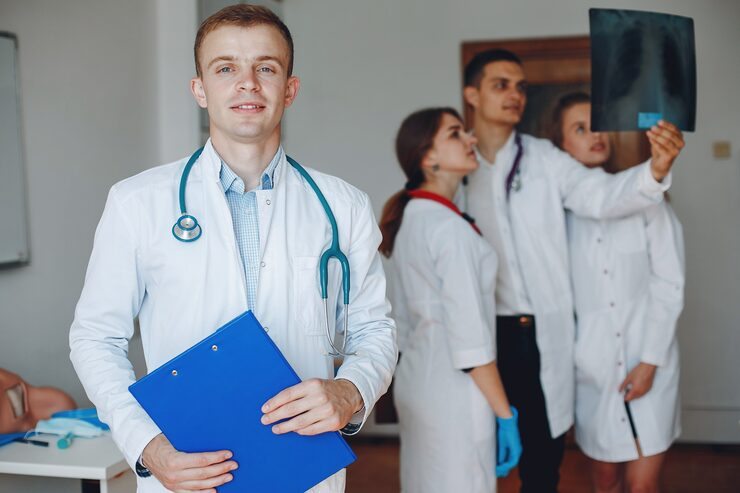
Below are the best medical internships in California for high school students in 2026 — paid, stipend-supported, or free.
Best High School Medical Internships in California

We reviewed dozens of programs across California and chose these based on their real-world medical experience, educational value, location, and accessibility for high school students.
If you’re aiming for lab research, hospital volunteering, or pre-med prep, this list has the strongest options for 2026 — expanded this year to 30 programs to cover even more of the state and more types of healthcare experience.
1. Children’s Hospital LA – LA-HIP Program
- Application Deadline: February 6, 2026
- Duration: 7-week summer research + yearlong support
This paid internship is designed for rising high school seniors from underrepresented backgrounds in medicine.
You’ll conduct biomedical research in the Saban Research Institute labs, attend specialized biology courses, receive SAT prep, and get guided college counseling. You’ll also receive a stipend, Metro card, and meals.
By completing real lab work and academic prep, you’ll demonstrate to colleges that you can handle research rigor and academic planning, even before high school graduation.
- Location: Los Angeles, CA
- Age Eligibility: Rising high school seniors from underrepresented backgrounds
- Pay/Cost: Stipend provided; Metro card and meals included
2. UCLA Health Volunteen Summer Program
- Application Deadline: Opens January 2026
- Duration: 6 weeks (June–August 2026)
UCLA’s Volunteen program places high school juniors and seniors in hospital departments across Westwood and Santa Monica. You’ll volunteer 4 hours per week, assisting with administrative and patient support tasks.
You must be at least 16, complete immunization records, and attend an in-person orientation.
This program won’t offer clinical training, but it gives you real-world hospital experience, ideal if you’re considering pre-med or nursing. There’s no cost, and it’s a great way to build your resume in healthcare early.
- Location: Los Angeles, CA
- Age Eligibility: At least 16 years old
- Pay/Cost: Volunteer position; no cost
3. Cedars-Sinai High School Student Volunteers
- Application Deadline: April 3, 2026 (for summer 2026 cohort)
- Duration: 6 to 8 weeks (varies by department)
Based in Los Angeles, this selective program puts you in a real hospital environment — shadowing clinical staff, helping visitors, and supporting hospital operations.
You must be between 14 to 18, commit to weekly shifts, and pass a TB test and health screening.
There’s no fee to apply, and although it’s volunteer-based, the prestige of Cedars-Sinai makes it a standout experience if you’re preparing for competitive pre-med applications. Before submitting your application, you can even create a professional-looking profile photo using a PFP creator to make your materials look polished and ready.
- Location: Los Angeles, CA
- Age Eligibility: 14–18 years old
- Pay/Cost: Volunteer position; no cost
4. Empowerly Research Scholar Program
- Application Deadline: Rolling enrollment (Spring, Summer, Fall, and Winter 2026 cohorts)
- Duration: 8 weeks (Spring, Summer, Fall, and Winter sessions available)
Empowerly’s Research Scholar Program lets you work one-on-one with PhD mentors to create an independent research paper.
You’ll choose from advanced topics like biotechnology, human disease, psychology, and public health.
The program is entirely online, which makes it accessible no matter where you live in California. It’s ideal if you want to showcase academic depth on your pre-med resume.
Tuition varies by session, and limited financial aid is available. If you’re serious about publishing or presenting research in high school, this is one of the most customizable, expert-led options available.
- Location: Online
- Age Eligibility: 8th to 12th graders
- Pay/Cost: Fee-paying; financial aid available
5. Stanford Pediatrics Internship Program (PIPS)
- Application Deadline: February 23, 2026
- Duration: 6 weeks (June 15 – July 24, 2026)
This program introduces you to pediatric research with Stanford faculty and postdoc mentors.
It’s tailored for rising juniors or seniors in Northern California and is free to attend. You’ll work ~30 hours per week on a medically focused research project, gaining lab skills, exposure to scientific thinking, and mentorship.
It’s one of the most prestigious internships available for California high school students interested in medicine and science careers.
- Location: Palo Alto, CA
- Age Eligibility: Rising juniors or seniors, age 16+, in Northern California
- Pay/Cost: Free; $3,000 stipend available for financial-need students
6. UCSF Summer Student Research Program
- Application Deadline: February 2026 (typically opens December 2025)
- Duration: 8 weeks
This paid internship places high school juniors or seniors in UCSF research labs where you’ll work one-on-one with mentors on biomedical projects, attend weekly seminars and labs, and present your findings at a symposium.
You must be at least 16 and have completed biology and math. Eligible high school participants receive a $3,000 stipend, making this lab-based research experience both accessible and résumé-building for pre-med students.
- Location: San Francisco, CA
- Age Eligibility: Juniors or seniors, 16+
- Pay/Cost: Stipend provided; no cost
7. Bay Area Youth Science (BAYS) at UCSF
- Application Deadline: Varies (program limited to KIPP-SFCP students)
- Duration: 8 weeks
This paid internship at UCSF is open to rising juniors and seniors from KIPP SF College Prep and similar backgrounds.
You’ll conduct paid research (up to $5,000 stipend) in labs studying drugs, cancer biology, structural biology, or infectious disease.
You’ll learn lab techniques and scientific communication, all while getting paid and building a research portfolio before college.
- Location: San Francisco, CA
- Age Eligibility: Rising juniors or seniors from KIPP SFCP or similar backgrounds
- Pay/Cost: Up to $5,000 stipend
8. Stanford Institutes of Medicine Research (SIMR)
- Application Deadline: February 21, 2026 (11:59 pm PST)
- Duration: 8 weeks (June 8 – July 31, 2026)
SIMR places rising juniors and seniors in top-tier labs at Stanford School of Medicine across areas like cancer biology, cardiovascular science, immunology, bioengineering, and neuroscience.
You’ll work on a team to build biomedical prototypes or contribute to ongoing projects. The program includes guest lectures, safety training, and a poster session.
Stipend details vary — a minimum stipend of $500 is offered, with $2,500+ for students from underrepresented backgrounds. With only around 50 students accepted from a competitive pool, this is one of the most prestigious medical research programs in the country.
- Location: Stanford, CA
- Age Eligibility: Rising juniors or seniors
- Pay/Cost: Stipend varies; financial aid available
9. Kaiser Permanente Teen Volunteer Program
- Application Deadline: Varies by location (check local KP hospitals)
- Duration: Typically 6 to 8 weeks
This year-round volunteer program runs at multiple Kaiser Permanente sites across California. You’ll help with non-clinical tasks such as delivering supplies, greeting patients, and supporting administrative staff.
Most locations accept students starting at age 15½. There’s no cost to join, but expect a formal application process, immunization requirements, and attendance commitments.
This is one of the easiest ways to get a hospital badge, experience healthcare systems, and start your journey into medicine — especially if you’re in SoCal.
- Location: Multiple CA locations
- Age Eligibility: 15½+
- Pay/Cost: Volunteer position; no cost
10. Henry Mayo Newhall Hospital Volunteer Program
- Application Deadline: Typically April–May 2026
- Duration: 6 to 8 weeks (Summer 2026)
This volunteer program is based in Santa Clarita Valley at Henry Mayo Newhall Hospital. Open to juniors and seniors, it gives you access to hospital departments such as physical therapy, patient transport, and emergency registration.
You’ll assist with clerical tasks, visitor support, and non-clinical duties — all while gaining first-hand exposure to hospital operations.
Volunteers must attend an orientation and commit to regular weekly hours. This free program is perfect if you live near Valencia and want to explore healthcare without needing lab or technical credentials.
- Location: Valencia, CA
- Age Eligibility: Juniors and seniors
- Pay/Cost: Volunteer position; no cost
11. KP LAUNCH Program
- Application Deadline: Varies by location (apply by May 2026)
- Duration: 4 weeks (June–July 2026)
KP LAUNCH gives you early access to medical career paths through a structured, hospital-based summer internship.
Hosted across multiple Kaiser Permanente locations in California, this program includes rotations in clinical departments, health education workshops, and mentorship from real medical professionals.
While it’s free to attend, many sites offer stipends for travel or lunch. The program specifically encourages applicants from underrepresented communities.
If you’re curious about the range of careers in healthcare, from patient care to hospital operations, this program offers both exposure and networking.
- Location: Multiple CA locations
- Age Eligibility: High school students
- Pay/Cost: Free; some sites offer stipends
12. Stanford Medical Youth Science Program (SMYSP)
- Application Deadline: February 2026 (exact date confirmed annually)
- Duration: 5 weeks (June–July 2026)
SMYSP is a fully-funded, commuter-based summer program for rising juniors and seniors interested in science and medicine.
Hosted at Stanford University, you’ll engage in STEM coursework, research lectures, mentorship meetings, and group projects. The program covers all costs, including materials, with a $1,250 clinical research stipend included.
You’ll also receive college counseling and work closely with Stanford medical students and faculty. Priority is given to students from low-income or first-generation backgrounds. Only about 24 scholarship recipients are admitted each year — making this one of the most competitive medical programs in the country.
- Location: Stanford, CA
- Age Eligibility: Rising juniors or seniors; priority for low-income or first-gen students
- Pay/Cost: No cost; $1,250 stipend included
13. Rady Children’s Hospital – Summer Medical Academy
- Application Deadline: Opens March–April 2026
- Duration: 2 weeks (June or July 2026, session-dependent)
This fee-based summer program gives you the chance to explore multiple areas of medicine in a top pediatric hospital.
Located in San Diego, Rady Children’s Summer Medical Academy offers hands-on clinical simulations, anatomy workshops, and daily lectures from practicing physicians.
You’ll get to try out medical tools, learn CPR, explore emergency care procedures, and even tour specialty departments. Financial aid is available, and students in grades 9 to 12 are eligible. Tuition runs around $1,500–$3,000 depending on session length.
- Location: San Diego, CA
- Age Eligibility: Grades 9–12
- Pay/Cost: Fee-paying; financial aid available
14. Buck Institute for Research on Aging Internship
- Application Deadline: January 16, 2026
- Duration: 10 to 12 weeks
This summer research internship prepares local high school students for careers in biomedical and geroscience research.
You’ll work alongside scientists in Novato, CA, gaining skills in lab techniques, data collection, and scientific communication. Applicants must be current 9 to 12th graders who have completed at least one AP science course (or equivalent).
The program cost is $2,500 per intern beyond sponsor support, but full and partial scholarships are available for students completing 10th or 11th grade with demonstrated financial need.
- Location: Novato, CA
- Age Eligibility: Current 9 to 12th graders with required coursework
- Pay/Cost: $2,500; scholarships available
15. Medical Immersion Summer Academy (MISA) Internship
- Application Deadline: April 14, 2026
- Duration: 4 weeks
Founded in Oakland in 2012 by Dr. Freeman, MISA gives pre-med and pre-health students hands-on clinical experience in diverse healthcare settings.
Partnering with institutions like Alameda Health Systems, Samuel Merritt University, and private clinics, MISA offers simulations, shadowing, and skill-building workshops that prepare you for future medical careers. This is a tuition-based program open to students nationwide.
- Location: Oakland, CA
- Age Eligibility: High school students
- Pay/Cost: Fee-paying
16. MIT THINK Project
- Application Deadline: March 30, 2026
- Duration: 6 weeks
Organized by MIT undergraduates, THINK supports students in the early stages of independent STEM research projects.
Rather than requiring completed research, it provides $1,000 in funding, weekly virtual mentorship, and technical guidance.
Finalists may also be invited to MIT’s campus for a four-day, all-expenses-paid visit to present their work, tour labs, and meet faculty and students.
- Location: Online (with potential campus visit)
- Age Eligibility: High school students
- Pay/Cost: Free
17. UCSF Program for Investigation and Training for Careers in Health (PITCH)
- Application Deadline: March 14, 2026
- Duration: 3 weeks
PITCH offers Bay Area high school students an unpaid, intensive introduction to healthcare careers.
Participants conduct research under UCSF student mentors, meet faculty, attend labs, and receive college advising.
This program emphasizes both science exposure and mentorship for aspiring medical professionals.
- Location: San Francisco, CA
- Age Eligibility: High school students (preferably local)
- Pay/Cost: Free
18. Science Internship Program (SIP) at UCSC
- Application Deadline: March 31, 2026
- Duration: 6 weeks
SIP immerses high school students in active STEM research under UCSC faculty, graduate students, and post-docs.
You’ll work on real projects — not simulations — contributing to ongoing research in labs across disciplines.
The program has an application fee, deposit, tuition, and optional housing costs.
- Location: Santa Cruz, CA
- Age Eligibility: Must be 14 (or 16 for some projects) and in high school
- Pay/Cost: $60 application fee; $300 deposit; tuition and optional housing costs
19. Cardiothoracic Surgical Skills and Education Center – Stanford Summer Internship
- Application Deadline: March 14, 2026
- Duration: 4 weeks
This elective summer program trains high school and pre-med students in cardiothoracic surgery basics and advanced skills.
You’ll practice knot tying, dissection, suturing, coronary artery bypass grafts, and aortic valve replacements under expert guidance at Stanford.
- Location: Stanford, CA
- Age Eligibility: Minimum age of 16
- Pay/Cost: Application fee plus program fee (~$5,500)
20. UCSF Summer Research Training Program (SRTP)
- Application Deadline: February 13, 2026
- Duration: 9 weeks (June 2 – August 1, 2026)
The Summer Research Training Program is one of UCSF’s flagship pre-med research opportunities for underrepresented students. You’ll be placed at one of several UCSF sites across the San Francisco Bay Area, working one-on-one with a mentor on a clinical, laboratory, or public health research project.
Now, here’s the kicker: this program is highly competitive, accepting less than 10% of applicants. But for students who get in, the benefits are massive — including a $3,000 stipend, weekly seminars from UCSF physicians and researchers, journal clubs, abstract writing, and a symposium presentation. Eligibility requires a 3.0+ GPA, completion of math and biology coursework, and being at least 16 by the start of the program.
- Location: Multiple sites across San Francisco Bay Area, CA
- Age Eligibility: Juniors or seniors with 3.0+ GPA, age 16+, underrepresented background preferred
- Pay/Cost: $3,000 stipend; free
21. UC Irvine Summer Online Research Program
- Application Deadline: Rolling, typically closes January–February 2026
- Duration: 3 weeks (multiple sessions through summer)
Want to know one of the most flexible medical research programs in California? UC Irvine’s School of Medicine Online Research Program lets you work remotely with college coaches and a UCI School of Medicine faculty mentor on an evidence-based medicine research project.
You’ll learn to critically evaluate medical literature, write a research abstract, and potentially submit your work as a co-author to a national conference. Tuition runs $2,350 per session, with a $75 early-bird discount for those who register before February 14, 2026. Scholarships are available for low-income students from underserved areas of Southern California.
- Location: Online (UC Irvine, CA)
- Age Eligibility: High school students; priority given to upper grades
- Pay/Cost: $2,350 per session; scholarships available
22. City of Hope Eugene and Ruth Roberts Summer Student Academy
- Application Deadline: February 2026
- Duration: 10 weeks (June–August 2026)
Here’s the deal: City of Hope is one of the leading cancer research and treatment centers in the country, and their Roberts Summer Academy is a paid research internship that places high school and undergraduate students in active biomedical labs.
You’ll conduct cancer biology, immunology, or biotech research alongside leading scientists, attend weekly career seminars, present at a closing symposium, and receive a meaningful weekly stipend. The program is especially valuable for students serious about oncology, immunology, or drug discovery careers.
- Location: Duarte, CA (Los Angeles County)
- Age Eligibility: Rising high school seniors and undergraduates
- Pay/Cost: Stipend provided
23. Scripps Research Translational Institute (SRTI) Student Research Internship
- Application Deadline: March 31, 2026
- Duration: 10 weeks (June 1 – August 7 or June 15 – August 21, 2026)
Picture this: Scripps Research is the world’s largest independent biomedical research institute, and its translational research arm sits right on the La Jolla coastline. Their student research internship gives high school students hands-on exposure to genomics, mobile health technology, and translational medical research.
You’ll work closely with a mentor on an independent research project — possibly involving genomics, digital health monitoring, or clinical trial design — write a formal proposal, and present your findings in a poster symposium. The program accepts around 40 students each year.
- Location: La Jolla, CA
- Age Eligibility: High school students aged 16+
- Pay/Cost: Free
24. UC San Diego OPTIMUS Outreach Program
- Application Deadline: March 2026
- Duration: 8 weeks (summer 2026)
The takeaway? Diversity in medicine matters, and OPTIMUS at UC San Diego’s Moores Cancer Center is one of the strongest equity-driven programs in California. Designed specifically for high school students from underrepresented backgrounds interested in cancer biology and medicine, OPTIMUS combines laboratory research with clinical shadowing.
You’ll learn clinical skills like suturing from surgical residents, conduct cancer research alongside scientists, and gain mentorship from medical professionals. This is a free program with a stipend offered — a rare combination in competitive medical internships.
- Location: Moores Cancer Center at UC San Diego, CA
- Age Eligibility: Students in grades 10 and 11 attending California schools, underrepresented backgrounds prioritized
- Pay/Cost: Free; stipend offered
25. Stanford GRIPS – Genome Research in Probabilistic Sequencing
- Application Deadline: February 2026
- Duration: 8 weeks (summer 2026)
For starters, here’s something unique: GRIPS focuses specifically on genomics and probabilistic sequencing, which is one of the fastest-growing fields in modern medicine. You’ll work in active Stanford research labs, conduct experiments, and contribute to ongoing biomedical studies under the guidance of Stanford scientists.
The program also includes weekly seminars, career panels, and cohort sessions designed to deepen your understanding of genomic research and its real-world applications. Regular mentor check-ins help you make steady progress on your project. This is one of the strongest options for students interested in computational biology, genomics, or bioinformatics.
- Location: Stanford, CA
- Age Eligibility: High school students 16+
- Pay/Cost: Free; stipend may be available
26. UCLA Pre-Med Summer Scholars Program (Surgery Department)
- Application Deadline: Spring 2026 (rolling)
- Duration: 1 week (multiple sessions in summer 2026)
Now, here’s the kicker: this is one of the most concentrated, hands-on surgical exposure programs available to California high schoolers. UCLA Health’s Surgery Department offers a one-week, daytime program that gives students hands-on experience with suturing, virtual reality surgical simulators, and advanced surgical technologies.
The program is taught by UCLA Surgery faculty and residents. It’s perfect for students who are seriously considering surgery as a career or want to fast-track their pre-med exposure during a short summer window.
- Location: Los Angeles, CA (UCLA campus)
- Age Eligibility: High school students interested in medicine and surgery
- Pay/Cost: Fee-based
27. Cedars-Sinai INSPIRE Research Internship
- Application Deadline: February–March 2026
- Duration: 6 to 10 weeks (summer 2026)
Want to know what separates a great pre-med resume from a good one? Paid research experience at a top-tier academic medical center. Cedars-Sinai’s INSPIRE program offers exactly that — a 6 to 10-week paid summer experience that introduces high school students and recent graduates to research in a healthcare environment.
You’ll work on projects spanning basic, translational, or clinical research, gaining exposure to core research principles, laboratory safety, study design, data collection, and scientific literature review. The program is highly selective, with around 25 students admitted each year.
- Location: Cedars-Sinai Medical Center, Los Angeles, CA
- Age Eligibility: High school students aged 16+
- Pay/Cost: Paid
28. Stanford STaRS Internship (Science, Technology, and Reconstructive Surgery)
- Application Deadline: March 2026
- Duration: 7 weeks (summer 2026)
Here’s the deal: STaRS sits at the cutting edge of biotechnology, tissue engineering, regenerative medicine, and medical device innovation. You’ll work directly with Stanford’s renowned reconstructive surgeons and research scientists, gaining real-world insights into how cutting-edge tools are transforming patient care.
Throughout the seven-week program, you’ll explore labs, attend seminars, and work on collaborative projects highlighting the intersection of medicine, technology, and design. The cohort is small — around 20 students per year — making STaRS especially competitive but particularly meaningful for students interested in surgery + tech.
- Location: Stanford, CA
- Age Eligibility: High school students 16+
- Pay/Cost: Unpaid; transportation may be covered
29. Stanford Clinical Summer Internship
- Application Deadline: February 23, 2026
- Duration: 2 weeks (July 13 – 24, 2026 in-person; July 27 – August 7, 2026 virtual)
Picture this: a two-week intensive that exposes you to real clinical practice through training, guided dissections, and live instruction led by Stanford faculty and medical students. The Clinical Summer Internship is shorter than research-heavy programs, but it packs a serious clinical-exposure punch in a condensed format — ideal for students with competing summer commitments.
You’ll experience a meaningful preview of medical school coursework and clinical encounters. Fee waivers are available on a first-come, first-served basis for students who need financial support.
- Location: Stanford, CA (in-person and virtual options)
- Age Eligibility: Rising juniors and seniors 16+ by start of program
- Pay/Cost: $95 application fee + tuition ($4,380 virtual / $6,380 in-person); fee waivers available
30. Tufts Pre-College Health Science Programs (Mini Med School / Mini Dental School)
- Application Deadline: May 1, 2026
- Duration: 1 to 2 weeks (summer 2026)
The bottom line? Sometimes the best California medical experience involves stepping outside California for an immersive specialty program. While Tufts is based in Boston, it draws strong cohorts of California pre-med students each summer for Mini Med School and Mini Dental School — and several of the program tracks can be completed virtually.
Mini Med School covers anatomy, public health, and diagnostics in real clinical and research settings (including the Tufts Clinical Simulation Center used by medical students). Mini Dental School puts you in state-of-the-art dental labs to practice procedures and learn patient-care techniques. Some tracks offer college credit, making this especially valuable for serious pre-med and pre-dental students.
- Location: Tufts University, Boston, MA (with virtual options)
- Age Eligibility: Rising high school students
- Pay/Cost: Fee-paying; financial aid available
How to Choose the Right Program

Every internship or volunteer opportunity comes with its own focus. Here’s how to pick an internship that fits you best:
- If you want lab research and mentorship: Prioritize programs like UCSF’s PITCH, Stanford SIMR, Cedars-Sinai INSPIRE, or City of Hope’s Roberts Summer Academy. These show strong initiative on college apps.
- If you want hospital experience now: Cedars-Sinai, UCLA Volunteen, Henry Mayo, or Kaiser programs are great entry points — even without clinical duties.
- If you’re cost-conscious: Stick with free or stipend-based programs. Stanford PIPS, UCSF Summer Research, KP LAUNCH, SMYSP, OPTIMUS, and SRTP all offer full financial aid or stipends.
- If you’re from an underrepresented background: Apply to programs that value equity — like PITCH, SMYSP, KP LAUNCH, LA-HIP, OPTIMUS, City of Hope, and UCSF SRTP.
- If you’re short on time: Look for 1 to 2-week options like UCLA Pre-Med Summer Scholars, Rady Summer Medical Academy, or Stanford Clinical Summer Internship — still valuable but easier to fit around summer jobs or travel.
- If you want surgical exposure: Stanford Cardiothoracic Summer Internship, Stanford STaRS, and UCLA Pre-Med Summer Scholars all provide hands-on surgical skill development.
- If you want a longer commitment: Buck Institute (10–12 weeks), City of Hope (10 weeks), and Scripps SRTI (10 weeks) offer extended research immersion.
Think long-term. Any of these programs can open doors to mentorship, research letters, or career paths — if you show up, engage, and ask good questions.
How to Strengthen Your Application for Competitive Programs
Now, here’s something most students don’t realize: programs like Stanford SIMR, UCSF SRTP, and City of Hope often have acceptance rates below 10%. With hundreds of applicants competing for a small cohort, what separates accepted students from the waitlist is rarely just GPA — it’s how well you communicate fit, curiosity, and prior preparation.
For starters, here’s what California medical internship reviewers consistently look for:
- Demonstrated science interest before applying. Have you taken AP Biology, AP Chemistry, or AP Statistics? Have you completed dual-enrollment science courses at a local community college? Programs want to see that you’ve already invested in the science fundamentals — not just that you’re curious about medicine in general.
- Specific, story-driven essays. Generic essays about “wanting to help people” rarely get through to the interview stage. The strongest applicants share a specific moment — visiting a hospital, watching a family member navigate illness, conducting an independent science fair project — that pushed them toward medicine.
- Existing research or healthcare exposure. This sounds circular (“how do I get experience to get experience?”), but starts small. Volunteer at a local clinic, shadow a family doctor, complete an online research methods course (Coursera, MIT OCW), or join HOSA Future Health Professionals. Programs want to see you took initiative before applying.
- Strong recommendations from science teachers. A specific, detailed letter from your biology or chemistry teacher outperforms a generic letter from a guidance counselor. Ask early — most programs require recommendations submitted weeks before the deadline.
- Quantifiable extracurriculars. “Tutored students” reads weaker than “Tutored 12 elementary students in math, raising average quiz scores 18%.” Use concrete numbers wherever possible.
Want to know one more strategic move? Apply to a stretch program AND a target program in the same cycle. Many California students apply only to Stanford or UCSF programs and get shut out everywhere. Spreading your applications across competitive (SIMR, SMYSP, UCSF SRTP), moderately selective (PIPS, Cedars-Sinai INSPIRE, Buck Institute), and accessible (KP LAUNCH, hospital volunteer programs) ensures you’ll have meaningful summer experience regardless of how the competitive cycle plays out.
Application Timeline: Your Month-by-Month Roadmap
Here’s the thing about California medical internships — most applications close between January and April, which means serious students start preparing in the previous fall. Picture this: a senior who waits until April to start applications has already missed Stanford SIMR (February), Buck Institute (January), UCSF SRTP (February), and City of Hope (February). Their options have shrunk by half before they’ve written a single essay.
For 2026 summer applicants (and 2027 summer planners), here’s the realistic timeline:
- August–September 2025: Research programs and identify your top 6–8 targets. Reach out to past participants if you know any. Begin a “program tracker” spreadsheet logging deadlines, essay prompts, and recommendation requirements.
- October–November 2025: Start essay drafts for your top three programs. Request recommendation letters from science teachers — give them at least 4 weeks notice. Confirm your transcripts and GPA documentation are ready.
- December 2025: Heavy editing and revision on essays. Finalize recommendation list. Submit your earliest applications (Buck Institute opens for January 16, 2026 deadline).
- January 2026: Submit applications for SMYSP, UCSF SRTP, and other early-cycle programs. Don’t wait until the last day — system errors are common on deadline day.
- February 2026: Submit Stanford SIMR (February 21), PIPS (February 23), Stanford Clinical Summer (February 23), and City of Hope applications. Begin preparing for interview invitations from earlier-cycle programs.
- March 2026: Submit Cardiothoracic Stanford (March 14), PITCH (March 14), STaRS, Scripps SRTI, OPTIMUS, and MIT THINK (March 30) applications. Many programs interview during this window.
- April 2026: Final-cycle applications: Cedars-Sinai (April 3), Henry Mayo, MISA (April 14), SIP at UCSC (March 31 if missed earlier).
- May 2026: Submit Tufts Mini Med School (May 1) and final Kaiser Permanente locations. Confirm enrollment in any program you’ve been admitted to.
The takeaway? Programs reward early applicants in two ways — better odds because reviewers haven’t built up “deadline fatigue,” and stronger interview prep time before peer competition heats up.
Beyond Programs: How to Build Year-Round Pre-Med Momentum
Want to know what stands out more than any single program? Sustained commitment to medicine throughout the year. Here’s the deal: a student who completes one summer program but then disappears from healthcare engagement for nine months reads as less committed than a student who balances a summer research internship with ongoing year-round activities.
For starters, here’s how to build pre-med momentum outside the summer window:
- Join HOSA Future Health Professionals. This national organization runs chapters in most California high schools and offers leadership opportunities, regional and national competitions, and skill workshops. State-level HOSA competition recognition is genuinely meaningful on college applications.
- Find a local doctor to shadow during the school year. Even 4 hours per month adds up to meaningful clinical exposure. Family doctors, pediatricians, and small clinics are often more open to high school shadowing than large academic medical centers.
- Start a school-based health initiative. Lead a vaccination awareness campaign, organize a blood drive with the American Red Cross, run a peer mental health education program, or launch a science fair team focused on biomedical research projects.
- Pursue research independently. Email professors at local universities (UC Irvine, UCSD, UCLA, UC Berkeley, Stanford). A polite, specific email expressing interest in their research can sometimes lead to volunteer or paid research opportunities during the school year.
- Earn a certification. CPR, First Aid, and Basic Life Support certifications are accessible (typically $50–100) and demonstrate concrete healthcare skill development. Some students also pursue EMT certification through community college after age 17.
- Volunteer at a community clinic or nonprofit. Year-round commitment to one organization often impresses admissions readers more than a summer-only program.
The bottom line? Summer programs are valuable, but they’re one piece of a larger pre-med story. The strongest applications layer summer research with ongoing year-round commitment, demonstrating that medicine isn’t a checkbox — it’s a genuine pursuit.
Work With Empowerly Today
If you want help getting into one of these programs, or using it to stand out in college admissions.
Empowerly’s expert counselors have helped thousands of students land competitive internships, publish research, and boost their pre-med profiles before college.
Book your free consultation today and let us help you plan your summer, sharpen your application, and map out a college strategy that works.
With Empowerly, you don’t just apply — you stand out.
FAQs: High School Medical Internships in California
1. Do I Need Prior Experience To Get Accepted?
No. Most programs are built for beginners. What matters more is curiosity, a solid application, and a willingness to learn.
2. Are These Internships Competitive?
Yes. Programs like Stanford PIPS, SMYSP, Stanford SIMR, Cedars-Sinai, City of Hope, and UCSF SRTP may only take a small percentage of applicants — sometimes under 10%. Apply early and write clear essays that show your interest in medicine.
3. Can These Internships Help With College Admissions?
Absolutely. Programs like UCSF, Stanford, Kaiser, and Cedars-Sinai give you experiences to write about in essays, plus contacts who can support your goals.
4. Do Any Programs Offer College Credit?
Some do — Tufts Pre-College Health Science Programs offer college credit options, for example. Most California-based programs are non-credit enrichment experiences, but they often carry more weight than credit classes because of their real-world focus and limited admission.
5. Can I Apply to More Than One Program?
Yes, and you should. Apply to multiple programs to increase your chances. Make sure they don’t overlap in schedule or time commitment.
6. When Should I Start Applying for Summer 2026 Programs?
Start researching in August–September 2025 if possible. Most California medical internship deadlines fall between January and April 2026, with the most competitive programs (Buck Institute, SMYSP, Stanford SIMR, UCSF SRTP) closing in January and February. Waiting until April significantly shrinks your options.
7. Are Paid or Stipend-Supported Programs Always Better?
Not necessarily. Paid programs like Stanford SIMR, UCSF SRTP, KP LAUNCH, City of Hope, and Cedars-Sinai INSPIRE provide meaningful stipends, but fee-paying programs like Empowerly Research Scholar Program and Stanford Clinical Summer Internship can also be valuable for the specialized mentorship and structured curriculum they provide. The “best” program is the one that fits your specific interests, location, schedule, and financial situation.
8. What If I Don’t Get Into a Competitive Program?
Don’t panic. California has more accessible medical experiences — hospital volunteer programs (Kaiser, UCLA, Cedars-Sinai), HOSA chapters, independent shadowing arrangements, and online research programs (Empowerly Research Scholar Program, UC Irvine Online Research). Pre-med commitment is built over years, not single summers.ple programs to increase your chances. Make sure they don’t overlap in schedule or time commitment.
