



High-achieving and ambitious STEM students in the U.S. often gravitate towards one of two big names for college: the Massachusetts Institute of Technology (MIT) or the California Institute of Technology (Caltech). With MIT based in Cambridge and Caltech nearly 3,000 miles away in Pasadena, the vibe at each school is understandably individual.
But the fundamental differences between these two universities can’t just be boiled down to differences between East Coast vs. West Coast culture. MIT and Caltech share a long, nerd-famous rivalry full of pranks, pride, and mutual respect. It’s a friendly and hilarious competition… but one that can still have serious stakes for prospective students.
The best way to find your true match? Gather your resources and make an informed decision, based on the evidence and your needs as a student. Research is your friend. Today, we’ll investigate these two engineering powerhouses with an eye towards high school students and families who are making the choice. Let’s see which engineering school is right for you!
A tale of two institutions: history and basics
Both of these universities offer an amazing educational experience. There’s a reason both MIT and Caltech are so well-renowned in the landscape of higher education.
MIT quick snapshot
For potential students, MIT offers a global innovation ecosystem: big, fast, collaborative, and connected to a massive tech hub.
- Founded: incorporated in 1861
- Mission vibe: “Mens et manus” (mind and hand), with a strong hands-on identity
- Status: private, non-profit educational organization
- Location/setting: Cambridge, Massachusetts, next to Boston’s research and startup network
- Campus size: 168 acres
- Student body: 11,886 total students in 2024–2025 (4,535 undergrads; 7,351 grad students)
See what the MIT campus looks like in this digital tour:
Caltech quick snapshot
On the other hand, Caltech often feels like a research boutique: tiny, intense, residential, and built around close mentoring and deep focus.
- Founded: Caltech traces roots to 1891
- Mission vibe: small institute, research-first, heavy STEM focus
- Status: independent, privately supported institution
- Location/setting: Pasadena, California, near Los Angeles tech, aerospace, and research employers
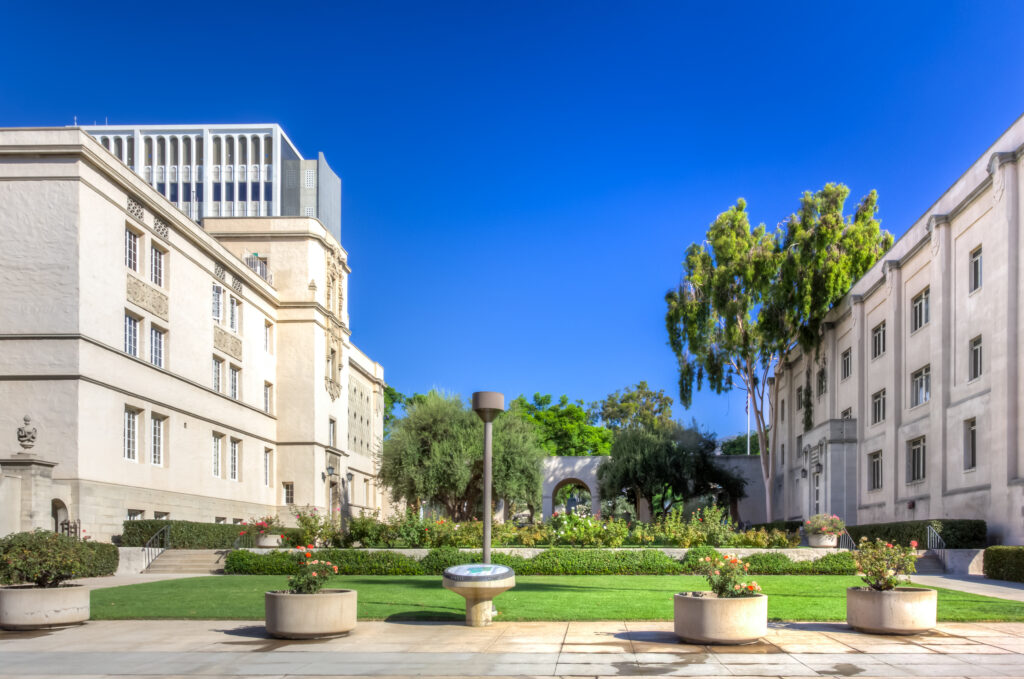
- Campus size: 124 acres
- Student body: about 1,000 undergrads and 1,400 grad students (about 2,400 total)
- Signature research tie: Caltech manages NASA’s Jet Propulsion Laboratory (JPL)
Check out Caltech’s campus here:
The hard data: compare and contrast
When it comes to achievements, both MIT and Caltech have bragging rights in spades. Let’s take a look at the evidence.
Admissions and acceptance rates
Both schools reject almost everyone. A “perfect” applicant pool exists at both.
- MIT first-year admission:
- Applicants: 28,232
- Admits: 1,284 (4.5%)
- Caltech first-year admission:
- Applicants: 13,856
- Admits: 356 (2.6%)
What does that mean for students? Is it impossible?
Not quite impossible, but definitely a challenge; the competition has never been fiercer. At both schools, computer science, AI-related pathways, and certain engineering lanes attract extremely qualified candidates. Extremely high test scores are the norm at both MIT and Caltech.
On top of that, Caltech’s small size adds another pressure point: fewer total seats, fewer total majors, fewer total “backup” pathways inside the same institution.

Academic programs
Academic calendar:
- MIT runs a fall/spring structure plus a four-week January Independent Activities Period (IAP), described as part of MIT’s “4-1-4” calendar. The short IAP gives students a chance to explore a hands-on project each January.
- Caltech runs a three-term structure (Fall term, Winter term, Spring term) shown across Caltech’s registrar calendars and catalog listings.
This section decides fit more than most families expect. For instance:
- If you like switching contexts fast, stacking projects, and pulling ideas from many departments, MIT often aligns.
- If you like going all-in on hard science with a small peer group and high mentorship density, Caltech might be the choice for you.
Sports and spirit
Neither school sells a big-time football experience. Instead, school spirit shows up in other ways. For instance, traditions and pride often show up through hacks, pranks, and inside jokes, including the long-running Caltech–MIT prank culture.
- MIT athletics competes primarily in NCAA Division III, with “Engineers” as the nickname.
- Caltech athletics competes in NCAA Division III, with “Beavers” as the identity.
Student life: housing and social atmosphere
Curious about the first-year student experience? This is where the “small vs large STEM school” question becomes real.
For starters, MIT offers a Pass/No Record system for first-year students in their first semester, reducing grade pressure as students adjust. Caltech has a similar system (Pass/Fail for the first two terms), but MIT’s is often viewed as more generous.
Caltech: the House System effect
- Caltech’s tight residential structure concentrates social life.
- Many students describe a strong identity tied to house culture and shared traditions.
- Upside: belonging arrives fast, support feels built-in, friendships deepen through shared routines.
- Pressure point: fewer social “lanes” exist, so conflict or mismatch inside a small community feels louder.
MIT: broader residential communities
- MIT has many residence halls plus an active ecosystem of fraternities, sororities, and independent living groups.
- Social life often spreads across:
- dorm culture
- clubs and labs
- hackathons and maker spaces
- Boston and Cambridge access
- Upside: more freedom to reinvent, easier to find a “second home” if your first group fails to click.
- Pressure point: more noise, more options, more FOMO, more self-management.
Outcomes: careers, grad school, and salary ROI
Outcomes look strong at both schools. Differences show up in pathways and scale.
Salary signals:
- MIT reports an average starting salary of $126,438 for graduates entering industry.
- Caltech reports a median base salary range of $110K–$119K for graduates who accepted full-time roles.
Where alumni often land:
- MIT pathways often skew toward:
- big tech, startups, consulting, finance, biotech, and applied AI
- product-building roles and founder tracks, helped by Boston-area density
- Caltech pathways often skew toward:
- PhD routes and research-heavy careers
- aerospace, national labs, space science, and deep-tech startups, influenced by proximity to JPL and Southern California’s aerospace corridor
Final recommendation: choose the place that matches your wiring
The question of MIT vs. Caltech is not a prestige contest. Both schools sit near the top of global rankings and both produce elite outcomes.
It comes down to culture. MIT students often describe the campus as intense but collaborative, competitive against problems (not each other). At Caltech, the Honor Code and small size mean students rely deeply on one another, sometimes even more than on faculty.
Next steps that lead to a confident decision:
- Visit in person if possible. If travel blocks plans, schedule virtual tours plus a student panel.
- Sit in on a class or watch sample lectures, then compare how your brain responds.
- Ask admissions for contact with current students in majors you care about.
- Check social media accounts like Reddit or YouTube vlogs to get an unfiltered insight into daily life, workload, and stress culture.
If you want application strategy support for each school, Empowerly’s guides break down what each campus tends to reward:

Here are a few questions to ask yourself as you reflect:
- Do you want a tiny peer cohort where everyone knows everyone, or do you want a larger community where you pick your lane over time?
- Do you learn best through deep theory and long problem-set marathons, or through build-test-iterate projects with many teams and clubs?
- Do you want a campus experience centered on a tight residential system, or do you want more social options across dorms, independent living groups, and a major city?
- Do you want daily proximity to a huge innovation marketplace, or do you want a quieter environment built around research intensity?
- Which environment fits your stress profile: fewer choices with higher intimacy, or more choices with higher self-management?
Do your best to answer these prompts thoughtfully and honestly. There are no wrong answers, only your truth as a student.
MIT vs. Caltech: the bottom line
When it comes to choosing which school is “better”, here’s the behind-the-scenes truth: no single article or ranking settles this decision. Your best fit depends on your goals, finances, learning style, and the environment where you do your strongest work. Book a free consultation to learn more about the Empowerly approach. We’re here to help.
