What is Princeton University known for? A lot — and not just its Ivy League name. Princeton is one of the oldest universities in the U.S., founded in 1746.
Princeton is currently ranked the #1 university in the United States according to U.S. News & World Report’s 2026 Best Colleges edition. It has had three U.S. Presidents attend (Woodrow Wilson, James Madison, and John F. Kennedy), with two graduating. Its alumni list includes world leaders, Nobel winners, and billionaires.
If you plan to apply to Princeton, here are 30 things you should know before you do.
30 Things Princeton University is Known For
Before you apply or even consider applying, it helps to know what makes Princeton stand out. Here are 30 things Princeton University is known for:
1. Princeton is the #1 University in the U.S.
Princeton ranks as the #1 university in the United States in U.S. News & World Report’s 2026 Best Colleges edition. It topped both MIT and Harvard for the top spot, holding firm at the summit for the fourth straight year.
The ranking considers factors like graduation rates, faculty resources, and academic reputation — all areas where Princeton excels. Princeton was also ranked #1 in Best Value Schools for 2026, an even rarer combination.
Princeton is also a private Ivy League university known for its elite academics, accomplished faculty, and research-driven environment. It’s located in Princeton, New Jersey — a quiet suburb about an hour from Philadelphia and two hours from New York City.
If you’re aiming to get into Princeton, know that you’re applying to the best.
2. 500+ Acres of Campus on the 4th Oldest University in the U.S.
Founded in 1746, Princeton is the fourth oldest university in the U.S. It was originally named the College of New Jersey and officially became Princeton University in 1896.
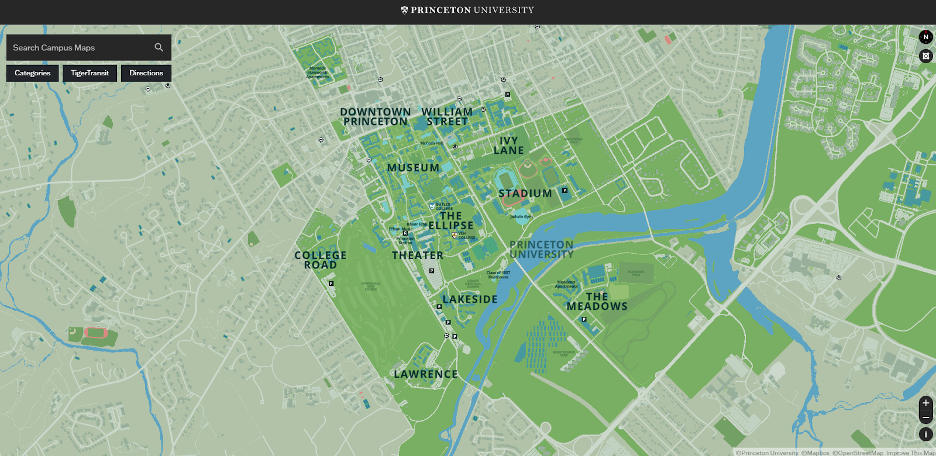
The campus spans 500+ acres in the town of Princeton, New Jersey. It’s walkable, filled with historic landmarks, and surrounded by parks, museums, and restaurants.
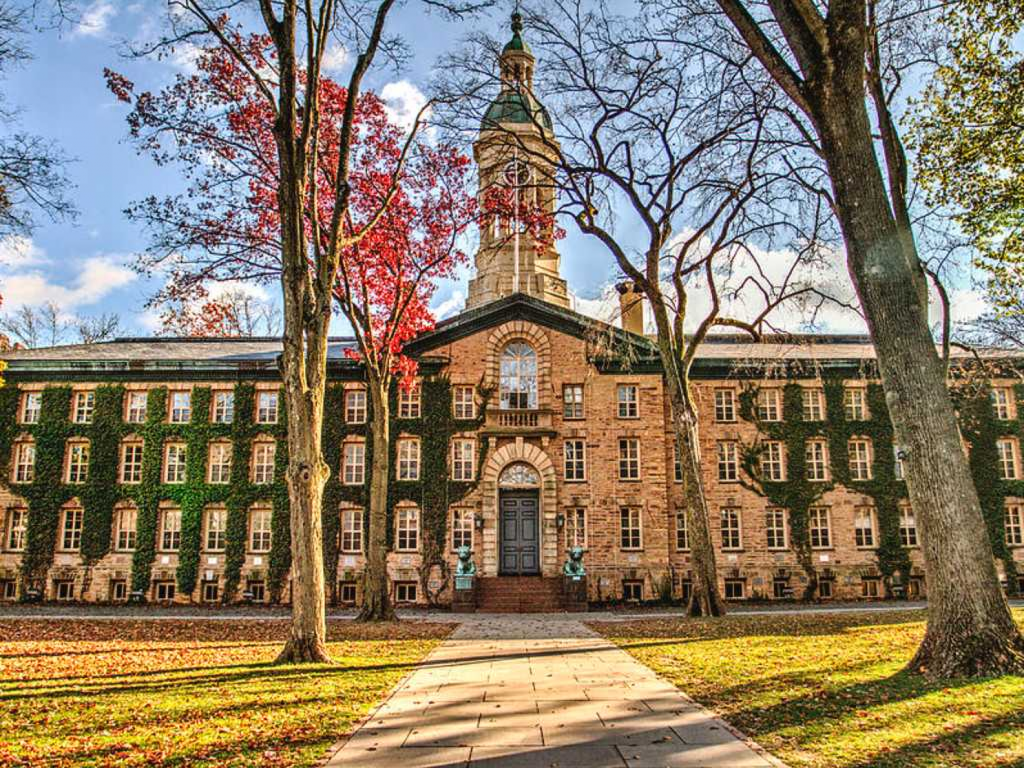
Nassau Hall, completed in 1756, is the university’s oldest building. It briefly served as New Jersey’s first state capital and hosted a public reading of the Declaration of Independence. Today, it houses Princeton’s administrative offices.
Other landmarks include Cleveland Tower, a memorial to President Grover Cleveland, along with statues, cannons, a sundial, and even a campus lake.
Princeton guarantees housing for all four years, and 94% of undergraduates live on campus. It’s more than a school — it’s a living museum of American academic history.
3. Princeton Traditions Date Back to the 1860s
Princeton’s long history brings with it a set of powerful, time-honored traditions. Some are quirky, others competitive — but each adds to the school’s identity.
One of the most iconic is the Bonfire. It only happens when Princeton beats both Harvard and Yale in football during the same season. When it does, students build a massive bonfire on Cannon Green using wood, effigies, and campus spirit. It’s rare — the last ones were in 2018 and 2013 — but unforgettable.
Another is Cane Spree, a tradition dating back to the 1860s. What started as actual class-year brawls is now an intramural competition between freshmen and sophomores each October. Events include relay races, obstacle courses, and tug-of-war.
Seniors also design and wear a class jacket (formerly a “beer jacket“), which features their class year and becomes their uniform during Reunions. Some students even choose to print and bind their senior thesis in leather, presenting a copy to their advisor — a meaningful gesture tied to Princeton’s academic culture.
From rowdy rivalries to formal rituals, Princeton’s traditions leave a lasting mark on campus life.
4. Princeton Has a Long List of Famous Alumni
Princeton is known for shaping leaders across politics, business, science, and the arts. Few universities have a roster of alumni this influential.
Two U.S. Presidents, James Madison and Woodrow Wilson, graduated from Princeton. John F. Kennedy also attended before transferring to Harvard. Today, Princeton’s School of Public and International Affairs bears Wilson’s name.
Other major political figures include Michelle Obama, Senator Ted Cruz, George Shultz, Donald Rumsfeld, and Supreme Court justices Elena Kagan and Samuel Alito.
In business, alumni include Jeff Bezos (Amazon), Meg Whitman (HP, Quibi), Malcolm Forbes, and Robert L. Johnson (BET).
In arts and entertainment, F. Scott Fitzgerald, Jimmy Stewart, Brooke Shields, Ellie Kemper, and David Duchovny all walked Princeton’s halls.
Even Albert Einstein had an office on campus, while George Washington received formal thanks from Princeton at Nassau Hall in 1783 — the same building that briefly served as the U.S. Capitol.
5. Princeton’s $34 Billion Endowment
Princeton’s endowment is one of the largest in the world, valued at $34.1 billion as of June 2024. That’s larger than the GDP of countries like Honduras and Cambodia.
Here’s the deal: Princeton funds nearly two-thirds of its operating budget with endowment earnings, using those funds to support teaching, research, and financial aid.
Returns average 9.9% over 20 years, thanks to a smart investment strategy and decades of philanthropy. In fiscal year 2024, Princeton distributed $1.7 billion from the endowment to support university priorities.
The money funds full tuition and stipends for all Ph.D. students, need-based aid for undergraduates, and major research in areas like AI, climate science, and Alzheimer’s. Now, here’s something most students don’t realize: as of fiscal year 2026, Princeton’s undergraduate financial aid budget alone reached $306 million, with endowment payouts covering nearly 70% of that figure.
Donor support makes a real difference. In 2020, alumni Kwanza Jones (’93) and José E. Feliciano (’94) gave nearly $20 million — the largest donation ever from Black and Latino alumni.
This endowment doesn’t just reflect Princeton’s wealth, it reflects its long-term investment in talent, access, and global impact.
6. Princeton Excels in Public and International Affairs
Founded in 1930, it was originally named after Woodrow Wilson, a former Princeton president and U.S. President. In 2020, the university removed his name due to his racist views and policies, a move that reflects Princeton’s evolving values.
The school trains future leaders in government, international organizations, and nonprofits. Students learn from top policy experts and gain hands-on experience through internships and fieldwork.
Its alumni have helped shape major global decisions, from public health to diplomacy. If you’re interested in solving complex global problems, Princeton’s public affairs program stands among the best.
7. Princeton’s Art Museum Holds Over 5,000 Years of History
The Princeton University Art Museum is one of the oldest and most respected university museums in the U.S. Its collection spans over 5,000 years of art history, from ancient artifacts to contemporary works.
The museum plays a central role in campus life. It supports lectures, exhibitions, and educational programs for both students and the local community. Art is used here not just for display, but for learning and research.
Whether you’re into classical sculpture or modern photography, this museum reflects Princeton’s commitment to cultural depth and academic excellence.
8. Princeton Offers One of the Best Financial Aid Programs in the Country
Princeton is expensive, like most elite private universities, with a Princeton tuition and fees of $65,210 per year for 2025-26, but few schools do more to make it affordable.
It’s one of the only universities that’s both need-blind and no-loan for all students, including international applicants. Princeton replaces loans with grants that never need to be repaid, and meets 100% of demonstrated need.
Want to know how generous it gets? In August 2025, Princeton announced a major financial aid expansion. Here’s what that looks like in 2026:
Most families earning under $100,000 pay nothing — the tuition, room, and board are fully covered.
Most families earning up to $250,000 receive free tuition.
Even families earning up to $300,000 often receive substantial grant support.
The average grant now covers nearly 90% of total student charges, compared to 65% in 2001-02.
The bottom line? If you’re worried about cost, Princeton is one of the most financially accessible elite schools you can apply to.
9. Nassau Hall Is a Symbol of Princeton and American History
Completed in 1756, Nassau Hall is Princeton’s oldest building and one of its most important landmarks.
It served as the original campus of the College of New Jersey and briefly became the U.S. Capitol in 1783 when the Continental Congress met there. George Washington was formally thanked on its steps for his role in the Revolution.
Today, Nassau Hall houses Princeton’s main administrative offices, including the Office of the President. Its history and architecture reflect the university’s deep roots in both education and early American government.
10. Albert Einstein Called Princeton His Intellectual Home
He became a life member of the Institute for Advanced Study and had an office on campus during his years in the U.S. He participated in student-led cultural events, including Princeton Hillel’s first official Shabbat.
Einstein’s presence reflects what Princeton is known for: attracting brilliant minds, supporting deep thought, and fostering an environment where ideas change the world.
11. Princeton Leads in Neuroscience Research and Education
The Princeton Neuroscience Institute (PNI) is one of the top brain research centers in the world. It brings together experts from biology, physics, psychology, computer science, and engineering to explore how the brain works — from molecules to memory.
Students can study cutting-edge topics like neural computation, cognitive processing, stem cells, and brain imaging. PNI is also home to some of the most advanced equipment in the field, including EEG systems, research-grade MRI scanners, and high-resolution microscopes.
The institute emphasizes hands-on research for undergraduates and strong links between theory and experimentation.
12. Princeton Chapel Is One of the Largest in the World
Completed in 1928, the Princeton University Chapel is the third-largest university chapel globally. It serves as the heart of campus spiritual and ceremonial life.
The chapel hosts interfaith services, concerts, meditations, and formal events, including the opening and closing of each academic year. It’s open daily from 7 am to 11 pm and welcomes students of all faiths and backgrounds.
Designed with Gothic architecture and modern accessibility features, the chapel offers both grandeur and quiet reflection. It’s more than a building, it’s a symbol of Princeton’s inclusive and community-centered values.
13. Woodrow Wilson’s Legacy at Princeton Is Complicated
Woodrow Wilson served as Princeton’s president before becoming the 28th U.S. President. He restructured Princeton’s curriculum and pushed the school toward modern academic excellence.
But Wilson’s name has become controversial due to his racist policies as both a university leader and a national figure. He opposed Black student enrollment at Princeton and re-segregated federal offices during his presidency.
In 2020, the university removed his name from the School of Public and International Affairs and a residential college. Princeton now places Wilson’s contributions in a fuller context, while doubling down on its commitment to inclusion and diversity.
The Princeton Plasma Physics Laboratory (PPPL) is one of the world’s top centers for fusion energy research. Its mission: develop clean, sustainable energy through fusion, the same process that powers the sun.
Researchers at PPPL study plasma physics, design experimental reactors, and build technologies that could one day replace fossil fuels. Their work advances the global push for safer, long-term energy solutions.
PPPL is a symbol of Princeton’s role in solving urgent scientific and environmental challenges.
15. Service Is Core to Princeton’s Mission
Princeton’s unofficial motto says it all: “In the nation’s service and the service of humanity.”
Students are encouraged to take that seriously through tutoring, public health work, sustainability projects, and more. Service isn’t a side activity at Princeton; it’s woven into classes, research, and community life.
The Pace Center for Civic Engagement guides students from orientation to graduation, offering leadership training, local outreach, and real-world impact. Events, workshops, and campus centers like the Fields Center and Women’s Center provide space for advocacy and reflection.
Princeton doesn’t just talk about public service, it actively prepares students to live it.
16. Princeton Triangle Club Is America’s Oldest College Musical Comedy Group
Founded in 1891, the Princeton Triangle Club is one of the university’s most iconic traditions. Students write, produce, and perform original musical comedies — packed with wit, satire, and live music.
Each fall, Triangle premieres a new show at McCarter Theatre, followed by a national tour in January. The production returns in spring for Princeton Reunions, drawing alumni from around the country.
Triangle isn’t just entertainment, it’s a creative proving ground. Students direct, choreograph, build sets, and run the show. It’s a beloved part of campus life and a launchpad for artistic careers.
17. Princeton Helped Shape Modern Computer Science
Princeton’s role in computer science history is massive. From Alonzo Church’s lambda calculus to early work with von Neumann and IAS machines, Princeton helped define the field.
Today, the Department of Computer Science leads research in algorithms, AI, machine learning, robotics, and computational biology. The school combines theory with practical tools that push innovation forward.
Notable figures like Michael Rabin, Dana Scott, and Hartley Rodgers all extended Princeton’s legacy in formal systems, programming languages, and automata theory. Facilities include powerful computing labs and partnerships with major research centers.
18. Princeton’s Campus Architecture Blends Gothic and Futuristic Design
Princeton is famous for its Collegiate Gothic architecture — vaulted ceilings, stone façades, and
ivy-covered towers. Buildings like Nassau Hall and Cleveland Tower reflect centuries of academic tradition.
But the campus isn’t stuck in the past. Modern additions bring in sustainable design, robotics in construction, and bold new forms that complement the Gothic core.
A recent project by Princeton engineers used glass bricks and industrial robots to construct a free-form vault for an architecture exhibition in London. The result was both timeless and forward-looking.
19. Princeton Academics Push You to Think Independently
Princeton is known for rigorous academics and a strong focus on independent research. Two of its defining features are the junior paper (JP) and the senior thesis, required in nearly all majors.
The JP introduces research methods and one-on-one mentorship. The senior thesis builds on that, giving students the chance to publish original work in their field.
Princeton also has top-ranked faculty in both STEM and the humanities. Writers like Toni Morrison and Joyce Carol Oates have taught on campus.
With over 215 Rhodes Scholars, Princeton ranks just behind Harvard and Yale. It’s a school that produces thinkers, researchers, and future leaders. The student-faculty ratio of 5:1 — among the lowest in the country — makes that level of mentorship not just available but expected.
20. Princeton’s Admissions Process Is Highly Competitive
Getting into Princeton is tough. Each year, the university admits a small, exceptional group of students from around the world. Picture this: out of roughly 32,000 applicants, only about 1,200 are admitted — an acceptance rate of approximately 3.7% in 2026.
Princeton looks for academic excellence, especially in math, science, and research. But test scores are only part of the story.
The admissions team also wants to know your voice, your story, and how you’ll contribute to Princeton’s campus life. That includes leadership, creativity, resilience, and service.
Application deadlines are:
Single-Choice Early Action: November 1
Regular Decision: January 1
Transfer: March 1
If you’re applying, show how you’ll take full advantage of the opportunities Princeton offers, inside and outside the classroom.
21. Extracurricular Life Is a Big Part of the Princeton Experience
From varsity sports to student-run clubs, Princeton’s extracurriculars are a huge part of campus culture.
One of the most unique traditions? The eating clubs, social and dining clubs for juniors and seniors. There are 11 in total, each with its own personality. Some are sign-in, others are bicker (selective).
Princeton’s sports history runs deep. It played the first-ever college football game in 1869 and still holds rivalries with Harvard, Yale, and Penn.
From cultural groups to athletic teams to public service organizations, Princeton offers hundreds of ways to get involved, lead, and build community.
22. Residential Life at Princeton Is Supportive and Full of Tradition
Princeton guarantees four years of on-campus housing, and 96% of students choose to live on campus. All first- and second-year students live in one of seven residential colleges: Butler, Mathey, Forbes, New College West, Whitman, Rockefeller, or Yeh.
Each college includes a dining hall, classrooms, study spaces, and community events. Students eat, learn, and grow together, often building lifelong friendships.
You’ll also get support from faculty heads, deans, and student advisers. Events range from language dinners and film series to sports tournaments, barbecues, and group outings.
Whether you stay in your college all four years or move to upperclass dorms, you’ll remain part of its community, right up to graduation day.
23. A Peaceful Campus Near the Heart of Two Major Cities
Princeton’s campus sits in the scenic town of Princeton, New Jersey, a quiet, leafy place with real charm. But don’t let the small-town feel fool you.
It’s less than 50 miles from New York City and Philadelphia, giving students quick access to internships, museums, concerts, and weekend escapes.
The campus itself is stunning. Gothic buildings, open greens, and historic landmarks like Cannon Green and Prospect Gardens make it one of the most beautiful campuses in the country.
Getting there is easy thanks to the “Dinky” train and Tiger Transit; you’re just minutes from major transit hubs.
24. Whig-Clio: America’s Oldest College Debate Society Lives Here
Founded in 1765 by students like James Madison and Aaron Burr, the American Whig-Cliosophic Society is the oldest literary and debating society in the U.S.
Known as Whig-Clio, it brings together politically-minded students who want to debate, write, and lead. The society has left its mark on American history, with alumni that include two U.S. presidents, two vice presidents, and four Supreme Court justices.
Today, it hosts public debates, Senate simulations, speaker events, and social mixers. Students join either the Whig Party (left-leaning) or Clio Party (right-leaning), keeping the society’s lively spirit of dissent alive.
If you want to sharpen your argument, find your voice, or step into public life, Whig-Clio is the place for it.
25. Princeton Gave the Word “Campus”
Ever wondered where the word “campus” comes from? You’re standing on it.
The Latin word campus means “field,” but it was first used to describe college grounds at Princeton. Specifically, the area around Maclean House, where two sycamore trees still stand to mark the 1766 repeal of the Stamp Act.
Today, “campus” is used around the world. But the idea of the college quad, the central green, the academic hub — it all started right here.
It’s a fun bit of trivia with a serious point: Princeton has shaped not just ideas, but the very language of higher education.
26. The Carl A. Fields Center Champions Inclusion and Equity
Named after Carl A. Fields, the first Black dean in Ivy League history, the Carl A. Fields Center is Princeton’s hub for diversity, equity, and social justice work.
The Center hosts everything from film nights to dialogue series, mentoring programs to leadership workshops. Initiatives like PUMP and the Carl Fields Fellows help students explore race, identity, and activism in meaningful ways.
Whether you’re looking for community, education, or a place to get real about social change, the Fields Center is where it happens.
It’s a cornerstone of Princeton’s promise to build a campus that welcomes and empowers every voice.
27. Princeton’s Historic Trees Tell a Quiet Story
Scattered across Princeton grounds are centuries-old trees, like the sycamores near Maclean House, planted to mark the repeal of the Stamp Act in 1766.
Some, like the towering tulip poplar near East Pyne, have stood watch since the 1800s, surviving fires and witnessing generations of students pass beneath their branches.
Others, like the massive ginkgo near McCosh Walk, hint at rarer stories — possibly planted before the Civil War or ordered by President James McCosh himself.
With over 400 species on campus, Princeton’s trees are more than decoration. They’re part of the university’s DNA — silent storytellers that link today’s scholars to the past, and proof of how nature and history can grow side by side.
28. Seeley G. Mudd Library: Where Princeton’s Academic Legacy Lives On
Home to over 60,000 senior theses, including those written by Sonia Sotomayor and Michelle Obama, Mudd Library holds the intellectual fingerprints of generations of Princeton graduates.
It’s also where you’ll find the University Archives, spanning more than 15,000 linear feet of documents, photographs, and audiovisual records.
For anyone who values scholarship and history, this is sacred ground.
29. Princeton Reunions Are Legendary
Every spring, Princeton turns into a sea of orange and black. The reason? Reunions.
One of the biggest and most beloved alumni gatherings in the country, Princeton Reunionsdraw over 25,000 alumni, families, and friends back to campus. From the spirited P-rade on Saturday to the nighttime fireworks and live concerts, it’s a celebration of tradition, connection, and Tiger pride.
There are also faculty forums, campus art exhibits, and performances by student and alumni groups. Whether you graduated last year or 50 years ago, Reunions offer a chance to reconnect with old friends, meet current students, and experience Princeton all over again.
The campus starred in “A Beautiful Mind,” the Oscar-winning story of mathematician and alumnus John Nash, bringing international attention to the university’s scholarly mystique.
You’ll also spot Princeton in shows like “The West Wing” and “Scandal,” or tied to fictional characters like Batman’s Bruce Wayne and Carlton Banks from The Fresh Prince of Bel-Air.
These appearances aren’t just fun trivia. They reflect Princeton’s enduring presence in the cultural imagination as a symbol of brilliance, tradition, and ambition.
Whether real or fictional, when a character goes to Princeton, it means something. And that’s a testament to the university’s iconic status in global storytelling.
Princeton by the Numbers: Admissions Stats for 2026
So you’ve read about what makes Princeton special — now let’s break down what it actually takes to get in. Here’s a snapshot of Princeton admissions and student life by the numbers for 2026.
Acceptance Rate and Application Volume
Overall acceptance rate: approximately 3.7% for the most recent admissions cycle
Applications received: roughly 32,000 per year
Students admitted: around 1,200
First-year class size: approximately 1,400 enrolled students
Now, here’s the kicker: Princeton’s acceptance rate places it in the same statistical tier as Stanford and MIT, but its applicant pool is smaller and arguably even more self-selecting. Princeton is famously looking for students who pair intellectual rigor with genuine humility — flashy applicants who lean too heavily on credentials often don’t make the cut.
Academic Profile of Admitted Students
Middle 50% SAT range: approximately 1500-1570
Middle 50% ACT range: approximately 34-35
Most admitted students rank in the top 10% of their high school class
Test-optional policy: Princeton remains test-optional for the 2026 admissions cycle, though many admitted students still submit scores
Student Body Snapshot
Total undergraduate enrollment: 5,813 (Fall 2024)
Total graduate enrollment: approximately 3,280
Student-faculty ratio: 5:1 — one of the lowest in the country
Pell Grant-eligible students in the Class of 2029: ~25%, the largest contingent in Princeton’s history
Cost and Financial Aid
2025-26 tuition and fees: $65,210
Total cost of attendance (2025-26): $90,718
Average net price for federal loan recipients: $8,143
Percentage of first-year students receiving need-based aid: 67%
Free tuition threshold: Most families earning up to $250,000
Outcomes
Four-year graduation rate: 75%
Six-year graduation rate: approximately 97%
Median salary six years after graduation: $87,815
Percentage of students graduating debt-free: 82%
The bottom line? Princeton is one of the most selective universities in the world, but it’s also one of the most generous when it comes to financial aid. If you can get in, the cost should never be the reason you don’t go.
Frequently Asked Questions About Princeton University
Got more questions about Princeton? Here are answers to some of the most common queries from prospective students and families.
Is Princeton harder to get into than Harvard or Yale?
All three Ivies are extraordinarily selective, but their acceptance rates are within a percentage point or two of each other. For 2026, Princeton’s acceptance rate sits around 3.7%, similar to Harvard and Yale. The differences come down to applicant pool composition and institutional priorities, not raw numbers. If you’re applying to one, you should be prepared for the difficulty of all three.
Does Princeton offer Early Decision?
No. Princeton offers Single-Choice Early Action (SCEA), which is a non-binding early option. You can only apply to one private university through Early Action if you choose Princeton, but you’re not committed to attending if accepted. The deadline is November 1, with decisions released in mid-December.
What are Princeton’s most popular majors?
Princeton is best known for its strengths in computer science, economics, public and international affairs, mathematics, and the molecular biology and engineering programs. The university also has top-ranked humanities programs, including English, history, and philosophy. Engineering students apply to a separate B.S.E. track.
What GPA do I need to get into Princeton?
There’s no official GPA cutoff, but most admitted students rank in the top 10% of their high school class with unweighted GPAs of 3.9 or higher. Princeton evaluates applications holistically — your course rigor (especially AP, IB, and honors classes), essays, recommendations, and extracurricular leadership matter as much as raw GPA.
How does Princeton’s financial aid compare to other Ivies?
Princeton’s financial aid is widely regarded as the most generous in the Ivy League. As of 2026, it offers free tuition to most families earning up to $250,000, no-loan packages for all aid recipients, and meets 100% of demonstrated need including for international students. Most peer institutions have similar policies, but Princeton’s income thresholds and grant generosity tend to be slightly higher.
Can international students get financial aid at Princeton?
Absolutely. Princeton is one of only a handful of U.S. universities that is need-blind for international applicants and offers the same generous financial aid packages to international students as it does to U.S. citizens. International students with demonstrated financial need can attend Princeton with little to no out-of-pocket cost.
What is Princeton’s campus like?
Princeton’s main academic campus spans more than 500 acres in suburban Princeton, New Jersey. It features iconic Collegiate Gothic architecture, sprawling green spaces, and over 400 tree species. The campus is walkable and self-contained, with most students living on-campus all four years. The town of Princeton itself is quaint and historic, with shops, restaurants, and easy train access to New York City and Philadelphia.
Is Princeton worth the cost?
For most students who get in, the answer is overwhelmingly yes. Between its #1 ranking, generous financial aid program, exceptional outcomes (median salary of $87,815 six years after graduation), and lifelong alumni network, Princeton offers tremendous return on investment. With 82% of students graduating debt-free and free tuition for families up to $250,000, the actual cost of attending Princeton is far lower than the sticker price suggests.
Your Princeton Application Process Starts Here
Princeton’s legacy is more than academic — it’s a launchpad for future leaders, creators, and changemakers. From groundbreaking research to unforgettable campus traditions, it offers an experience like no other. But getting in takes more than just good grades — it takes strategy, insight, and support.
That’s where Empowerly comes in.
Our expert college counselors, the highest-rated in the country, have helped students increase their admission odds by 11x, with 98% getting into Ivy League and top 25 schools.