Applications
Top Medical Schools 2026: Rankings & Admissions Insights


Curious about the best medical schools in the United States?
You’re not alone. For good reason, becoming a medical doctor is still one of the most prestigious and competitive career paths in the world. The path is anything but simple, involving years of demanding coursework, practical clinical rotations, and specialized training. However, those who succeed reap the benefits of intellectual challenge, lifelong influence, and the capacity to improve lives.
So, if you’re going to put in all that work — which medical schools top the charts this year, and what do you need to know before you apply? In this guide, we’ll break down the 2026 medical school rankings, explain what makes a med school “the best,” and offer early-stage application tips for students starting their journey now.
Why do medical school rankings matter?
Let’s face it: medical schooling is a marathon, not a sprint.
With thousands of qualified students applying every year and only a limited number of spots available, you need to choose wisely. Considering that so much hard work is ahead of you and several years of your life are on the line, it’s no small decision. After all, your path to becoming a doctor will be shaped by where you study.
But (and it’s a big “but”), that doesn’t mean every student needs to go to Harvard to become a great doctor. In fact, choosing the right medical school is about more than a number next to its name. It’s about fit, mission, and what the program offers you.
Here’s a video summary of how to approach this decision:
What makes a medical school “good”? Where do the medical school rankings come from?
Here’s a hint: it’s not just about name recognition.
When it comes to medical school rankings, there’s a lot more under the surface than just prestige. Each year, outlets like U.S. News & World Report and The Princeton Review evaluate programs based on a complex mix of factors that reflect both academic rigor and clinical excellence.
So — what really sets a top medical school apart? Let’s break it down.
1. Research funding and output
Top-tier med schools often lead in cutting-edge biomedical research. Institutions like Harvard, Stanford, and Johns Hopkins typically receive tens of millions in NIH grants each year — giving students access to high-tech labs, clinical trials, and mentorship from field-defining researchers. If you're considering an MD-PhD path or want to contribute to scientific breakthroughs, research rankings matter.
2. Residency match rates
The residency match rate is arguably the ultimate test of a med school’s strength. Programs that consistently send graduates into competitive specialties (like dermatology, orthopedic surgery, or anesthesiology) often signal strong academic prep and support. These schools also tend to have robust advising and clinical placement services.
3. GPA and MCAT stats
It’s no surprise that the most selective medical schools also boast the highest incoming stats. Think median MCAT scores in the 515–522 range, and GPAs well above 3.8. While these numbers don’t guarantee success, they reflect a highly competitive peer group — which can elevate your own performance and expectations.
4. Faculty-to-student ratio and class size
Small-group learning, early clinical exposure, and faculty mentorship all depend on how many students are sharing the space. Top schools often tout low student-to-faculty ratios and a tight-knit cohort model, which helps cultivate collaboration instead of cutthroat competition.
5. Institutional mission and primary care ranking
Don’t overlook mission-driven metrics. Schools like UCSF and the University of Washington consistently rank among the best for primary care education and serving rural or underserved communities. If you're passionate about health equity, global health, or community service, these rankings may matter more than prestige alone.
Not sure if a research powerhouse or a primary care leader is right for you? Consider these three key questions:
- Are you more interested in lab research or patient care?
- Do you want to work in an urban hospital or rural clinic?
- Are you open to public service missions or focused on private practice?
Here’s the bottom line:
Rankings are useful, but they’re not everything. Pay attention to your own goals: research vs. clinical practice, big city vs. rural learning, public health vs. private practice. The “best” medical school is the one that fits your future.
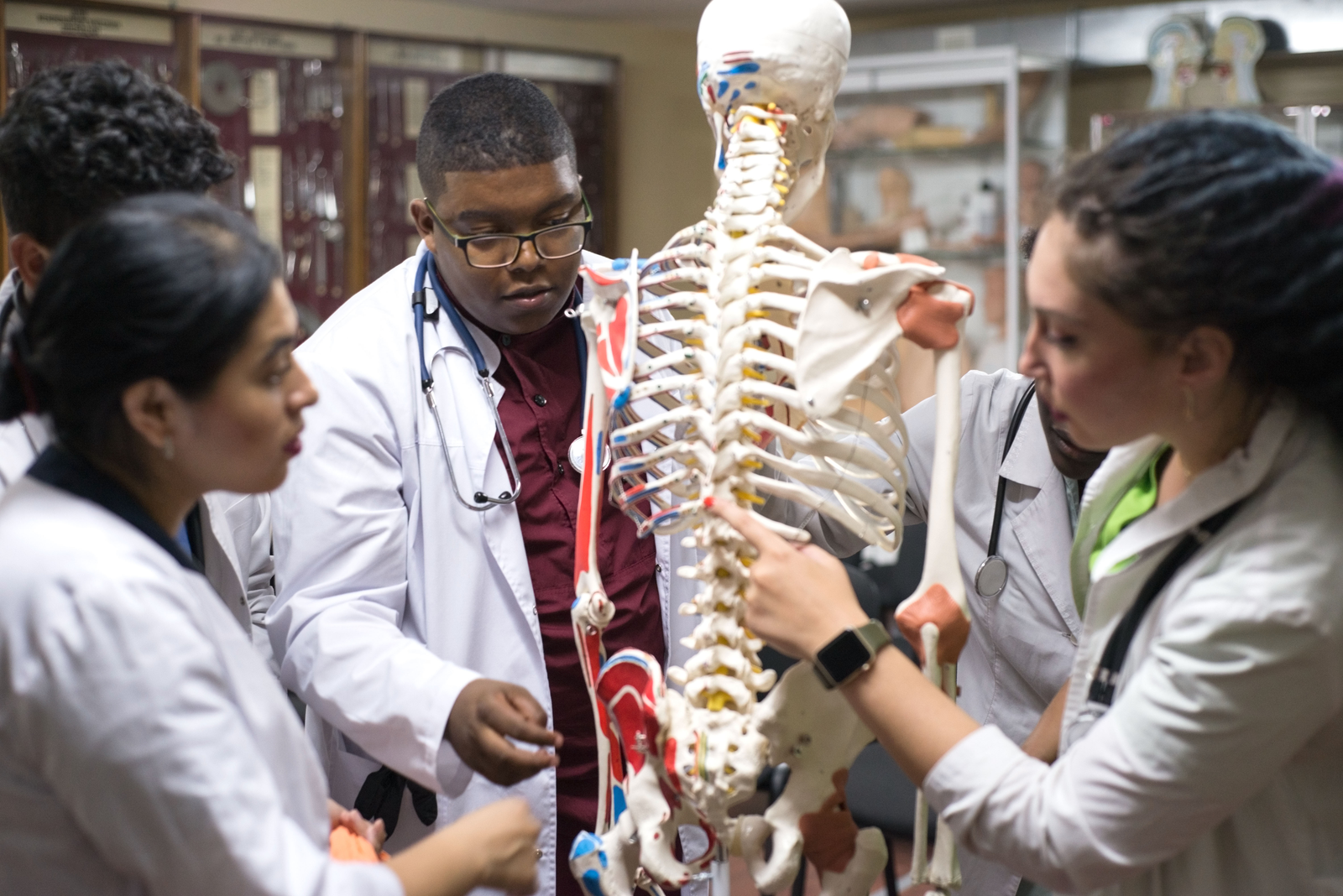
2026 medical school rankings: top 20 programs
Which U.S. medical schools lead the pack in 2026?
The newest medical school rankings, released by the U.S. News & World Report, reflect the latest shifts in academic reputation, research funding, and graduate outcomes. While the top five schools are longtime leaders in medical education, several rising institutions have gained ground thanks to expanded clinical offerings, innovative curriculum design, and strategic investments in research and community health.
Below, we’ve listed the top 20 medical schools in the United States for 2026, with a brief summary of each school’s strengths and profile.
1. Harvard University (Boston, MA)
Harvard Medical School (HMS) is widely regarded as the most prestigious medical school in the world, consistently ranking at or near the top of every major list. Founded in 1782, HMS has been at the forefront of nearly every major advance in modern medicine. The school receives more NIH funding than almost any other institution, and its faculty have collectively won dozens of Nobel Prizes, Lasker Awards, and other major honors. Students benefit from clinical training across a vast network of affiliated hospitals, including Massachusetts General Hospital, Brigham and Women's Hospital, Beth Israel Deaconess Medical Center, and Boston Children's Hospital — each a world leader in its own right. Competitive admissions include a median GPA of 3.94 and an MCAT score of 520.
HMS offers two distinct curricular tracks: the Pathways program (a traditional classroom-to-clinical model) and the Health Sciences and Technology (HST) program, run jointly with MIT, which emphasizes quantitative and engineering approaches to medicine. The school enrolls approximately 165 students per class and maintains a deeply collaborative, non-competitive culture. HMS is an ideal fit for students interested in academic medicine, MD-PhD training, biomedical research, and global health leadership. The school's location in the Longwood Medical Area — surrounded by world-class hospitals, research institutes, and the Harvard T.H. Chan School of Public Health — creates one of the most concentrated biomedical research environments on the planet.
2. Johns Hopkins University (Baltimore, MD)
Johns Hopkins School of Medicine has been a defining force in American medical education since its founding in 1893, when it established the model for modern medical training that most U.S. schools still follow today. Hopkins consistently ranks among the top three medical schools nationally and is particularly renowned for its surgical specialties, biomedical research, and clinical training. The Johns Hopkins Hospital, which serves as the primary teaching hospital, has been ranked the #1 hospital in the country more times than any other institution. The school receives among the highest levels of NIH research funding in the nation, supporting cutting-edge work in oncology, neuroscience, immunology, and public health.
Students at Hopkins benefit from early clinical exposure, a flexible curriculum, and a culture that values both rigorous scientific inquiry and compassionate patient care. The Genes to Society curriculum integrates basic science and clinical training from the first year, and students have ample opportunity to engage in research — many publish before graduation. Hopkins also operates the Bloomberg School of Public Health (the largest school of public health in the world), giving medical students unique access to epidemiology, health policy, and global health resources. The school enrolls approximately 120 students per class, with a median MCAT around 521 and a median GPA above 3.9.
3. University of Pennsylvania (Perelman) (Philadelphia, PA)
The Perelman School of Medicine at the University of Pennsylvania is one of the oldest medical schools in the United States, founded in 1765. Penn consistently ranks in the top five nationally and is particularly strong in neuroscience, cardiology, oncology, and health policy. The school is closely integrated with the Penn Medicine health system, which includes the Hospital of the University of Pennsylvania, Penn Presbyterian Medical Center, and several other facilities across the Philadelphia region. Perelman's research enterprise is massive, with over $1 billion in annual sponsored research across the health system — one of the highest totals in the country.
Perelman offers a wide array of dual-degree programs, including MD-PhD, MD-MBA, MD-JD, and MD-MPH, making it an ideal choice for students who want to combine medical training with other professional interests. The school's curriculum emphasizes early clinical immersion, with students entering hospital settings in their first year. Perelman enrolls approximately 150 students per class, with a median MCAT around 522 and a median GPA of 3.93. The school's Ivy League setting in Philadelphia — a major city with deep history, a thriving food and arts scene, and a lower cost of living than New York or Boston — is an added draw for many applicants.
4. Columbia University (Vagelos) (New York, NY)
The Vagelos College of Physicians and Surgeons at Columbia University is one of the most storied medical schools in the country, with a rich legacy in cardiology, internal medicine, surgery, and neuroscience. Located in the Washington Heights neighborhood of Manhattan, Columbia's medical campus sits adjacent to NewYork-Presbyterian Hospital, one of the top-ranked hospitals in the nation. The school emphasizes urban healthcare access and interdisciplinary training, and its students gain clinical experience in one of the most diverse patient populations in the world. Columbia's research output is extensive, with strong programs in precision medicine, genomics, and neurodegenerative disease.
Columbia's curriculum has undergone significant modernization in recent years, integrating basic science and clinical training more tightly and incorporating early patient contact. The school also offers notable dual-degree programs and a growing focus on health equity and community medicine. Vagelos enrolls approximately 140 students per class, with incoming students typically holding a median MCAT of 522 and a GPA above 3.9. For students who want to train in one of the world's greatest cities with access to a massive, diverse hospital system, Columbia is hard to beat.
5. Stanford University (Stanford, CA)
Stanford School of Medicine is one of the most innovative and forward-thinking medical schools in the country, known for its deep ties to Silicon Valley's biotech and technology ecosystem. The school excels in bioengineering, medical informatics, precision medicine, and translational research — areas where the intersection of medicine and technology is creating entirely new fields. Stanford's research funding is among the highest of any medical school, and its faculty are leaders in immunology, cancer biology, neuroscience, and regenerative medicine. Students benefit from Stanford's broader university culture of entrepreneurship and innovation.
Stanford enrolls one of the smallest medical school classes among top programs — approximately 90 students per year — which creates an intimate, highly collaborative learning environment. The school's Discovery Curriculum emphasizes flexibility, allowing students to pursue individual research interests, global health experiences, and dual degrees. Stanford's clinical training takes place at Stanford Health Care and Lucile Packard Children's Hospital, both of which are nationally ranked. Median incoming stats typically include a GPA above 3.9 and an MCAT around 519. For students interested in the future of medicine — where technology, data science, and biology converge — Stanford is a uniquely compelling choice.
6. Mayo Clinic Alix School of Medicine (Rochester, MN)
The Mayo Clinic Alix School of Medicine offers one of the most distinctive medical education experiences in the United States. With one of the smallest class sizes of any top-ranked program (approximately 50 students per campus across Rochester, MN and Scottsdale, AZ), Mayo provides an extraordinarily high faculty-to-student ratio and deeply personalized mentorship. Students train within the Mayo Clinic itself — consistently ranked as one of the best hospitals in the world — giving them clinical exposure that is difficult to match anywhere else. The school's emphasis on team-based patient care, integrated practice, and clinical excellence reflects Mayo's broader institutional culture.
Mayo's curriculum is built around early clinical immersion, with students entering patient care settings in their first weeks. The school's research enterprise, while smaller than some peers, is tightly focused and produces high-impact work in areas like regenerative medicine, individualized medicine, and surgical innovation. Mayo also offers unique experiences like the Scholarly Concentration Program, where students pursue a focused area of interest (such as health disparities, global health, or medical humanities) alongside their core medical training. For students who prioritize clinical training quality and a close-knit learning community over big-city life, Mayo is an unmatched option.
7. Washington University in St. Louis (St. Louis, MO)
Washington University School of Medicine in St. Louis is one of the top-ranked and most generously funded medical schools in the country. WashU typically ranks in the top 10 nationally and receives among the highest levels of NIH research funding of any institution — supporting world-class programs in pediatrics, neuroscience, oncology, and immunology. The school's primary teaching hospital, Barnes-Jewish Hospital, is consistently ranked among the best in the Midwest and nationally. WashU is also known for its exceptionally generous financial aid: the school has made significant commitments to reducing student debt, including scholarship programs that cover full tuition for qualifying students.
The curriculum at WashU emphasizes early clinical exposure, small-group learning, and a collaborative culture that is widely praised by students and graduates. The school enrolls approximately 120 students per class, with median incoming stats around a 3.92 GPA and a 521 MCAT. WashU's location in St. Louis offers a lower cost of living than coastal cities, and the medical campus is adjacent to a thriving research corridor that includes the McDonnell Genome Institute and Siteman Cancer Center. For students seeking a top-tier medical education with strong financial support and a research-intensive environment, WashU is one of the best values in the country.
8. University of California, San Francisco (UCSF) (San Francisco, CA)
UCSF is widely considered one of the best medical schools in the world — and it is unique in that it is a health sciences-only university with no undergraduate campus. This means every resource, every dollar, and every faculty member is devoted entirely to health sciences education and research. UCSF consistently ranks among the top five programs for primary care education and is a national leader in health equity, public health, and serving underserved communities. Its clinical training takes place at UCSF Medical Center, Zuckerberg San Francisco General Hospital, and the San Francisco VA Medical Center, giving students exposure to a remarkably diverse patient population.
UCSF's research enterprise is enormous, with the school regularly ranking among the top recipients of NIH funding. Faculty and students are leaders in HIV/AIDS research, global health, cancer biology, neuroscience, and health policy. The school enrolls approximately 150 students per class, with a median MCAT around 519 and a GPA above 3.8. UCSF's San Francisco location provides an extraordinary quality of life and access to a booming biotech industry, though the high cost of living is a consideration. For students passionate about primary care, public health, health equity, and community-oriented medicine, UCSF is arguably the single best medical school in the country.
9. Yale University (New Haven, CT)
Yale School of Medicine is known for its distinctive educational philosophy — the Yale System — which emphasizes self-directed learning, intellectual curiosity, and student autonomy. Under the Yale System, students do not receive traditional letter grades in their first two years, and class rankings are not disclosed. This creates a uniquely collaborative and low-stress learning environment that allows students to pursue their interests deeply without the pressure of competing against classmates. Yale is particularly strong in psychiatry, public health, academic medicine, and basic science research, and its faculty includes leaders in immunology, genetics, and global health.
Yale enrolls approximately 104 students per class — one of the smallest cohorts among top schools — and maintains a very low student-to-faculty ratio. The school's primary teaching hospital is Yale-New Haven Hospital, one of the largest and most comprehensive academic medical centers in the Northeast. Yale also offers a strong MD-PhD program and extensive global health opportunities. Median incoming stats include a GPA around 3.93 and an MCAT around 521. For students who value intellectual freedom, self-direction, and a supportive academic culture, Yale offers a medical education experience unlike any other.
10. Weill Cornell Medical College (New York, NY)
Weill Cornell Medical College, located on the Upper East Side of Manhattan, is one of the most clinically connected medical schools in the country. Its primary teaching partner is NewYork-Presbyterian Hospital (shared with Columbia), one of the top-ranked hospitals in the nation, and students also train at Hospital for Special Surgery, Memorial Sloan Kettering Cancer Center, and Rockefeller University — all within blocks of each other. This concentration of world-class clinical and research institutions gives Weill Cornell students unparalleled access to diverse specialties, cutting-edge research, and an extraordinarily wide range of clinical experiences.
Weill Cornell has invested heavily in global health, operating satellite campuses and programs in Qatar, Tanzania, Haiti, and other countries. The school enrolls approximately 106 students per class and has a median MCAT around 521 and a GPA above 3.9. Weill Cornell's curriculum integrates basic science and clinical training from the start, and the school offers dual-degree programs including MD-PhD, MD-MBA, and MD-MS. For students who want to train in the heart of New York City with access to some of the most famous medical institutions in the world, Weill Cornell is an outstanding choice.
11. Duke University School of Medicine (Durham, NC)
Duke University School of Medicine is known for its distinctive accelerated curriculum, which compresses basic science training into the first year and moves students into clinical rotations by the second year. This structure frees up the third year almost entirely for research, giving Duke students one of the most robust research experiences of any medical school in the country. Many Duke medical students publish original research, present at national conferences, or complete a scholarly project that contributes meaningfully to their field before graduation. Duke's primary teaching hospital, Duke University Hospital, is consistently ranked among the best in the Southeast and nationally.
Duke's research enterprise spans oncology, global health, cardiovascular medicine, biomedical engineering, and health policy, and the school benefits from close ties to the Duke Clinical Research Institute — the world's largest academic clinical research organization. The school enrolls approximately 120 students per class, with a median MCAT around 521 and a GPA above 3.9. Duke's Durham, North Carolina location offers a high quality of life, a lower cost of living than major coastal cities, and proximity to the Research Triangle — one of the most concentrated research and tech corridors in the nation.
12. University of Washington (Seattle, WA)
The University of Washington School of Medicine is nationally recognized as the premier program for primary care education and rural health training in the United States. UW has ranked #1 in primary care education for over 30 consecutive years and operates the WWAMI (Washington, Wyoming, Alaska, Montana, Idaho) regional medical education program, which extends clinical training to some of the most underserved and remote areas in the country. Students who choose UW are often deeply committed to serving rural, tribal, and underserved communities, and the school's mission reflects that commitment at every level.
Beyond primary care, UW is also a major research institution with strong programs in global health, infectious disease, and health services research. The school receives substantial NIH funding and operates within the UW Medicine system, which includes Harborview Medical Center (the only Level I trauma center in a five-state region) and Seattle Children's Hospital. UW enrolls a large class of approximately 280 students (across WWAMI sites) and offers one of the most affordable tuitions among top-ranked medical schools for in-state students. For students passionate about primary care, rural medicine, and health equity, UW is the gold standard.
13. University of Chicago (Pritzker School of Medicine) (Chicago, IL)
The Pritzker School of Medicine at the University of Chicago offers a deeply intellectual medical education within one of the world's great research universities. Pritzker is known for its close-knit community, small class size (approximately 90 students), and a culture that values both rigorous inquiry and compassionate care. The school's strengths include bioethics, endocrinology, gastroenterology, and health disparities research. Students train at the University of Chicago Medical Center on the South Side of Chicago, one of the primary Level I trauma centers in the city, which exposes students to a diverse and complex patient population.
Pritzker's curriculum integrates basic science and clinical training with a strong emphasis on evidence-based medicine and scholarly inquiry. The school has invested significantly in health equity and community engagement, reflecting the university's broader commitment to its South Side neighborhood. The school's MD-PhD program is highly regarded, and students have access to the full breadth of the University of Chicago's research resources. Median incoming stats include a GPA around 3.92 and an MCAT around 521. For students seeking a rigorous, intellectually driven medical education with a strong research foundation, Pritzker is an excellent fit.
14. Vanderbilt University (Nashville, TN)
Vanderbilt University School of Medicine is known for its innovative approach to personalized medicine, its collaborative learning environment, and its strong emphasis on student mentorship. The school's Curriculum 2.0, introduced in recent years, integrates basic science and clinical training from the start and emphasizes small-group learning, simulation, and early patient contact. Vanderbilt's primary teaching hospital, Vanderbilt University Medical Center (VUMC), is the largest academic medical center in the Southeast and a national leader in cancer research, genomics, and surgical innovation.
Vanderbilt enrolls approximately 96 students per class and maintains a culture that is widely described as collaborative rather than competitive. The school offers extensive dual-degree programs and global health opportunities, and Nashville's growing healthcare industry (the city is sometimes called the "Healthcare Capital of the World") provides unique career connections. Median incoming stats include a GPA around 3.90 and an MCAT around 519. For students who want a top-tier medical education in a supportive, innovative environment — with the lifestyle benefits of a mid-sized, culturally vibrant city — Vanderbilt is a standout choice.
15. University of Michigan Medical School (Ann Arbor, MI)
The University of Michigan Medical School is one of the most well-rounded medical education programs in the country, offering exceptional strength across research, clinical training, primary care, and community health. Michigan consistently ranks in the top 15 nationally and receives over $500 million in annual research funding — placing it among the top five medical schools in the nation for sponsored research. The school's teaching hospitals, including Michigan Medicine's University Hospital, C.S. Mott Children's Hospital, and the VA Ann Arbor Healthcare System, provide students with clinical experiences across every major specialty.
Michigan's curriculum emphasizes leadership development, public health, and health systems science alongside traditional medical training. The school enrolls approximately 170 students per class and is known for producing graduates who go on to leadership positions in academic medicine, public health, and health policy. Median incoming stats include a GPA around 3.89 and an MCAT around 519. Ann Arbor is consistently ranked as one of the best college towns in America, offering a vibrant cultural scene, Big Ten athletics, and a lower cost of living than most coastal cities. Michigan is an ideal choice for students who want a comprehensive medical education with strong Midwest values and a national reputation.
16. Northwestern University (Feinberg School of Medicine) (Chicago, IL)
Northwestern's Feinberg School of Medicine combines rigorous academics with a prime downtown Chicago location and deep clinical partnerships across one of the country's largest and most diverse metropolitan areas. Feinberg's primary teaching hospital, Northwestern Memorial Hospital, is consistently ranked among the top hospitals in Illinois and the Midwest. The school is known for its interdisciplinary approach, integrating medical training with engineering, law, business, and the social sciences through Northwestern's broader university ecosystem. Research strengths include oncology, cardiology, neurology, and health services.
Feinberg's curriculum is built around an accelerated model that moves students into clinical rotations early and provides extensive opportunities for elective research, global health experiences, and dual-degree programs. The school enrolls approximately 160 students per class, with median incoming stats around a 3.92 GPA and a 521 MCAT. Feinberg's location on Chicago's Streeterville neighborhood — steps from the Magnificent Mile and Lake Michigan — offers an urban medical training environment with access to a diverse patient population and world-class cultural amenities.
17. Icahn School of Medicine at Mount Sinai (New York, NY)
The Icahn School of Medicine at Mount Sinai is one of the most innovative and socially conscious medical schools in the country. Located on the Upper East Side of Manhattan, Icahn is known for its emphasis on diversity, equity, and inclusion (DEI), population health, and social justice in medicine. The school has been a pioneer in creating flexible pathways to medicine, including the FlexMed early assurance program (which guarantees admission to college sophomores and waives the MCAT requirement) and the three-year accelerated MD program for students pursuing primary care careers.
Icahn's research enterprise is extensive, with particular strength in genomics, immunology, data science, and neuroscience. The Mount Sinai Health System, which includes eight hospitals across the New York metropolitan area, provides students with clinical training in one of the most diverse patient populations in the world. The school enrolls approximately 140 students per class, with a median MCAT around 520 and a GPA above 3.8. For students who value innovation, social mission, and diversity in their medical education, Icahn offers a truly distinctive experience.
18. Baylor College of Medicine (Houston, TX)
Baylor College of Medicine stands out among elite medical schools for its exceptional affordability — it is one of the least expensive private medical schools in the country, with tuition significantly lower than its peers. Located in the Texas Medical Center (TMC), the largest medical complex in the world, Baylor students have access to an extraordinary breadth of clinical training sites, including Ben Taub Hospital (one of the busiest public hospitals in the nation), Texas Children's Hospital (the largest children's hospital in the country), and the Michael E. DeBakey VA Medical Center. This concentration of clinical resources is unmatched.
Baylor's research programs are strong in genetics, tropical medicine, vaccine development, and global health — the school houses the National School of Tropical Medicine, one of only two in the U.S. The school enrolls approximately 186 students per class, with a median MCAT around 518 and a GPA above 3.9. Baylor's Houston location provides access to a booming healthcare job market, a diverse and growing city, and a very affordable cost of living compared to New York, Boston, or San Francisco. For students who want a top-tier medical education without the top-tier price tag, Baylor is one of the smartest financial choices available.
19. University of California, Los Angeles (David Geffen School of Medicine) (Los Angeles, CA)
The David Geffen School of Medicine at UCLA is one of the most comprehensive and highly ranked medical schools on the West Coast. UCLA is known for its dual-degree programs, global health initiatives, and commitment to public service and community medicine. Students train at Ronald Reagan UCLA Medical Center, one of the top-ranked hospitals in California, as well as the Santa Monica UCLA Medical Center and the VA Greater Los Angeles Healthcare System. UCLA's research enterprise is extensive, with strong programs in cancer biology, stem cell research, neuroscience, and health disparities.
UCLA's PRIME (Program in Medical Education) offers specialized training tracks for students committed to serving underserved populations, including Latino, African American, and rural communities. The Geffen Scholars program provides full-tuition scholarships to qualifying students committed to community leadership. The school enrolls approximately 175 students per class, with a median MCAT around 519 and a GPA above 3.8. UCLA's Westwood location provides year-round sunshine, a world-class cultural scene, and proximity to LA's sprawling healthcare and biotech industries. For students who want to combine top-tier medical training with public service and a Southern California lifestyle, UCLA is an outstanding choice.
20. Emory University School of Medicine (Atlanta, GA)
Emory University School of Medicine is a rising star among top-ranked medical schools, with particular strength in infectious disease research, public health, and hospital-based clinical training. Emory's location in Atlanta — home to the Centers for Disease Control and Prevention (CDC) and the headquarters of many global health organizations — gives students unparalleled access to public health infrastructure. The school's primary teaching hospitals include Emory University Hospital, Grady Memorial Hospital (one of the largest public hospitals in the Southeast), and the Atlanta VA Medical Center, providing clinical training across a remarkably diverse patient population.
Emory's research enterprise has grown significantly in recent years, with strong programs in HIV/AIDS, virology, immunology, transplant medicine, and global health. The school's Emory Global Health Institute connects students with research and service opportunities in over 100 countries. Emory enrolls approximately 140 students per class, with a median MCAT around 518 and a GPA above 3.8. Atlanta offers a lower cost of living than most major cities, a thriving food and arts scene, and a booming healthcare industry. For students interested in infectious disease, global health, and public health — or who simply want a top-tier medical education in a dynamic Southern city — Emory is an increasingly compelling choice.
These institutions represent the top tier of medical education in the U.S. — but remember, there are over 150 accredited MD and DO programs nationwide. Top medical school rankings are helpful, but finding a school aligned with your goals, values, and learning style matters even more.
Up next, we’ll walk through the key steps in the medical school application process — and how you can build a competitive profile before you apply.

From high school to medical school: how to prepare and apply
If you’re serious about pursuing medicine, your timeline begins now. Whether you're still in high school or already deep into your college pre-med coursework, understanding the full application process early will help you avoid costly mistakes — and maximize your chances at a top-tier program.
Let’s walk through the big-picture steps of getting into medical school and how you can prepare at every stage.
Here’s a simplified timeline of your path from high school to med school:
- High School: Focus on building strong STEM fundamentals, explore health-related extracurriculars (volunteering, research programs, shadowing), and choose a college with strong pre-med support.
- College Years 1–2: Take prerequisite courses (biology, chemistry, physics) and earn good grades in them, build relationships with professors, join pre-med organizations, and begin volunteering or clinical exposure.
- College Year 3: Prepare for and take the MCAT, begin writing your personal statement, and start researching schools.
- College Year 4: Submit actual application(s), write secondaries, interview, and await match decisions.
You might notice that your 3rd and 4th years of college are pretty important! Let’s zoom in on that key time period! Here’s what a sample med school application timeline for undergraduates looks like.
- January - April (spring of junior year): Finalize MCAT prep and start researching colleges By May: Register for online application account(s) By June: Submit primary application(s)
- July - August (summer): Write secondary essays
- August - October (fall of senior year): Interview season
- October - March (spring of senior year): Admissions decisions released
Tuition and financial aid
Let’s get real for a second. What does medical school cost, and how do you pay for it?
The average cost of medical school tuition and fees is around $60,000 per year. However, public or in-state schools can be more affordable, and scholarships or service programs can also help alleviate some of the financial burden.
Just like applying to undergraduate colleges, it’s smart to start early with your FAFSA, submit any school-specific financial aid forms, and apply for merit-based awards when eligible.
Application basics: what you need to know
Official transcripts and GPA
To be competitive, you’ll need strong academics. A GPA of 3.7 or higher, especially in science courses, is typically expected.
MCAT scores
Aim for high MCAT scores; top schools often expect a 515 or above.
Personal statement (about 5,300 characters)
Take the time to communicate a clear, personal reason for pursuing medicine, backed by real-world experience.
Work and activities section
Most competitive applicants include clinical experience in their application. This includes shadowing doctors, hospital volunteering, or hands-on work in healthcare settings.
Letters of recommendation
Naturally, you’ll also need excellent recommendations — ideally from professors, physicians, or research mentors who can speak to your strengths, if possible.
Secondary essays for each school
When possible, reference leadership and service experience through impactful extracurriculars, research, or community engagement.
Interviews for selected applicants
Keep in mind that many med school admissions are rolling, meaning early applicants often have an advantage. Aim to submit your primary application as soon as it opens in late spring or early summer.
Start early, plan strategically
Even if medical school feels years away, your choices in high school can set the foundation for success:
- Choose challenging science courses (AP Bio, Chem, or Physics)
- Explore summer research or medical internships
- Join health or STEM-related clubs
- Reflect early on why you want to pursue medicine
Want more ideas? Explore this pre-med program guide to choose a college that supports your long-term goals.
Additionally, keep in mind that although the road to medical school is lengthy, you don't have to travel it alone. From high school through medical school applications, Empowerly's counselors work one-on-one with students to create competitive pre-med pathways. Get in touch with Empowerly right now to create your pre-med roadmap, go over your college list, and begin making plans for a medical career with knowledgeable assistance at your side.