Applications
2025 Boston University Acceptance Rate: Class of 2029

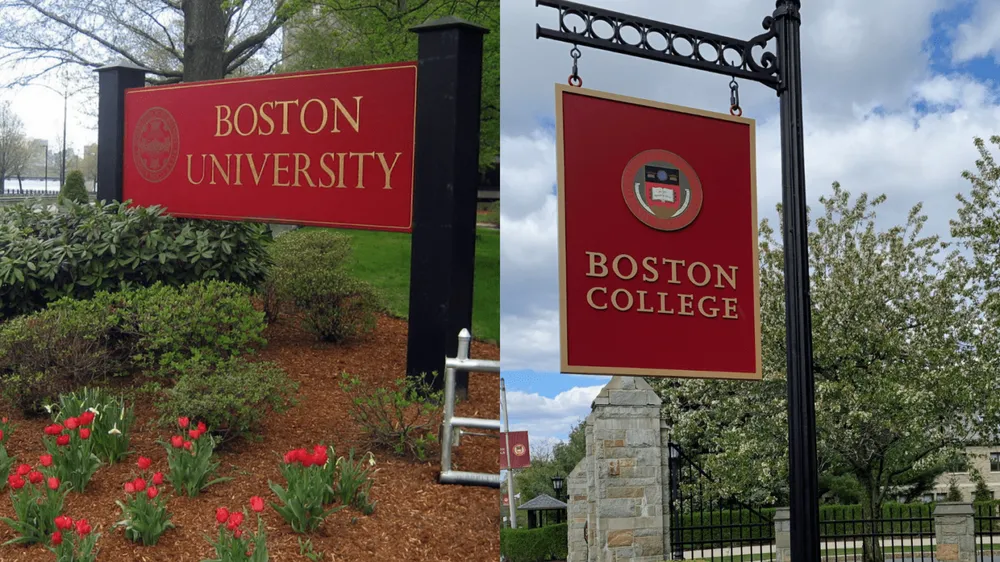
Boston University admitted 12.8% of first-year applicants for the Class of 2029. According to BU’s 2024 to 2025 Common Data Set, the university accepted 9,860 students from 76,776 applications.
Most seats in BU’s first-year class now go to binding Early Decision admits, while the rest of the class is filled through Regular Decision. The university remains test optional for all undergraduate programs through fall 2028 and spring 2029 entry terms and it evaluates applications holistically, with particular emphasis on rigor, grades, essays, recommendations, and personal qualities.
Quick answer: The Boston University acceptance rate is 12.8% for the Class of 2029, based on 9,860 admits out of 76,776 total applicants reported in the Common Data Set.
Because BU releases detailed admissions statistics through its annual Common Data Set, the most recent complete figures currently available describe the Class of 2029 cycle rather than an upcoming Class of 2030 or 2031.
Boston University acceptance rate at a glance
Here is how the Boston University acceptance rate and key admissions policies looked for the two most recent entering classes with full data.
|
Entering Class |
Overall Acceptance Rate |
First-year Applications |
Students Admitted |
Early Decision |
SAT or ACT Policy |
|---|---|---|---|---|---|
|
Class of 2029 |
12.8% |
76,776 |
9,860 |
Two binding Early Decision rounds (ED I and ED II). No separate ED admit rate published. |
Test optional for all applicants through fall 2028 and spring 2029 entry terms. |
|
Class of 2028 |
10.9% |
78,176 |
8,512 |
Two binding Early Decision rounds (ED I and ED II). No separate ED admit rate published. |
Test optional for all applicants through fall 2028 and spring 2029 entry terms. |
How Boston University’s admissions process actually works
Boston University enrolls first-year students primarily through two binding Early Decision rounds and a Regular Decision round. Both Early Decision options are binding. If you apply Early Decision I or II and are admitted and BU’s financial aid offer meets your demonstrated need, you are expected to enroll.
BU uses the Common Application and follows a holistic review process that emphasizes curriculum rigor, strong grades, essays, and school context, alongside extracurricular impact and personal qualities. The university evaluates you both for general admission and for a specific undergraduate school or college, such as the College of Arts and Sciences, Questrom School of Business, the College of Engineering, or the College of Communication.
Standardized testing is optional at Boston University for all undergraduate programs and scholarships for students applying through fall 2028 and spring 2029 entry terms. Applicants who choose not to submit SAT or ACT scores are not disadvantaged, and BU will place greater weight on your transcript, essays, recommendations, and other application components.
BU is a private institution without a preference for in state applicants, and admission decisions are shaped by institutional priorities in each undergraduate college. Waitlist activity varies by cycle and is not guaranteed, so students should treat a waitlist offer as an uncertain outcome rather than a likely path to enrollment.
Boston University acceptance rate: historical trends
The table below shows how the Boston University acceptance rate and application volume have shifted over the last five entering classes, based on BU’s Common Data Set releases.
|
Entering Class |
Acceptance Rate |
Applications |
Admitted |
|---|---|---|---|
|
Class of 2029 |
12.8% |
76,776 |
9,860 |
|
Class of 2028 |
10.9% |
78,176 |
8,512 |
|
Class of 2027 |
11.0% |
80,794 |
8,876 |
|
Class of 2026 |
14.7% |
75,833 |
11,153 |
|
Class of 2025 |
18.6% |
75,473 |
14,012 |
Across these five cycles, BU’s overall acceptance rate declined from 18.6% for the Class of 2025 to 10.9% for the Class of 2028, then rose modestly to 12.8% for the Class of 2029. Application volume stayed very high, with more than 75,000 applicants in every year listed.
Because a majority of the class now enrolls via binding Early Decision, the Regular Decision admit rate is likely lower than the overall university wide rate for each class. BU does not publish separate admit rates for Early Decision or for specific undergraduate colleges, so you should assume that certain programs are more competitive than the headline university acceptance rate implies.
Who gets in: Boston University’s enrolled Class of 2029
GPA
The GPA profile for Boston University’s Class of 2029 shows that most enrolled students are at or near the top of their high school classes, reflecting BU’s emphasis on sustained academic excellence.
|
Measure |
Data |
|---|---|
|
Middle 50% unweighted GPA range |
3.7 to 4.0 |
|
Share of students in top 10% of high school class |
86% |
In practical terms, competitive applicants to BU usually present a transcript with mostly A and A minus grades in a demanding course load. Because BU assigns very high importance to both academic GPA and the rigor of your secondary school record, long term performance in challenging classes is essential for a realistic shot at admission.
Test scores
Under its current test optional policy, Boston University does not publish an official SAT or ACT middle 50% range for the most recent entering classes on its admissions or class profile pages.
Instead, BU emphasizes that applicants may choose whether to submit standardized test scores and that those who apply without SAT or ACT results will not be disadvantaged in the review process. If you do submit scores, they will be considered as one component among many pieces of your academic and personal profile.
What Boston University weighs most in admissions
Boston University’s Common Data Set explains how the admissions office rates each part of your application. The table below summarizes which factors BU considers very important, important, or considered in first year admission decisions.
|
Factor |
Importance |
|---|---|
|
Rigor of secondary school record |
Very Important |
|
Class rank |
Considered |
|
Academic GPA |
Very Important |
|
Standardized test scores |
Considered |
|
Application essay |
Very Important |
|
Recommendation(s) |
Very Important |
|
Interview |
Not Considered |
|
Extracurricular activities |
Important |
|
Talent or ability |
Important |
|
Character or personal qualities |
Very Important |
|
First generation |
Considered |
|
Alumni or ae relation |
Considered |
|
Geographical residence |
Considered |
|
State residency |
Not Considered |
|
Religious affiliation or commitment |
Not Considered |
|
Racial or ethnic status |
Considered |
|
Volunteer work |
Considered |
|
Work experience |
Considered |
|
Level of applicant’s interest |
Considered |
Cost of attendance and financial aid at Boston University
Estimated cost of attendance
Here is the estimated cost of attendance for one year at Boston University for 2026 to 2027 before financial aid, based on BU’s published tuition and fee information.
|
Budget Item |
Amount |
|---|---|
|
Tuition |
$73,024 |
|
Housing |
$13,170 |
|
Food |
$7,570 |
|
Fees |
$1,570 |
|
Books and supplies |
$1,000 |
|
Personal expenses |
$1,455 |
|
Local transportation |
$630 |
Actual costs will vary based on your housing choice, meal plan, and personal spending, but this estimate provides a realistic starting point for planning and for comparing BU to other universities on your list.
Financial aid snapshot
Boston University has a substantial financial aid program for undergraduates, especially for U.S. citizens and permanent residents who qualify for need based assistance.
BU promises to meet 100% of demonstrated financial need for first time, first year students who are U.S. citizens or permanent residents and it does so without loans in the need based package.
Under BU’s expanded aid initiative, admitted first year students from families with annual household incomes below $200,000 and typical assets can expect to pay no more than $20,000 per academic year toward the cost of attendance. Tuition is fully covered, and aid also supports housing and dining.
Families with total income of $75,000 or less and typical assets can expect to pay nothing toward the cost of attendance under BU’s promise to meet full demonstrated need.
BU awards approximately $473 million annually in financial aid to undergraduates, and the BU Scholarship Assurance guarantees that institutional need based scholarship aid will not be reduced for any of a student’s undergraduate years.
Students and families can use BU’s net price calculator to estimate what they might pay out of pocket based on their financial circumstances.
How to strengthen your Boston University application
The most effective way to improve your chances at BU is to align your application with the factors the university values most, especially academic rigor, grades, essays, and recommendations.
|
Action |
Why It Matters |
|---|---|
|
Maximize course rigor while maintaining strong grades |
BU rates both academic GPA and rigor of secondary school record as very important, so a challenging schedule with mostly A and A minus grades will carry significant weight in the review process. |
|
Invest serious time in your essays |
The application essay is rated very important and is one of the best ways to show intellectual curiosity, personal voice, and fit with BU’s programs and resources. |
|
Cultivate thoughtful teacher and counselor recommendations |
BU considers recommendations very important because they provide context for your performance, character, and potential contributions to campus. |
|
Develop a focused extracurricular profile |
Extracurricular activities and talent or ability are important factors, so sustained impact in a few areas can stand out more than a long list of brief involvements. |
|
Demonstrate your interest in BU authentically |
Level of applicant’s interest is considered, so researching BU’s specific colleges and opportunities and reflecting that knowledge in your application can help signal genuine enthusiasm. |
If Boston University is clearly your first choice and the financial commitment is realistic for your family, applying Early Decision I or II can be a meaningful way to signal that interest. BU does not publish an Early Decision admit rate, so any potential advantage is hard to quantify and must be balanced carefully against the binding nature of these plans.
Frequently asked questions
What is the current Boston University acceptance rate
For the Class of 2029, the Boston University acceptance rate is 12.8%, based on 9,860 admitted students out of 76,776 total first year applicants reported in BU’s 2024 to 2025 Common Data Set.
Does Boston University offer Early Decision or Early Action
Boston University offers two binding Early Decision rounds, Early Decision I and Early Decision II, but it does not offer a nonbinding Early Action plan. BU does not publish separate admit rates for Early Decision applicants, so only the combined overall acceptance rate is available.
What is Boston University’s testing policy
Boston University is test optional for all undergraduate programs and scholarships for students applying through fall 2028 and spring 2029 entry terms. Applicants may choose whether to submit SAT or ACT scores, and those who do not submit scores will not be disadvantaged in the admissions review.
What GPA do you need to get into Boston University
There is no formal cutoff GPA for admission to BU, but for the Class of 2029 the middle 50% unweighted GPA range for enrolled students is 3.7 to 4.0, and 86% of students ranked in the top 10% of their high school class. These numbers suggest that successful applicants typically earn strong A and A minus level grades in a rigorous high school program.
Boston University is a highly selective research university, but a thoughtful application strategy and a balanced school list can keep the process manageable and less stressful. If you are aiming for BU or other competitive universities, working closely with experienced counselors can help you build a smart college list, refine your essays, and present your strongest possible application.