Applications
2025 MIT Acceptance Rate: Class of 2029
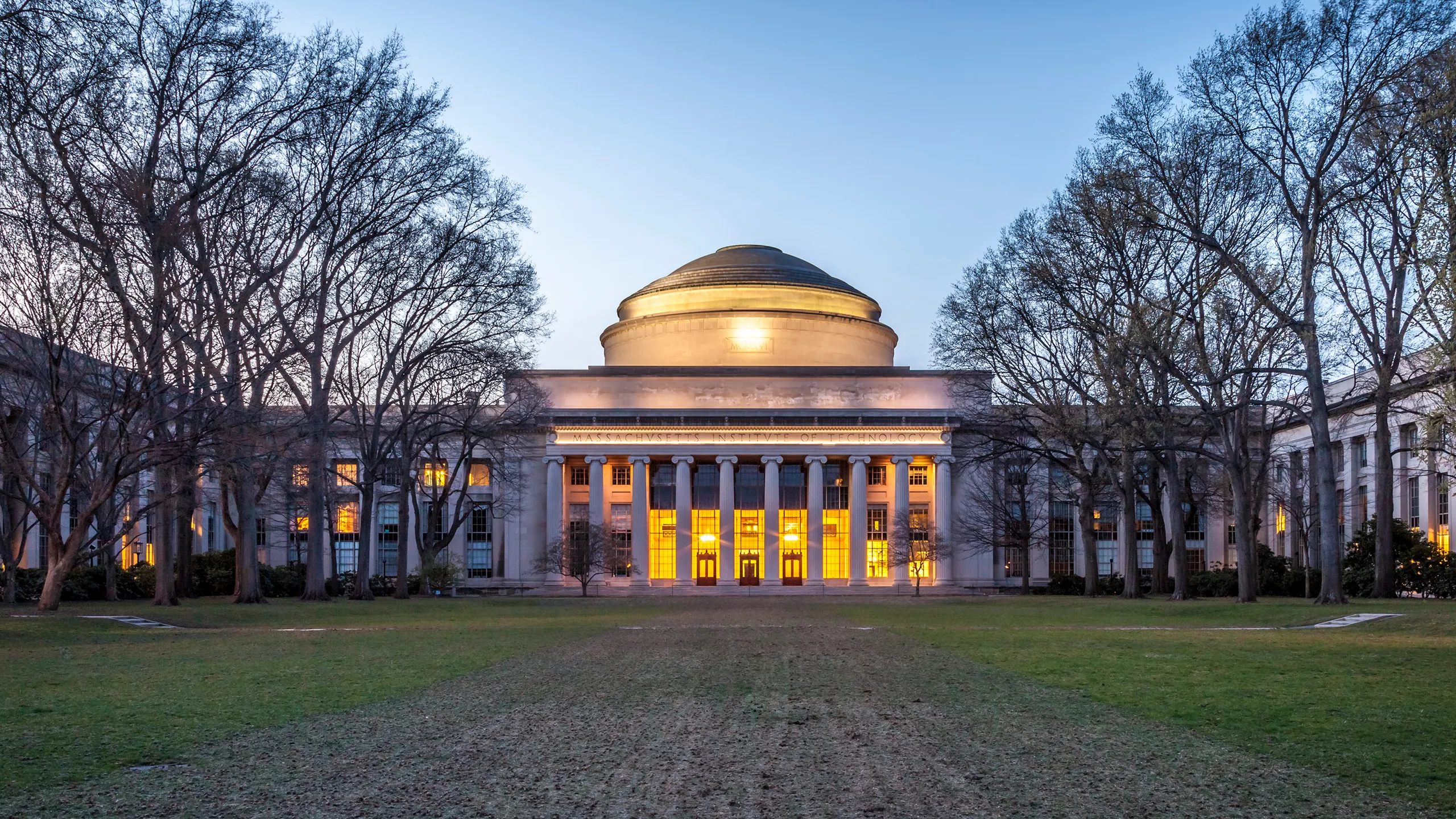
The Massachusetts Institute of Technology, better known as MIT, is one of the best and most prestigious technical colleges in the world. If you want hands-on research from day one and a tight-knit, tech-driven community at your fingertips, MIT is certainly on your radar.
What makes it so special? It's not just aura. To train the next generation of minds, the Institute blends rigorous science and engineering with entrepreneurship, design, and the arts. At this school, students most often learn from hands-on project experience, then launch directly into high-impact careers. Their unique and effective method explains the many valuable innovations from alumni… and intense interest from applicants each year. These days, the competition is as fierce as ever — and getting fiercer with every cycle.
Now, here's something most prospective applicants don't realize: MIT has held the #1 position in the QS World University Rankings for 14 consecutive years (2016 through 2026). As of 2026, the institute counts 105 Nobel laureates, 26 Turing Award winners, and 8 Fields Medalists among its faculty and alumni. The selectivity isn't arbitrary — it reflects sustained, world-leading academic dominance.
Ready to look beyond the hype to see what your odds are really like? Today, we'll discuss MIT's 2025 acceptance rate, the average student profile for the incoming Class of 2029, the newly released Class of 2030 Early Action data, and tips on how to build a competitive application yourself.
About MIT: at a glance
Let's get to know the basics. The name is world-famous, but what kind of university is MIT, really? What makes it stand out?
- Campus: located in Cambridge, Massachusetts, MIT gives you both an urban campus to call home and direct access to Boston's thriving academic, biotech, and startup scenes.
- Application timeline: EA by November 1. RD by January 5. Reply by May 1. Regular Decision results are released on Pi Day — March 14 — at 6:28 PM Eastern Time ("Tau Time" — a nod to MIT's love of mathematics).
- Essays: MIT uses its own application with several short responses rather than one long personal statement. Expect concise prompts that ask about your values, community, and interests.
- Testing policy: MIT requires either the SAT or ACT. The office accepts both paper and digital SAT. (That said, no SAT essay, ACT writing, or ACT science section is required.) MIT was among the first elite universities to bring back mandatory standardized testing following the COVID-19 pandemic.
Here's a peek at student life and the campus you'll call home:udent life and the campus you’ll call home:
The 2025 MIT acceptance rate
Now, let's get into the data for this year.
What the numbers say for 2025:
- MIT received 29,282 first-year applications for the Class of 2029 and admitted 1,324 students, an overall admit rate of 4.56 percent — nearly identical to the Class of 2028's 4.55%.
- Early Action offers totaled 721 (a 5.98% EA acceptance rate), with additional admits in Regular Action after deferral review.
- Regular Decision acceptance rate for the Class of 2029 ran approximately 3.56% — meaningfully lower than the EA rate.
Here's the deal — MIT's admit rate has remained in the mid-4% range in recent cycles, reflecting sustained selectivity even as application volume fluctuates. For starters, here's the historical context:
- Class of 2021: 7.17% overall acceptance rate
- Class of 2025: 4.03% (during the test-optional era)
- Class of 2026: 3.96% (record low)
- Class of 2027: 4.68%
- Class of 2028: 4.55%
- Class of 2029: 4.56%
What does this mean, in context? MIT's admit rate has remained in the low single digits in recent years. Application volume stays high, cycle after cycle, despite the testing requirements.
The net effect is a highly selective process where academic readiness plus mission fit decide the outcome. MIT releases cycle-by-cycle stats and a class profile each fall, which confirms the selectivity and the small number of waitlist admits in 2025.
Class of 2030 Early Action: the latest update
Want to know what just happened in the most recent cycle? In December 2025, MIT announced its Class of 2030 Early Action results:
- 11,883 Early Action applications received
- 655 admitted through EA (a 9.2% decrease from last year's 721)
- Early Action acceptance rate: 5.51% — the lowest EA rate in recent memory
- 7,738 applicants (65.12%) deferred to Regular Decision review
- 2,703 (22.75%) denied outright in the EA round
- 787 (6.62%) withdrew their applications
Picture this: the Class of 2030 EA cycle was MIT's tightest in years. Regular Decision results for the Class of 2030 will be released on Pi Day (March 14, 2026) at Tau Time (6:28 PM ET). Once those numbers are finalized, MIT's overall Class of 2030 acceptance rate is projected to drop to approximately 3.5% — a new record low.
The takeaway? MIT continues its slow but unrelenting climb in selectivity, even as it remains one of the few elite universities to publish detailed cycle-by-cycle data each year.
Average accepted student profile: MIT Class of 2029
Let's see who we're up against. For admitted students in the Class of 2029, the middle 50 percent score ranges were:
- SAT Math 780–800
- SAT Evidence-Based Reading and Writing 740–780
- ACT Composite 34–36
As you read, think of these as ranges, not cutoffs. Remember that MIT reads applications in context and emphasizes math and science preparation.
What this means for you
Here's what you should take away from this information:
- The bar is high and specific. Strong math and science preparation plus testing are table stakes.
- Context matters. MIT reads holistically and values character, collaboration, and contribution.
- Action wins. Projects, research, and leadership that improve something count most.
- Timing helps. Early Action works best when your academics and scores are already in range.
How to build a stronger MIT application
Now, let's put everything together. What can you do now to prepare?
Show evidence of your impact
MIT is famously transparent about its admissions philosophy. The admissions site states that they seek "people who will use their education to make the world better." That means your application should show more than aptitude; it should reflect initiative, collaboration, curiosity, and a desire to solve real-world problems.
What does that look like? Use activities to show sustained impact in research, engineering, computing, design, or social problem-solving. Connect outcomes to teamwork, initiative, and responsibility. In short, ask yourself: "Have I shown that I love learning? Have I used that love to help others?" If yes, you're thinking like an MIT applicant.
Use the short responses well
The prompts are short on purpose. Avoid fluff. Answer the question directly, then add one concrete detail that proves your claim. If you improved a sensor, shipped an app, led a build, or published findings, say what changed and who benefited. In this case, more than ever, quality beats quantity.
Match the math and science bar
For such a data-focused school, this is key. Want to study CS or Engineering? They don't admit by major, but interest areas still matter.
If you're aiming for CS, electrical engineering, or robotics, your application should show a blend of coding fluency, applied projects, and advanced math. Self-driven apps, GitHub repos, or USACO participation help. If you're leaning toward mechanical or bioengineering, highlight prototyping, build challenges, or research with impact.
What's more, your transcript should show advanced math through calculus and lab science at the highest level available at your school. If your school does not offer advanced options, use local college courses or approved online providers to fill gaps. Testing helps verify readiness in a standardized way at MIT.
Plan your testing
You already know standardized test scores will be required. Aim to finish SAT or ACT by late summer before senior year, then keep one fall date as insurance if you need a score bump. MIT accepts the digital SAT. Focus on Math for SAT and math-heavy sections for ACT while maintaining balanced scores overall.
Choose recommenders thoughtfully
Pick two teachers who saw you tackle high-level work and can speak to collaboration, curiosity, and resilience. One should be math or science, the other humanities or social science, which mirrors MIT's expectation for balanced preparation.
Plan your Early Action strategy
MIT's Early Action is nonbinding. You submit by early November and hear in mid-December. If your scores and fall transcript are ready, Early Action provides an early read. If not, build strength for January and apply Regular Action with improved evidence.
No matter which strategy you choose, make sure you're prepared on time with a plan in place.
Tell the truth about your story
First-gen or low-income student? MIT is committed to access. They offer dedicated advising, peer mentorship, and financial aid that covers full need with no loans. Be honest and proud about your story; context and resilience matter a lot.
No matter what, tell the real experiences. The office verifies information and expects integrity. As best practice, you'd do well to keep records of publications, code repositories, competition results, and mentorship roles. Also, be ready to explain your contribution to team projects.
Think beyond the major
MIT does not admit by major, so you should frame interests broadly. Show how you explore across departments and why that breadth matters for your goals. The most effective profiles link technical depth to community value.
What to Do If You're Deferred from MIT Early Action
Here's the kicker — for the Class of 2030 cycle, 65.12% of Early Action applicants were deferred to Regular Decision review. That's an enormous deferral pool, and it represents a meaningful second chance for committed applicants.
Want to know what to actually do if you've been deferred? Picture this — the deferral itself isn't a soft rejection. MIT explicitly states that deferred applicants receive a second look "without prejudice" in the Regular Decision round. Your file moves forward, and you have a real opportunity to strengthen your case.
Here's the deal on what works (and what doesn't) post-deferral:
- Update strategically, not constantly. Send one strong update via the applicant portal — typically in mid-January — covering substantive achievements: a new award, a major research milestone, an improved fall transcript, or a significant leadership role. Avoid sending multiple small updates that dilute your message.
- Strengthen your fall transcript. Your first-semester senior year grades matter enormously for deferred applicants. A strong fall transcript with the most challenging courses available is one of the most impactful updates you can offer.
- Demonstrate continued growth. If you've completed new projects (built something, shipped code, published findings, won competitions), include them. Connect the new work to themes in your original application — this shows the through-line in your commitment.
- Don't pivot your story. Stay consistent with the narrative you presented in your EA application. Deferred applicants who suddenly reinvent themselves often come across as desperate or unclear. Trust the story you originally told.
- Keep applying elsewhere. Most deferred MIT applicants ultimately enroll at other excellent universities. While maintaining hope for MIT, treat your other applications with the same care and intention. The waitlist outcome is uncertain; your other options are real.
The bottom line? A deferral signals that MIT sees promise but wants more time and information. Use this window thoughtfully — and remember that the Regular Decision acceptance rate (typically 3-4%) is even tighter than EA, so calibrate your expectations accordingly.
How MIT Compares to Other Top STEM Universities
Want to know one of the most important strategic questions for MIT applicants? Cross-admit competition. When you apply to MIT, you're almost certainly also applying to Caltech, Stanford, Harvard, Princeton, and several other elite universities. Understanding how MIT compares helps you craft an application that emphasizes the right fit signals.
For starters, here's how MIT stacks up against its closest peers in 2026:
- MIT vs. Caltech: Both are STEM-focused, but MIT is larger (~4,500 undergraduates vs. ~1,000 at Caltech) and broader, with strong humanities, business (Sloan), and architecture programs. Caltech is more research-intensive at the undergraduate level, while MIT offers more student life variety. Caltech's Class of 2029 acceptance rate runs around 3.8% — similar selectivity but a more concentrated technical focus.
- MIT vs. Stanford: Stanford accepted approximately 3.9% of Class of 2029 applicants. While both schools are research powerhouses, Stanford offers a broader liberal arts experience alongside its STEM strengths and has stronger undergraduate humanities and social science programs.
- MIT vs. Harvard: Harvard accepted 4.18% of Class of 2029 applicants. Harvard offers a far broader range of academic departments, including stronger undergraduate humanities, government, and social sciences. MIT is the choice if you want intensive technical depth and hands-on research; Harvard if you want maximum disciplinary breadth.
- MIT vs. Carnegie Mellon: CMU's School of Computer Science admits at single-digit rates, similar to MIT's CS-bound applicants. CMU is more program-specific in its admissions (you apply to a specific school), while MIT admits to the Institute broadly and lets you choose your major later.
- MIT vs. Georgia Tech & Purdue: Both are excellent public STEM alternatives with significantly higher acceptance rates and stronger value propositions for in-state students. Many MIT applicants apply to these as accessible matches or safety options.
The takeaway? MIT's distinctive combination of technical depth, hands-on research from day one (via UROP), and tight-knit campus culture makes it ideal for students who want to build and invent. Stanford and Harvard reward broader exploration; Caltech rewards intensive science immersion; CMU rewards program-specific deep dives. Knowing which of these is your true first choice helps you write more authentic, compelling essays.
MIT Financial Aid: What Most Applicants Don't Know
Now, here's something most applicants overlook entirely — MIT's financial aid is among the most generous in the country, with an explicit commitment to making the Institute affordable for talented students from any economic background.
Picture this: as of the 2025-26 academic year, MIT covers full demonstrated financial need with no loans required. That's a meaningful distinction from many other elite universities where loans are still part of the standard aid package.
Here's the deal on MIT's financial aid commitments in 2026:
- Free tuition for families earning under $200,000: MIT announced an expanded affordability initiative covering tuition costs for families earning under $200,000 — significantly broadening access for middle-income families.
- Free attendance for families earning under $100,000: Families earning under $100,000 typically pay no tuition, fees, housing, or dining costs.
- No-loan policy: Financial aid packages do not include loans. All institutional aid is grant-based, meaning no repayment is required.
- Need-blind admissions for U.S. applicants: Your family's ability to pay is not considered in your admissions decision. International applicants are also evaluated need-blind for MIT — one of only a handful of U.S. universities to extend this commitment globally.
- Average aid package: For students receiving need-based aid, the average grant package now exceeds $60,000 per year, with many students paying significantly less than the published sticker price.
The bottom line? Don't self-select out of applying to MIT based on cost. Run MIT's Net Price Calculator early in your application process to see what you'd actually pay. For many families, the real cost of MIT is dramatically lower than the published cost of attendance — and meaningfully lower than what many state universities would cost.
Life at MIT
Curious what it's like to be a "Techie"? Here's a quick review of some of the aspects of student life that shape your daily routine.
Learning by doing
Undergraduates join faculty labs through UROP as early as first year. You can earn pay or credit while you design experiments, build devices, analyze data, or write software. Examples of recent UROP projects include developing brain-machine interfaces, modeling asteroid trajectories, and even building low-cost water filters for developing regions! No matter your major, you'll find faculty-led labs to join and many undergrads stay with the same lab for multiple years. Many students co-author papers or present at conferences before graduation.
Global experiences
MISTI connects students to funded internships and research abroad in more than 40 countries. Students pair on-campus work with summer or semester-length placements, which adds cultural fluency and professional maturity.
Student life snapshots
Residential life is central. Each dorm has a strong culture, from maker-friendly spaces to music and art communities. Student blogs give a candid window into daily life, housing traditions, and academic rhythms. Use them to gauge fit and plan campus visits.
MIT Acceptance Rate: Year-by-Year Trends (2021-2030)
Want to know exactly how MIT's selectivity has evolved? Here's the complete trend over the past decade.
For starters, here's the year-by-year breakdown of MIT's overall acceptance rate:
| Applications | Admitted | Acceptance Rate | |
|---|---|---|---|
| 2021 | 20,247 | 1,452 | 7.17% |
| 2022 | 20,075 | 1,438 | 7.16% |
| 2023 | 21,706 | 1,427 | 6.58% |
| 2024 | 21,312 | 1,427 | 6.70% |
| 2025 | 33,240 | 1,340 | 4.03% |
| 2026 | 33,767 | 1,337 | 3.96% |
| 2027 | 26,914 | 1,259 | 4.68% |
| 2028 | 28,232 | 1,284 | 4.55% |
| 2029 | 29,282 | 1,324 | 4.56% |
| 2030 (projected) | TBD | TBD | ~3.5% |
A few patterns worth noting:
- The COVID-era surge: Applications jumped from ~21,000 (Class of 2024) to ~33,000 (Class of 2025), driven by the temporary test-optional policy. This brought acceptance rates down dramatically.
- Post-test-required stabilization: After MIT reinstated standardized testing for the Class of 2027, application volume settled in the 27,000-29,000 range — still much higher than pre-pandemic levels.
- Mid-4% as the new normal: The Class of 2027, 2028, and 2029 all cluster in the 4.5-4.7% range, suggesting this is the new baseline acceptance rate for MIT.
- The Class of 2030 projection: Based on the Early Action data (5.51%) and historical EA-to-RD relationships, the overall Class of 2030 rate is projected to drop to ~3.5% — which would be a new record low.
The takeaway? MIT's selectivity has tightened structurally — not just because of one cycle's surge, but because the global applicant pool has fundamentally shifted toward elite STEM institutions.
Your future: MIT and beyond
Now you know for yourself: the odds are slim, but it's not impossible. The Class of 2029 admit rate sits near 4.5%, and the Class of 2030 is on track to drop further. The trend signals high selectivity and the need for a focused plan. If MIT is a top choice for you, build strength in advanced math and science, shape a clear story through the short responses, and anchor your application in work that serves a real need.
Want to know one more reality check? Even strong candidates with 1500+ SAT scores, multiple AP 5s, and meaningful extracurriculars get rejected from MIT every year. The applicant pool is so saturated with qualified candidates that admissions decisions often come down to who tells the most compelling story of impact, fit, and future contribution. Your job is to make that story easy for admissions readers to recognize — through your essays, your activities, and your specific demonstrations of building, inventing, and collaborating.
Ready to put together a targeted list, testing plan, and activity strategy that matches these expectations? Book a free consultation to learn more! Empowerly's counselors guide students through each step with data, timelines, and feedback tailored to your goals.