Applications
2026 Middlebury Acceptance Rate & How It Affects You
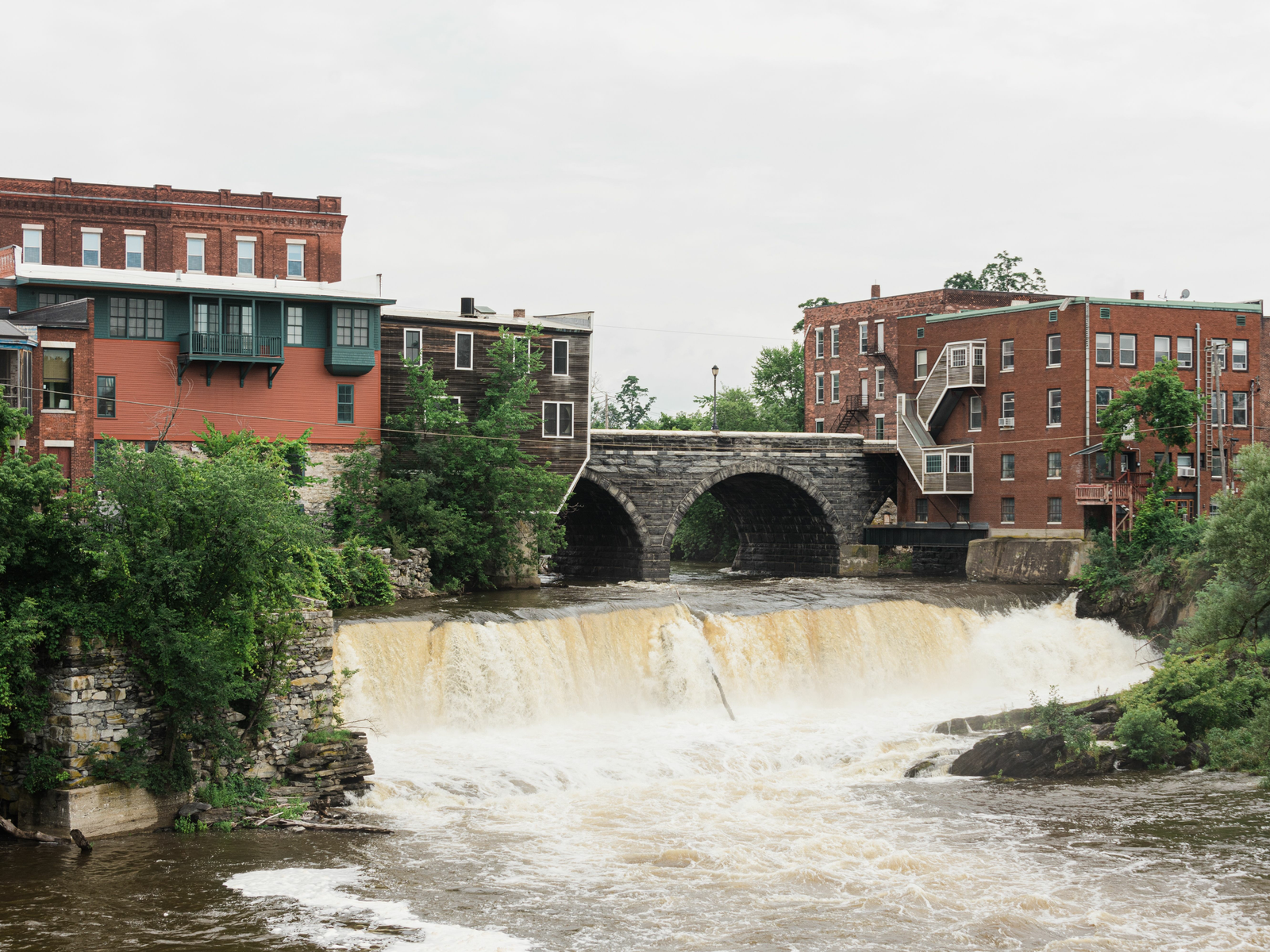
On first glance at Middlebury College, you might notice the creek bubbling past the picturesque campus, nestled in the quiet hills of Vermont. With a view of the Green Mountains to the east and the Adirondacks to the west, it's easy to get distracted by natural beauty. Yet despite the peaceful surroundings, its admissions process is anything but sleepy!
If you're thinking about throwing your hat in the ring, then you deserve to know the truth: Middlebury is one of the most selective liberal arts colleges in the country. In 2025, the Middlebury acceptance rate ticked up slightly, but don't let that trend fool you — it's still incredibly competitive.
Now, here's something most prospective students don't realize about 2026: the trend continued for the Class of 2030. In April 2026, Middlebury announced an admit rate of 17% for the Classes of 2030 and 2030.5 — up from 13.9% the prior year. But picture this — Williams (7.5%), Amherst (7.3%), Bowdoin (8.1%), and Swarthmore (7%) all sit in single digits. Middlebury's higher rate doesn't mean it's easier to get in; it means the school is being thoughtful about applicant pool size, yield management, and ensuring strong fit.
In this article, we'll explore what the 2025 acceptance rate really means, how a liberal arts education like Middlebury's can benefit you, and what it takes to build a strong application strategy. Whether you're just starting your college list or preparing for Early Decision, this guide is built to help you make informed choices.
Ready? Let's dive into the Middlebury College acceptance rate and what it means for prospective students.
Quick facts: Middlebury College admissions 2026
First, let's look at the quick facts.
- Acceptance rate: 13.9%
- Total applicants: 11,831
- Middle 50% SAT: 1430-1550
- Middle 50% ACT: 33-34
- Test-optional: Yes
- Early Decision offered: Yes (ED I and ED II)
For the latest cycle (Class of 2030, admitted spring 2026):
- Acceptance rate: 17%
- Total applicants: 11,458
- Total admitted: roughly 2,000
- Expected fall 2026 first-year enrollment: 640
- Expected February 2027 enrollment (Febs): 115
- 44% of admitted students chose not to submit test scores
So what exactly are we dealing with here?
The power of a liberal arts education in 2026
You've probably heard the phrase "liberal arts" before — but what does it actually mean for your future? Add what does it even mean to find your "best fit" in a college?
These students explain what it feels like to find your home away from home, and why it matters so much:
At a time when students (and families) are focused on career outcomes, rising tuition costs, and specialized degrees, liberal arts colleges like Middlebury are proving their value in powerful ways.
More than just majors
A liberal arts education isn't about choosing a narrow path — it's about preparing for many. Middlebury students don't just take classes in their major; they explore broadly across the humanities, sciences, and social sciences. That translates into skills every employer wants: critical thinking, persuasive writing, and problem-solving across disciplines.
Middlebury offers more than 850 courses across 45 majors, from economics and environmental science to neuroscience and international studies. This range supports exploration — while still offering the academic rigor top students expect.
Career prep and grad school success
Contrary to old myths, liberal arts grads are not at a disadvantage in the job market. In fact, many go on to thrive in business, tech, medicine, and law. What's more, reports consistently show that liberal arts students excel in graduate school admissions and long-term career outcomes thanks to their adaptability and communication skills.
Not sure where you want to go yet? Middlebury's career services and alumni network offer personalized support, connecting students with internships, fellowships, and research from their first year onward.
Middlebury's unique advantage
What sets Middlebury apart even within the liberal arts world?
Its leadership in global education and environmental studies is nationally recognized. Students have access to one of the most rigorous language instruction programs in the country, and opportunities for study abroad are deeply integrated into the undergraduate experience.
Middlebury also offers top-notch STEM resources and preprofessional programs, including well-equipped science labs, hands-on research, and a growing network in data science and public health. For students who want both intellectual breadth and specialized depth, it's hard to beat.
Middlebury acceptance rate 2026: a closer look
Let's talk numbers.
Middlebury's acceptance rate in 2025 was 13.9%, according to the Middlebury Campus student newspaper. That's a slight increase from previous years — but it doesn't mean the admissions process has become easier.
In fact, most experts interpret the shift as a temporary dip in application volume, not a drop in selectivity. With roughly 2,800 undergraduates total, Middlebury remains a small and highly competitive institution. That places Middlebury firmly in the "reach" category for most applicants — regardless of GPA or test scores.
Here's the deal — for the Class of 2030 cycle (decisions released April 2026), the trend continued. Middlebury admitted approximately 2,000 students from 11,458 applicants, for a 17% admit rate. Why the increase? Vice president of strategic enrollment and dean of admissions Nicole Curvin pointed to several factors: the decline in domestic high school graduates, increasing competition among peer elite liberal arts institutions, and federal policies affecting higher education. The school continues to closely monitor its applicant pool to determine the appropriate acceptance rate each year.
Want to know the historical context? Here's how Middlebury's acceptance rate has evolved:
- Class of 2025: 15.7% (1,446 admits from 11,908 applicants)
- Class of 2026: 13.5-15% (1,618 admits from 11,995 applicants)
- Class of 2027: 12.7% (1,604 admits from 12,664 applicants)
- Class of 2028: 11.6-12% (one of the highest application volumes ever)
- Class of 2029: 13.9% (1,655 admits from 11,831 applicants)
- Class of 2030: 17% (~2,000 admits from 11,458 applicants)
The takeaway? Even at 17%, Middlebury remains in the "reach" category for the vast majority of applicants. A small selective liberal arts college admitting 17% of applicants is still admitting only about 1 in every 6 students who apply.
How to get into Middlebury: what admissions officers value
This video gives you a good sense of the kind of students Middlebury wants to accept and enroll in their community:
Middlebury uses a holistic review process, meaning there’s no magic formula for getting in. But there are clear patterns among successful applicants.
Academic rigor and performance
Middlebury expects academic excellence. The most competitive applicants have taken the hardest classes available at their schools — APs, IBs, honors — and maintained top grades.
Test scores remain optional at Middlebury, but if you choose to submit, strong SAT or ACT scores can still help demonstrate academic readiness. Curious how you measure up? According to US News, “half the applicants admitted to Middlebury College who submitted test scores have an SAT score between 1430 and 1550 or an ACT score of 33 and 34.”
One thing to note: Middlebury is known for intellectual engagement. Admissions officers want to see that you’re not just high-achieving but deeply curious.
Mission fit and personal story
Middlebury uses a holistic review process, meaning there's no magic formula for getting in. But there are clear patterns among successful applicants.
Academic rigor and performance
Middlebury expects academic excellence. The most competitive applicants have taken the hardest classes available at their schools — APs, IBs, honors — and maintained top grades.
Test scores remain optional at Middlebury, but if you choose to submit, strong SAT or ACT scores can still help demonstrate academic readiness. Curious how you measure up? According to US News, "half the applicants admitted to Middlebury College who submitted test scores have an SAT score between 1430 and 1550 or an ACT score of 33 and 34."
One thing to note: Middlebury is known for intellectual engagement. Admissions officers want to see that you're not just high-achieving but deeply curious.
Mission fit and personal story
Middlebury doesn't just admit strong students — it looks for students who will thrive in a close-knit, collaborative, and globally minded environment.
That means your essays, activities, and recommendation letters need to show more than accomplishment. They should reveal what drives you. Are you passionate about sustainability? Social justice? Languages and culture? Middlebury will pay attention to how your interests align with the college's core values.
Your voice matters in this process. The personal statement and supplemental essays are where many strong applications rise — or fall.
The Early Decision advantage
Middlebury offers two rounds of Early Decision applications: ED I (November) and ED II (January). Applying ED can make a measurable difference in your odds of admission.
While Middlebury does not officially publish its ED acceptance rate, like many selective colleges, its ED pool tends to see significantly higher admit rates than the Regular Decision pool. For starters, here's a data point: for the Class of 2028, Middlebury admitted 409 students from 1,341 ED applicants — a 30.5% ED admit rate, more than double the overall rate that year. For the Class of 2029, 519 students were admitted through binding programs (ED I, ED II, QuestBridge, Posse Foundation, College Track).
Why? ED applicants demonstrate commitment, which colleges value when managing yield. If Middlebury is your top choice — and your academic profile is strong — applying ED could work in your favor.
Why Middlebury remains a top choice for many
For students looking for academic challenge, close community, and meaningful faculty relationships, Middlebury continues to stand out.
Check out the campus from a bird's eye view here:
But it's not just the gorgeous scenery that draws top students. Here's why:
- Faculty access: With a 9:1 student-to-faculty ratio and an average class size of just 16, students get direct mentorship from professors — not TAs.
- Academic flexibility: Students can double major, explore independent research, and pursue interdisciplinary programs that cross traditional boundaries.
- Global reach: From the Middlebury Language Schools to immersive study abroad options, students expand their worldview inside and outside the classroom.
- Environmental leadership: Middlebury was the first carbon-neutral college in the U.S. Its environmental studies program is one of the oldest and most respected in the nation.
Campus life is rich and student-driven, with more than 150 student organizations, thriving arts programs, and access to the stunning natural landscape of Vermont's Green Mountains and Lake Champlain Valley.
How Middlebury Compares to Peer Liberal Arts Colleges
Want to know one of the most important strategic questions for Middlebury applicants? Cross-admit competition. When you apply to Middlebury, you're almost certainly also applying to Williams, Amherst, Bowdoin, Pomona, Swarthmore, and several other elite liberal arts colleges. Understanding how Middlebury compares helps you craft an application that emphasizes the right fit signals.
For starters, here's how Middlebury stacks up against its closest peers in 2026:
- Middlebury vs. Williams: Williams (Class of 2029 acceptance rate ~7.5%) is the most selective liberal arts college in the country. Both schools share a strong New England identity, world-class teaching, and small student bodies (~2,000 at Williams vs. ~2,800 at Middlebury). Williams is more tutorial-focused and tends to attract students seeking the most traditional academic experience. Middlebury offers stronger global and environmental programs.
- Middlebury vs. Amherst: Amherst (Class of 2029 acceptance rate ~7.3%) emphasizes an open curriculum with no general education requirements — radically different from Middlebury's more structured approach. Amherst also part of the Five College Consortium (with Smith, Mount Holyoke, Hampshire, UMass Amherst), giving students cross-registration options. Middlebury offers more cohesive integration of language and global studies.
- Middlebury vs. Bowdoin: Bowdoin (Class of 2029 acceptance rate ~8.1%) is famous for its dining, sustainability, and outdoor culture — similar to Middlebury in many ways. Both schools have strong environmental programs and tight-knit communities. Bowdoin's Maine coastal location offers different outdoor opportunities than Middlebury's Vermont mountain setting.
- Middlebury vs. Pomona: Pomona (Class of 2029 acceptance rate ~6.6%) is part of the Claremont Colleges Consortium in California, offering access to five different undergraduate colleges plus two graduate institutions. Middlebury offers a more concentrated, single-campus experience with deeper integration of language and global programs.
- Middlebury vs. Swarthmore: Swarthmore (Class of 2029 acceptance rate ~7%) is the most academically intense liberal arts college, with Honors programs that approach graduate-level rigor. Middlebury is rigorous but offers more balance between academics and outdoor/community life.
- Middlebury vs. Wesleyan: Wesleyan (Class of 2029 acceptance rate ~17%) has a strong reputation for film studies, creative writing, and arts programming. Middlebury and Wesleyan have similar acceptance rates now, but Middlebury offers stronger language immersion and environmental programs.
The takeaway? Middlebury's distinctive combination of language immersion (the world-renowned Middlebury Language Schools), environmental leadership (first carbon-neutral U.S. college), and global education (deeply integrated study abroad) makes it ideal for students with international or environmental interests. Students seeking maximum academic intensity often choose Williams or Swarthmore; students wanting consortium access often choose Amherst or Pomona; students prioritizing creative arts often choose Wesleyan.
Middlebury Application Timeline for the 2026-2027 Cycle
Picture this: a high school junior reading this in spring 2026 with Middlebury as a top choice. Now, here's the deal — knowing the deadlines and key milestones can be the difference between a polished application and a rushed one.
Here's the 2026-2027 cycle timeline you should be working backward from:
Spring 2026 (junior year):
- Take your first SAT or ACT in March, April, or May (Middlebury remains test-optional, so this is to give you a baseline)
- Build your activities list and identify which experiences to highlight
- Begin researching Middlebury's language programs, environmental studies, and other distinctive offerings
- Schedule a Middlebury campus visit (Preview Days in April are open to admitted students; general campus tours run year-round)
Summer 2026 (before senior year):
- Take a second SAT or ACT if your spring scores weren't competitive (target above 1430 SAT or 33 ACT to consider submission)
- Visit Middlebury if you haven't already — Vermont in summer is gorgeous and helps you write an authentic supplemental essay
- Start drafting your Common App personal essay and Middlebury supplemental essays
- Identify specific Middlebury programs, professors, or initiatives you want to reference
September-October 2026 (senior year):
- Final SAT and ACT dates if needed (test-optional gives flexibility, but plan ahead)
- Submit teacher and counselor recommendation requests (give them at least 4 weeks notice)
- Finalize Middlebury supplemental essays
- Decide between ED I, ED II, or Regular Decision
November 1, 2026:
- Early Decision I deadline — application materials due
- Begin financial aid materials (CSS Profile, FAFSA)
Mid-December 2026:
- ED I results released
- Accepted students must respond to commitment within standard window
- Deferred ED I applicants are reviewed in the RD pool
January 1, 2027:
- Early Decision II deadline and Regular Decision deadline
Mid-February 2027:
- ED II results released
Late March/April 2027:
- Regular Decision results released
May 1, 2027:
- National Decision Day — accepted students must commit by this date
February 2028:
- For Febs (students admitted as February-starters): begin classes in February 2028
The bottom line? Successful Middlebury applicants work backward from these deadlines, building their application in stages rather than scrambling in the final weeks.
Common Mistakes Applicants Make at Middlebury
Now, here's something most prospective students don't realize until it's too late. The biggest mistakes that derail Middlebury applications aren't about academics — they're about authenticity, fit, and showing the wrong kind of strengths.
Want to know what to avoid?
- Mistake 1: Generic "why Middlebury" essays. "I want to attend a small liberal arts college with great academics" tells admissions officers nothing about you or Middlebury. Reference specific programs (the Middlebury Language Schools, Bread Loaf School of English, environmental studies' Franklin Environmental Center), specific faculty whose work resonates with you, or specific co-curricular experiences (the Mountain Club, the carbon-neutral campus initiatives, language tables at meals).
- Mistake 2: Performing outdoor enthusiasm you don't have. Middlebury has a strong outdoor culture, but admissions officers can spot inauthenticity from a mile away. If you're not actually outdoorsy, don't claim to love hiking just because you think it'll help your application. Plenty of admitted Middlebury students aren't outdoor enthusiasts — focus on what genuinely drives you.
- Mistake 3: Ignoring language programs in your essays. Middlebury is globally famous for its language immersion programs. If you have any genuine interest in language, culture, or international affairs, signal that interest clearly. If you don't, that's fine — but don't pretend to have it.
- Mistake 4: Treating ED II as a backup to other reach schools. ED II at Middlebury is for students whose top choice is Middlebury after being deferred or rejected from another school. Applying ED II just to use the binding advantage at any school you'd accept admission to is strategically misguided.
- Mistake 5: Underestimating the importance of community fit. Middlebury values "engaged citizenship" — students who think about their role in larger communities. Show this in your activities, essays, and recommendations. Solo achievements without community connection won't resonate as strongly.
- Mistake 6: Submitting weak test scores out of obligation. With 44% of admitted students choosing not to submit scores in 2025, the test-optional policy is genuinely used. If your SAT is below 1430 or ACT is below 33, withholding may be the right call.
- Mistake 7: Skipping the Febs option. The February-start option (admitting students for February 2027 start instead of September 2026 for Class of 2030) is sometimes offered to applicants who are strong but might benefit from a gap semester. Don't reject this option without serious consideration — Febs build deep community bonds and often have unique experiences during their "Junior Feb" semester abroad.
The bottom line? Treat your Middlebury application with the same intentionality you'd apply to any major life investment. Each component — essays, extracurriculars, recommendations, optional test scores — should reinforce a clear, compelling narrative about who you are and why Middlebury specifically is where you'll thrive.
Middlebury's place on your college list: what to consider
With a 13.9% acceptance rate (and 17% for the most recent Class of 2030 cycle), Middlebury should be considered a "reach" school for nearly all applicants. That doesn't mean you shouldn't apply — but it does mean you need to be strategic.
Every student should build a balanced college list with a mix of:
- Reach schools: Highly selective colleges
- Match schools: Where your academic profile falls within the middle 50% of admitted students
- Safety schools: Where you're likely to be admitted and would be happy to attend
Middlebury is a great fit for students interested in liberal arts, environmental science, global studies, or small college environments. But don't forget that there are many similar schools that offer overlapping strengths with slightly higher admission rates.
Need help building that list? That's where expert guidance can make all the difference. Check out our e-book on how to fully understand the college list process!

Financial Aid and Cost of Attendance at Middlebury
Want to know one factor that often gets overlooked? Middlebury's financial aid program is among the most generous in the country, which significantly affects what families actually pay.
Here's the deal on Middlebury's financial aid commitments in 2026:
- Need-blind admissions for U.S. applicants: Your family's ability to pay is not considered in your admissions decision.
- Meets full demonstrated financial need: Middlebury commits to meeting 100% of demonstrated financial need for admitted U.S. students.
- No-loan financial aid for families earning under $100,000: Lower-income families typically pay nothing or minimal amounts.
- Reduced costs for middle-income families: Families earning between $100,000-$200,000 typically pay significantly less than the published cost of attendance.
- Total cost of attendance for 2025-26: Approximately $87,000 (including tuition, room, board, fees, books, and personal expenses) — but the average financial aid recipient pays substantially less.
For starters, here's a sample of what families actually pay (these are approximate estimates):
- Families earning under $75,000: Typically pay $0-$5,000 per year
- Families earning $75,000-$125,000: Typically pay $5,000-$20,000 per year
- Families earning $125,000-$200,000: Typically pay $20,000-$40,000 per year
- Families earning $200,000-$300,000: Typically pay $40,000-$70,000 per year
- Families earning over $300,000: Typically pay the full cost of attendance
The takeaway? Don't self-select out of applying to Middlebury based on the published cost. Run Middlebury's Net Price Calculator on their financial aid website to see what your family would actually pay. For many families, the real cost is dramatically lower than the sticker price — and meaningfully lower than what many state universities would cost.
International students should note that Middlebury is not need-blind for international applicants, meaning financial need IS considered in admissions decisions for non-U.S. citizens. International students requiring financial aid should be aware that the admissions process is more competitive.
What the 2026 Middlebury acceptance rate means for you
If the 2026 Middlebury acceptance rate of 17% tells us one thing, it's that Middlebury College continues to hold its place as one of the most selective liberal arts institutions in the nation. Even with the increase from 13.9% the prior year, getting in requires strategy, focus, and a strong fit.
If you have your sights set on this Vermont gem, you have your work cut out for you. Consider applying Early Decision, crafting compelling essays, and showing clear alignment with the college's values. Don't overlook the importance of academic rigor and authentic storytelling. Ultimately, your grades, course rigor, and the authenticity of your story are what can set you apart.
And most importantly, don't go it alone.
Love Middlebury? You may also want to research similar schools like…
- Williams College
- Amherst College
- Bowdoin College
- Wesleyan College
Each offers strong academics, liberal arts focus, and supportive communities, but with slightly different campus cultures and acceptance rates. After all, you may not even know your best-fit college exists yet!
Empowerly's team of former admissions officers and expert counselors can help you build a college list that makes sense for your goals — and a strategy that gets results. 98% of the students who have worked with our community have been accepted into the Ivy League and top 25 schools. No matter your starting point, our team can help!