University of Florida Acceptance Rate Class of 2030

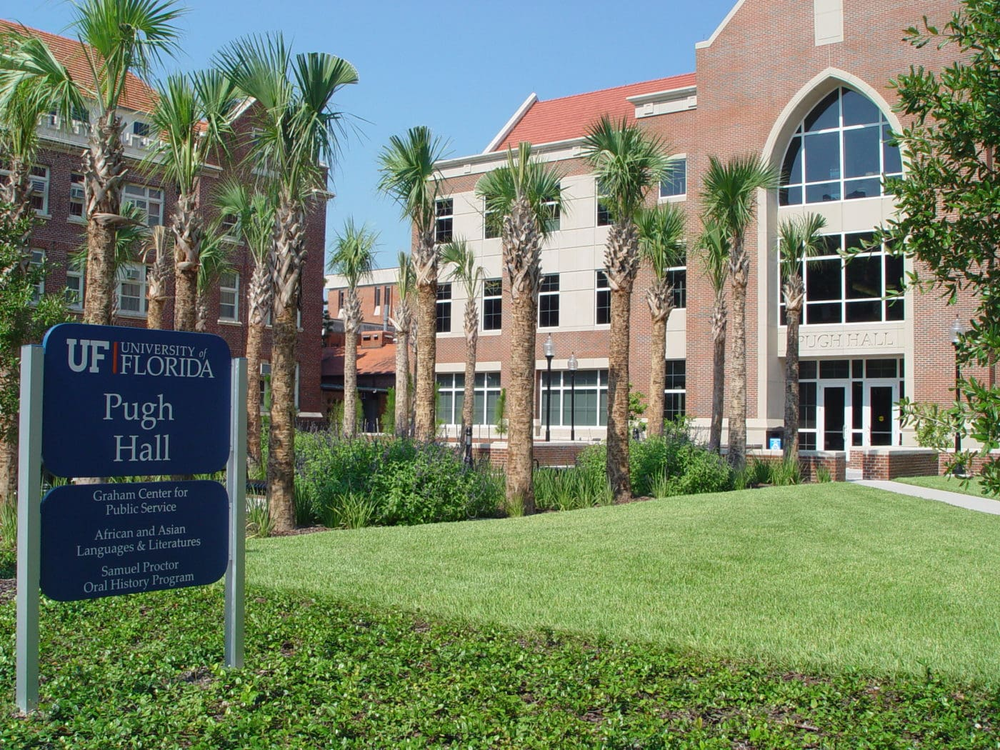
For the Class of 2030, UF received 95,986 first-year applications, the largest applicant pool in school history. They admitted 19,012 students for a projected enrolled class of 7,500. That yields an acceptance rate of about 19.8%, down from 20.3% for the prior cycle (Class of 2029), when 90,523 students applied, and 18,403 were admitted.
UF’s most recent complete Common Data Set (“CDS”) is the 2025-2026 edition, covering the enrolled Class of 2029. All class profile data below comes from this document unless otherwise noted.
UF Recent Acceptance Rates
| Class of 2030 | Class of 2029 | |
|---|---|---|
| First-year applications | 95,986 | 90,523 |
| Overall acceptance rate | 19.8% | 20.3% |
| Students admitted | 19,012 | 18,403 |
| Students enrolled | 7,500 (projected) | 7,619 |
UF’s acceptance rate fell below 20% for the first time with the Class of 2030.
| Class Year | Overall Acceptance Rate |
|---|---|
| Class of 2030 | 19.8% |
| Class of 2029 | 20.3% |
| Class of 2028 | 24.2% |
| Class of 2027 | 24% |
| Class of 2026 | 23.3% |
| Class of 2025 | 30.1% |
The sharpest single-cycle drop came between the Classes of 2025 and 2026, when the rate fell from 30.1% to 23.3%. Selectivity has tightened steadily since then, and by the Class of 2030, UF’s rate dipped below 20% for the first time.
UF’s Early Action, Early Decision & the Testing Requirement
UF offers non-binding, non-restrictive Early Action open to all applicants. The EA deadline is November 1, with decisions released on the last Friday in January. If admitted, you are not required to enroll. You have until May 1 to decide. Regular Decision applications are due by January 15, with decisions released on the second Friday in March.
Beginning with the Class of 2031 (entering fall 2027), UF will also offer binding Early Decision with an October 15 deadline and decisions released by December 11. No ED applications were reported for the Class of 2030 because this is a new option (more below).
UF requires standardized testing. All first-year applicants must submit SAT, ACT, or CLT scores under Florida Board of Governors regulation 6.002. For clarity, the CLT (Classic Learning Test) is a standardized test alternative that assesses reading, grammar, writing, and math. The latest date for scores to be received is January 22. For the admitted Class of 2030, the middle-50% ranges were: SAT 1420–1520, ACT 32–35, and GPA 4.5–4.7.
UF rates four factors as “Very Important” in its admissions review:
rigor of secondary school record
academic GPA
extracurricular activities
talent/ability.
The following factors are rated “Important”:
standardized test scores
application essay
character/personal qualities
volunteer work
work experience.
“Considered” factors are:
first-generation status
geographical residence
state residency
Class rank, recommendations, interview, alumni relation, religious affiliation, and demonstrated interest are all “Not Considered.”
The takeaway? Transcript strength is the foundation. Both rigor and GPA are “Very Important.” But unlike schools that put academics alone in the top tier, UF also places extracurriculars and talent/ability in its highest tier, signaling that what you do outside the classroom carries weight. Recommendations are “Not Considered”, so spend your energy on your essay, activities, and test scores instead.
The Early Action Advantage
For the Class of 2030, UF admitted 14,497 students through Early Action and 4,515 through Regular Decision. That means 76% of all admits came through EA. Applying early is the favorable strategy.
Because UF’s Early Action is non-binding and non-restrictive, you can apply EA to other schools simultaneously and compare financial aid offers before committing on May 1. Florida’s Bright Futures Scholarship can cover up to 100% of tuition and fees for qualifying in-state students. You are not committing to a financial aid package you have not seen.
UF’s EA is open to all applicants regardless of residency. Out-of-state and international students can take advantage of this round.
Early Decision Coming for the Class of 2031
Beginning with the Class of 2031 (entering fall 2027), UF will introduce a binding Early Decision option. The CDS 2025-2026 lists the ED plan, though the first ED cycle applies to Fall 2027 entry.
Key details:
Early Decision deadline: October 15
Decisions released: December 11
Binding commitment: Admitted students must withdraw all other college applications
Early Action remains available as a non-binding, non-restrictive option for all applicants with the November 1 deadline.
Students considering Early Decision should use UF’s Net Price Calculator to estimate potential costs and financial aid eligibility before making a binding commitment.
In-State vs. Out-of-State: The Residency Factor
UF is a state-funded institution mandated to serve Florida residents. This creates a measurable admissions gap, particularly for international applicants. The following data are from the Class of 2029 CDS.
| Residency | Applied | Admitted | Enrolled | Acceptance Rate |
|---|---|---|---|---|
| In-State (Florida) | 42,172 | 9,387 | 5,856 | 22.3% |
| Out-of-State (Domestic) | 39,420 | 8,086 | 1,608 | 20.5% |
| International | 8,931 | 930 | 155 | 10.4% |
| Overall | 90,523 | 18,403 | 7,619 | 20.3% |
The gap between in-state and out-of-state domestic applicants is narrower at UF than at many peer flagships. International applicants face a significantly lower rate of 10.4%. Of the 7,619 enrolled first-years, 76.9% were Florida residents. State residency and geographical residence are both rated “Considered” in UF’s admissions review.
UF’s Enrolled Class of 2030: Who Gets In?
Test Scores
| Metric | Class of 2030 |
|---|---|
| Mid-50% SAT | 1420–1520 |
| Mid-50% ACT | 32–35 |
| Mid-50% GPA | 4.5–4.7 |
Admitted Honors Students (Class of 2030):
| Metric | Honors |
|---|---|
| Mid-50% SAT | 1520–1560 |
| Mid-50% ACT | 35–36 |
| Mid-50% GPA | 4.6–4.8 |
Class of 2029 (CDS 2025-2026, enrolled students):
| 25th Percentile | 50th Percentile | 75th Percentile | |
|---|---|---|---|
| SAT Composite | 1330 | 1410 | 1490 |
| ACT Composite | 29 | 32 | 33 |
For the enrolled Class of 2029, 78% of first-years submitted SAT scores and 39% submitted ACT scores.
SAT Score Distribution (Class of 2029):
| Score Range | Percentage |
|---|---|
| 1400–1600 | 56% |
| 1200–1399 | 38% |
| 1000–1199 | 5% |
| 800–999 | 1% |
ACT Score Distribution (Class of 2029):
| Score Range | Percentage |
|---|---|
| 30–36 | 73% |
| 24–29 | 22% |
| 18–23 | 4% |
Class Rank and GPA
Among the admitted Class of 2030, the mid-50% weighted GPA was 4.5–4.7.
For the enrolled Class of 2029 (CDS 2025-2026), among the 87% of students whose schools reported class rank:
| Rank | Percentage |
|---|---|
| Top 10% of graduating class | 85% |
| Top quarter | 98% |
| Top half | 100% |
GPA Distribution (Class of 2029, weighted):
| GPA Range | Percentage |
|---|---|
| 4.0 and above | 58% |
| 3.75–3.99 | 38% |
| 3.50–3.74 | 4% |
The average GPA was 3.9 (unweighted, 4.0 scale), with 95% of enrolled students reporting.
Academic Interests
For the Class of 2030, the top five colleges of enrollment were: Liberal Arts & Sciences, Engineering, Business, Agricultural & Life Sciences, and Public Health & Health Professions.
Geographic Diversity (Class of 2030)
UF’s Class of 2030 draws from 3,988 high schools, 58 of Florida’s 67 counties, all 50 states, and 74 countries. The class includes 1,990 first-generation admits.
Gender Split (CDS 2025-2026, Class of 2029)
| Male | Female | |
|---|---|---|
| Applied | 40,876 (45.2%) | 49,647 (54.8%) |
| Admitted | 8,725 (47.4%) | 9,678 (52.6%) |
| Enrolled | 3,526 (46.3%) | 4,093 (53.7%) |
First-year retention rate: 97%. Six-year graduation rate: 92%. Student-faculty ratio: 17:1.
What UF Weighs Most in Admissions
This section deserves a close read. It is drawn from UF’s CDS (2025-2026).
| Factor | Importance |
|---|---|
| Rigor of secondary school record | Very Important |
| Academic GPA | Very Important |
| Extracurricular activities | Very Important |
| Talent/ability | Very Important |
| Standardized test scores | Important |
| Application essay | Important |
| Character/personal qualities | Important |
| Volunteer work | Important |
| Work experience | Important |
| First-generation status | Considered |
| Geographical residence | Considered |
| State residency | Considered |
| Class rank | Not Considered |
| Recommendations | Not Considered |
| Interview | Not Considered |
| Alumni/ae relation | Not Considered |
| Religious affiliation/commitment | Not Considered |
| Level of applicant’s interest | Not Considered |
Four factors share UF’s highest tier: rigor, GPA, extracurriculars, and talent/ability. Two surprises stand out. One, recommendations are “Not Considered”. UF does not read letters of recommendation, a notable departure from most selective universities. Two, demonstrated interest is also “Not Considered”. Visiting campus or attending info sessions won't improve your admissions odds, though it may help you decide whether UF is right for you.
Cost of Attendance and Financial Aid at UF
UF remains one of the most affordable top-five public universities in the country, especially for in-state students.
Estimated Cost of Attendance (2026-2027, On/Off Campus)
| Category | In-State | Out-of-State |
|---|---|---|
| Tuition & Fees | $6,440 | $34,620 |
| Room & Board | $14,190 | $14,190 |
| Books, Course Materials, Supplies & Equipment | $1,220 | $1,220 |
| Transportation | $1,700 | $1,700 |
| Personal Expenses | $2,224 | $2,224 |
| Loan Fees | $56 | $56 |
| Total | $25,830 | $54,010 |
Note: Tuition figures are projected estimates for incoming freshmen based on 30 credit hours.
For in-state students living with parents, the estimated total cost of attendance drops to $16,240.
What Changes the Cost Equation?
Florida’s Bright Futures Scholarship program is the standout affordability factor. The Florida Academic Scholars award (the highest tier) covers 100% of tuition and fees and provides a stipend for books. Combined with UF’s in-state tuition of $6,440, many qualifying Florida residents attend UF at little to no tuition cost.
Aid by the Numbers (CDS 2025-2026 & UF Admissions)
| Metric | Figure |
|---|---|
| First-year undergraduates receiving grants & scholarships | 92% |
| First-years receiving need-based grant/scholarship aid | 33% |
| Average aid package (students with need who received aid) | $21,768 |
| Average percentage of need met | 98% |
| Total grants & scholarships awarded to undergraduates | $319 million |
| Undergraduates graduating with no student loan debt | 79% |
| Application fee | $30 |
UF meets an average of 98% of demonstrated financial need, which is higher than many peer flagships. Combined with low in-state tuition, Bright Futures, and $319 million in total grants and scholarships, UF is one of the best values in public higher education.
Strengthening Your UF Application
| Strategy | Why It Matters |
|---|---|
| Take the hardest courses available and excel in them | Rigor and GPA are both “Very Important.” With 85% of enrolled Class of 2029 students in the top 10% of their class, your transcript is the foundation. Load up on AP, IB, AICE, and dual-enrollment courses. |
| Apply Early Action | 76% of Class of 2030 admits came through EA. The November 1 deadline is non-binding and non-restrictive, so there is no downside. All applicants are eligible. |
| Target the mid-50% test score ranges | Testing is required (SAT, ACT, or CLT). Aim for the mid-50% ranges in the table above. Scoring at or above the 75th percentile strengthens your application. |
| Consider Early Decision if UF is your first choice (starting Class of 2031) | UF’s new binding ED option has an October 15 deadline. At many universities, ED applicants see a meaningful admissions advantage. Model your financial aid before committing. |
| Show depth in extracurriculars and talent | Extracurriculars and talent/ability are both rated “Very Important”. This is unusual among public flagships. UF wants sustained commitment and impact, not a list of surface-level activities. |
| Write a strong essay | The application essay is rated “Important.” Connect your interests, experiences, and goals to what UF offers. |
| Don’t bother with recommendations or demonstrated interest | Both are “Not Considered.” Spend that energy on your essay and activities instead. |
Frequently Asked Questions
What is UF’s acceptance rate for the Class of 2030?
UF received 95,986 first-year applications for the Class of 2030, the largest applicant pool in school history. They admitted 19,012 students for a projected enrolled class of 7,500, according to UF’s Division of Enrollment Management (updated July 2026). That brings an acceptance rate of around 19.8%. For the prior cycle (Class of 2029), 90,523 students applied and 18,403 were admitted for an acceptance rate of 20.3% per the CDS 2025-2026.
Does UF have Early Decision or Early Action?
Both. UF offers non-binding, non-restrictive Early Action with a November 1 deadline, open to all applicants regardless of residency. Decisions are released on the last Friday in January. Beginning with the Class of 2031, UF will also offer binding Early Decision with an October 15 deadline and decisions by December 11. For the Class of 2030, 76% of all admits (14,497 of 19,012) came through EA, making it the most important round to target.
Is UF test-optional?
No. UF requires standardized test scores (SAT, ACT, or CLT) for all first-year applicants, per Florida Board of Governors regulation 6.002. At least one test score must be received by January 22. The mid-50% SAT for the admitted Class of 2030 was 1420–1520, and the ACT was 32–35. UF rates standardized testing as “Important” in its Common Data Set.
What GPA do I need for UF?
The admitted Class of 2030 posted a mid-50% weighted GPA of 4.5–4.7. Among enrolled Class of 2029 students, 58% had a weighted GPA of 4.0 or above, and the average unweighted GPA was 3.9 on a 4.0 scale. Academic GPA is rated “Very Important” in the Common Data Set. Rigor matters as much as the number. UF recalculates GPA based on core academic courses with added weight for advanced coursework.
Does UF require letters of recommendation?
No. Recommendations are rated “Not Considered” in UF’s Common Data Set. UF does not factor letters of recommendation into admissions decisions.
Is it harder to get into UF as an out-of-state student?
The gap is narrower than at many peer flagships. In-state applicants were admitted at 22.3% compared to 20.5% out-of-state domestic and 10.4% international for the Class of 2029. Of enrolled first-years, 76.9% were Florida residents. State residency is rated “Considered”, not “Important” or “Very Important”, in UF’s admissions review.
What are my chances from the waitlist?
Essentially zero. For the Class of 2029, UF offered 3,196 applicants a place on the waitlist. Of the 2,737 who accepted, only 1 was ultimately admitted. The waitlist is not ranked.
What does UF cost?
The estimated total cost of attendance for 2026-2027 is $25,830 (in-state, on/off campus) and $54,010 (out-of-state). In-state tuition and fees are $6,440 per year. For qualifying Florida residents, the Bright Futures Scholarship can cover up to 100% of tuition and fees. UF meets an average of 98% of demonstrated need, and 79% of undergraduates graduate with no student loan debt.
How is UF different from other top public universities in admissions?
Three things stand out. EA is open to all applicants regardless of residency, and 76% of Class of 2030 admits came through that round. Four factors are rated “Very Important”, including extracurriculars and talent/ability alongside rigor and GPA. And recommendations are “Not Considered,” which is unusual among selective universities.
What are UF’s admissions deadlines?
Early Action (all applicants): November 1. Notification: last Friday in January. Early Decision (starting Class of 2031): October 15. Notification: December 11. Regular Decision: January 15. Notification: second Friday in March. Reply deadline: May 1.
Trying to figure out how to make your application stand out in a pool of nearly 96,000? Empowerly’s counselors help students build the transcript, testing strategy, and application that UF’s admissions committee rewards.
Trying to figure out how to make your application stand out in a pool of nearly 96,000? Empowerly’s counselors help students build the transcript, testing strategy, and application that UF’s admissions committee rewards.